IIT Bhilai Develops Bio-Based Hydrogel for Industrial Wastewater Treatment
India- 2026
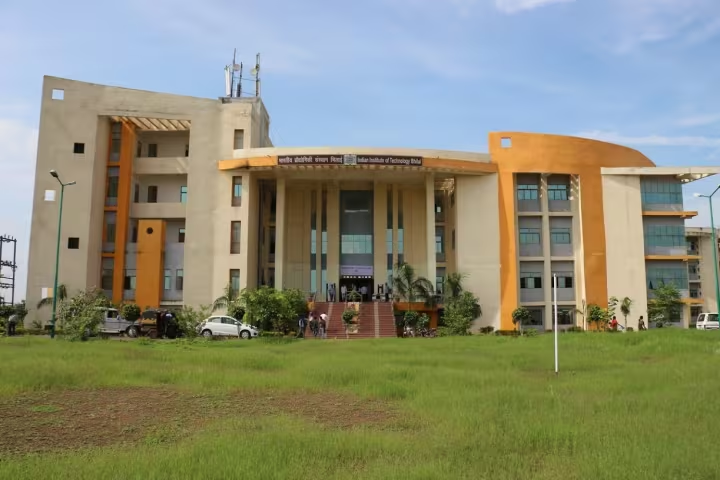
Scientists at the Indian Institute of Technology Bhilai have developed a bio-based hydrogel capable of removing harmful pollutants from contaminated water, marking a practical step forward in sustainable wastewater treatment.
Industrial wastewater remains one of the largest contributors to water pollution in India, particularly from sectors such as textiles, chemicals, and dyes. Against this backdrop, the development highlights the growing need for scalable, low-impact treatment solutions.
The research aligns with national programmes such as the Jal Jeevan Mission, Swachh Bharat Mission, and the National Mission for Clean Ganga, all of which emphasise sustainable and efficient water management.
Eco-Friendly Hydrogel for Wastewater Treatment
The research team, comprising Koushik Mahata, Nishikanta Singh, Durgesh Kumar Sinha, Swarup Maity, and led by Dr. Sanjib Banerjee, developed a hydrogel using natural building blocks that forms spontaneously at room temperature. Unlike conventional materials, it does not require toxic chemicals or catalysts, reducing both complexity and environmental impact.
The hydrogel’s porous, sponge-like structure allows it to effectively absorb toxic dyes and organic pollutants commonly found in industrial wastewater.
Performance in Real-World Conditions
Beyond laboratory testing, the material has been evaluated in real polluted river water, where it demonstrated strong pollutant removal capability. It can be reused multiple times, moulded into different shapes for varied applications, and naturally degrades after use, eliminating the risk of secondary pollution.
This combination of reusability and biodegradability positions the material as a practical alternative to traditional treatment methods that often generate chemical residues.
Addressing the Limitations of Conventional Solutions
According to Dr. Banerjee, many existing water treatment materials rely on hazardous chemicals that can create additional environmental concerns. This research demonstrates that naturally derived materials can deliver effective purification without compromising environmental safety, making them more suitable for large-scale deployment.
The study has been published in the internationally recognised journal Advanced Functional Materials, reflecting the growing contribution of IIT Bhilai to advanced materials research focused on environmental sustainability.
Market Research Outlook Analysis
This development reflects a broader shift within the water treatment ecosystem toward bio-based and low-toxicity chemistries. As regulatory pressure increases and industries face stricter discharge norms, demand for reusable and environmentally safe treatment materials is expected to accelerate.
Innovations such as hydrogel-based pollutant absorption could influence future product development strategies, particularly across textile, chemical, and industrial wastewater segments. The market is gradually moving toward solutions that balance performance, cost efficiency, and environmental compliance.
For deeper insights or customised research on this segment, connect with our team at research@marketresearchoutlook.com.