

India Coal Gasification Market, 2032
- Chemicals & Advanced Materials, Energy, Power & Storage, Petrochemicals & Intermediates
- Oct 2026
- Pages 140
- Report Format: pdf
- Report Price: $2400 USD
India’s coal gasification sector is witnessing strong structural growth, driven by the National Coal Gasification Mission target of 100 million tonnes by 2030, the INR 8,500 crore and INR 37,500 crore incentive schemes, revenue share rebates in commercial coal auctions, a push to replace imported urea, ammonia, methanol, and LNG, and rising investment from public sector coal, power, and gas companies along with large private steel and chemical groups.
| Study Duration | 2021-2032 |
| Market Size (2025) | USD 1,260 Million |
| CAGR (2026-2032) | 21.3% |
| Leading Segment | Entrained Flow Gasifiers (Ammonia & Urea) |
| Fastest Growing Segment | Coal-to-Methanol & Coal-to-SNG |
| Market Size (2032) | USD 4,860 Million |
Market Overview: India Coal Gasification Market
The India coal gasification market size is expanding quickly, driven by the National Coal Gasification Mission, two rounds of capital incentive schemes, a 50% revenue share rebate for coal used in gasification, long-term coal linkages, and a clear policy goal of cutting imports of fertilizers, chemicals, and gas. Valued at USD 1,260 million in 2025 and projected to reach USD 4,860 million by 2032, growing at a CAGR of 21.3%, the sector is supported by coal gasified volumes of 9.4 million tonnes in 2025, set to reach 46.0 million tonnes by 2032. Entrained flow gasifiers lead the technology mix, while coal-to-methanol and coal-to-SNG form the fastest growing application group. India holds over 400 billion tonnes of coal and 47 billion tonnes of lignite, giving gasification a secure domestic feedstock base. As Coal India, BHEL, NLC India, GAIL, and BCGCL advance public sector plants, and Jindal Steel, Reliance Industries, Adani Enterprises, Thermax, and New Era Cleantech develop commercial projects, gasification is turning into a policy-backed, technology-led, and import-substituting industry with strong long-term growth potential.
Key Report Takeaways: India Coal Gasification Market
- Coal gasification value in India is projected to grow from USD 1,260 million in 2025 to USD 4,860 million by 2032, registering a CAGR of 21.3%, driven by national gasification targets, capital incentives, and the steady shift from pilot units to large commercial plants.
- Entrained flow gasifiers lead the technology mix, accounting for 46% of market value in 2025, supported by their use in large fertilizer and chemical plants, while BHEL pressurised fluidized bed gasifiers are gaining ground for high-ash coal.
- Coal-to-methanol and coal-to-SNG are the fastest growing applications, expected to grow at a CAGR of 27.8% through 2032, as India seeks to replace over 80% of its methanol needs and over 50% of its LNG supply that currently comes from imports.
- Coal gasification projects worth INR 65,000 crore are under execution, and the INR 37,500 crore scheme approved in May 2026 targets 75 million tonnes of coal and lignite gasification, structurally expanding the India coal gasification market across fertilizer, chemical, steel, and fuel applications.
- Rising investment by Coal India, BHEL, NLC India, GAIL, Reliance Industries, and Jindal Steel in gasification plants, technology development, and underground coal gasification blocks is reducing import dependence and supporting the 2032 growth outlook for domestic syngas.
Key Market Drivers: India Coal Gasification Market
National Coal Gasification Mission and the 100 Million Tonne Target Driving Gasification Investment Across India
The strongest driver is a clear national target. The National Coal Gasification Mission, launched in 2020, aims to gasify 100 million tonnes of coal by 2030, and the Ministry of Coal has built a full policy package around it. India holds over 400 billion tonnes of coal and 47 billion tonnes of lignite, and nearly 40% of coal reserves lie in deep seams that are hard to mine conventionally, which makes gasification an attractive way to use them. The government expects gasification to draw investment of INR 3 lakh crore across nearly 25 projects and create 50,000 direct and indirect jobs. Coal Secretary Vikram Dev Dutt stated in June 2026 that projects worth INR 65,000 crore are already under execution. A firm target, a deep resource base, and visible project progress give equipment makers, EPC contractors, and technology licensors confidence to build capacity, creating sustained demand across the India coal gasification market.
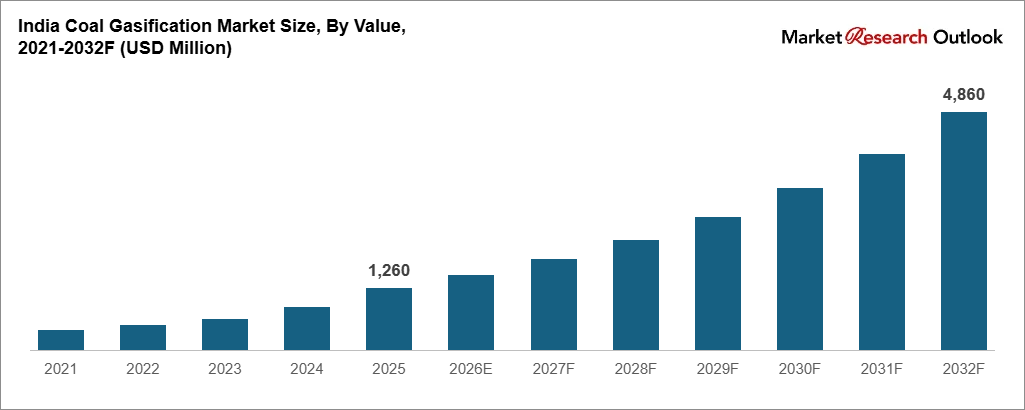
Source:
Government Incentive Schemes, Revenue Share Rebates and Coal Linkage Reforms Fuelling New Project Awards
Financial support has moved from intent to awards. The Scheme for Promotion of Coal Gasification Projects, approved in January 2024 with an outlay of INR 8,500 crore, now supports eight projects with INR 6,233 crore of incentives across coal-to-SNG, ethanol, hydrogen, acetic acid, ammonium nitrate, DRI-based steel, and sustainable aviation fuel. In May 2026, a larger INR 37,500 crore scheme for surface coal and lignite gasification was approved, targeting 75 million tonnes of gasification. It offers up to 20% of plant and machinery cost, paid in four equal instalments, with caps of INR 5,000 crore per project and INR 12,000 crore per business group. Eligible projects need clean syngas capacity of at least 0.5 million tonnes per annum, and they receive coal linkages for 30 years under the non-regulated sector window. A 50% rebate on revenue share for coal used in gasification under commercial auctions further improves project returns and keeps new awards flowing.
Import Substitution in Fertilizers, Methanol and Natural Gas Strengthening Demand for Coal-Derived Syngas
Import replacement is the third major driver. India imports over 50% of its LNG, 20% of its urea, all of its ammonia requirement, and over 80% of its methanol, and the FY2025 import bill for these products reached INR 2.77 lakh crore. Each of these products can be made from coal-derived syngas. The Talcher Fertilizers plant in Odisha, a joint venture of GAIL, Coal India, RCF, and FCIL, will make urea from coal, with commissioning now expected in 2027. Coal India and GAIL formed a joint venture in March 2025 to build a coal-to-SNG plant, while NLC India is advancing lignite-to-methanol at Neyveli. Because domestic coal prices are regulated and far less volatile than global LNG and methanol prices, syngas-based plants offer steadier input costs for fertilizer and chemical producers. This makes import substitution a long-term structural source of demand for gasification technology and project services.
Key Market Challenges: India Coal Gasification Market
High Ash Content and Variable Quality of Indian Coal Limiting Gasifier Performance
Indian coal is difficult to gasify. Most domestic coal carries high ash content and varies in quality from mine to mine, which affects gas yield, slag handling, and equipment wear. Many gasifiers designed abroad were built for low-ash coal and do not perform well on Indian grades without changes. Projects therefore often need washed or beneficiated coal, which raises raw material and processing cost and adds a washery to the project scope. Ash disposal and handling also add to capital and operating cost. BHEL pressurised fluidized bed technology was developed partly to handle high-ash coal, but it is only now moving to commercial scale. Until more plants prove stable operation on Indian coal, feedstock quality will remain a key technical risk across the India coal gasification market.
High Capital Cost, Long Gestation Periods and Financing Risk Delaying Project Execution
Gasification plants are large and slow to build. Typical gestation periods run from five to seven years, and the Talcher urea project, first announced in 2018, has seen its commissioning moved from 2023-24 to 2027. Capital cost is high because a full plant includes coal handling, air separation, gasifiers, syngas cleaning, and downstream synthesis units, and import and customs duties on key equipment add further cost. Lenders remain cautious because few commercial plants have a long operating record in India. Private developers must show net worth of at least 20% of total project cost to qualify for the new incentive scheme, which limits the pool of eligible bidders. Delays raise interest during construction and can erode returns, making financing risk a practical barrier for new entrants into the sector.
Limited Commercial Experience With Indigenous Technology and Carbon Emission Concerns Impacting Project Economics
Indigenous gasification technology is still mostly at pilot scale. BHEL ran its 6.2 MW pilot in Tiruchirappalli in 2020, and Thermax operates a coal-to-methanol pilot plant in Pune, but large commercial units have mostly relied on foreign licensors. Licensing fees, performance guarantees, and limited local supply of proven gasifier designs raise project cost. Carbon emissions are a second concern. Coal-to-chemicals routes release more carbon dioxide per tonne of product than natural gas routes, and carbon capture, utilisation, and storage remains at a nascent stage in India. As carbon pricing, green finance rules, and export market standards tighten, projects without a clear emissions plan may face higher financing costs. Pilot scale-up, local manufacturing of gasifiers, and early CCUS integration are improving the outlook, but these factors still weigh on project economics.
Key Market Trends: India Coal Gasification Market
Rising Adoption of Indigenous Pressurised Fluidized Bed Gasification Technology in India
Domestic technology is moving from pilot to commercial scale. BHEL pressurised fluidized bed gasification (PFBG) technology, tested on high-ash coal at Tiruchirappalli, has been selected for the Bharat Coal Gasification and Chemicals Limited project at Lakhanpur, Odisha. That plant will produce 0.66 million tonnes per year of technical-grade ammonium nitrate, with commissioning scheduled for September 2029. BHEL has also run a coal-to-methanol pilot in Hyderabad, and Thermax is testing coal-to-methanol in Pune. Using local technology lowers licensing cost, reduces foreign exchange outflow, and allows equipment to be built in Indian workshops. If Lakhanpur performs well, PFBG is likely to become a preferred option for future plants using unwashed or lightly washed coal. This shift toward indigenous technology is lowering long-run cost and widening the supplier base for gasifier equipment.
Joint Ventures Between Public Sector Coal, Power and Gas Companies Driving Large Gasification Projects
A clear move toward joint ventures is reshaping project ownership. Coal India and BHEL formed Bharat Coal Gasification and Chemicals Limited for the Lakhanpur ammonium nitrate plant, while Coal India and GAIL formed a joint venture in March 2025 for coal-to-SNG. Talcher Fertilizers brings together GAIL, Coal India, Rashtriya Chemicals and Fertilizers, and Fertilizer Corporation of India. These partnerships pair coal supply with technology, gas marketing, and fertilizer sales expertise, which lowers execution and offtake risk. In May 2026, Coal India also invited expressions of interest for coal-to-syngas facilities under build-own-operate and build-own-maintain models, opening space for private technology and EPC firms. Joint structures are expected to remain the main route for large public sector gasification projects through 2032.
Underground Coal Gasification Blocks and Private Sector Commercial Projects Widening the Project Pipeline
Private sector interest and underground gasification are broadening the pipeline. The 14th commercial coal mine auction in October 2025 offered 41 mines, including 21 with underground coal gasification potential for the first time, and agreements for four of these mines were signed in April 2026. In August 2026, Reliance Industries proposed an integrated underground coal gasification complex in Eluru district, Andhra Pradesh, with planned investment of INR 2.73 lakh crore over 30 years and up to INR 3,000 crore for exploration and pilot testing between 2026 and 2027. Jindal Steel already runs a coal gasification-based DRI plant at Angul, Odisha, while Adani Enterprises and New Era Cleantech are developing commercial-scale projects, and Maharashtra is hosting five projects supplied by Western Coalfields. These developments are reinforcing the 2032 growth outlook across the full value chain.
Segmental Insights: India Coal Gasification Market
By End-User: Fertilizer Segment Dominates Coal Gasification Demand in India
The fertilizer segment dominates end-user demand, accounting for 36% of market value in 2025, driven by the Talcher urea project, the Lakhanpur ammonium nitrate plant, and the policy goal of cutting urea and ammonia imports. Entrained flow and PFBG gasifiers paired with ammonia synthesis units are the main configurations in this segment. Chemicals and petrochemicals account for 29% of demand, led by coal-to-methanol, acetic acid, and olefin projects in Odisha, Maharashtra, and Tamil Nadu. Steel and metallurgy contribute 22%, supported by syngas-based DRI production at Angul and planned captive gasifiers at integrated steel plants. Power and fuels, including SNG, hydrogen, and sustainable aviation fuel, account for the remaining 13%. In 2025, Coal India, BHEL, GAIL, Talcher Fertilizers, and Jindal Steel accounted for a large share of gasification spending, reinforcing fertilizer leadership in the India coal gasification market.
By Technology: Entrained Flow Leads While Coal-to-Methanol and Coal-to-SNG Grow Fastest
Entrained flow gasifiers lead the technology mix, accounting for 46% of market value in 2025, because they offer high carbon conversion and large single-train capacity suited to fertilizer and chemical plants. Fluidized bed gasifiers hold 21%, fixed bed gasifiers 15%, and pressurised fluidized bed gasifiers 12%, with PFBG set to gain share as the Lakhanpur project moves forward. Underground coal gasification accounts for 2% of value today but is expected to grow quickly as auctioned UCG blocks move into pilot and commercial stages, while other technologies hold the remaining 4%. By application, coal-to-methanol and coal-to-SNG are the fastest growing segments at a CAGR of 27.8% through 2032. High-ash domestic coal makes up 58% of feedstock. Leading players including BHEL, Thermax, Engineers India, Larsen & Toubro, and global licensors are aligning technology offerings to this mix, lifting average project size and value.
Regional Insights: India Coal Gasification Market
Regional analysis shows that East India and Central India together account for 56% of market value, reflecting the location of India’s largest coalfields. East India leads with 39%, driven by Odisha, where the Talcher urea plant, the Lakhanpur ammonium nitrate project, and Jindal Steel’s Angul DRI facility are located, along with West Bengal and Jharkhand, home to Eastern Coalfields and Bharat Coking Coal. Central India contributes 17%, led by Chhattisgarh and Madhya Pradesh with large South Eastern Coalfields and Northern Coalfields reserves. West India accounts for 27%, supported by Maharashtra, which hosts five projects drawing coal from Western Coalfields, and Gujarat, where refinery-linked gasification is well established. South India holds 11%, led by NLC India lignite-to-methanol at Neyveli, Tamil Nadu, and the Reliance UCG proposal in Andhra Pradesh, while North India accounts for the remaining 6%. Mine-mouth economics will keep eastern and central states as the main hubs across the India coal gasification market.
Recent Developments: India Coal Gasification Market
- Coal gasification in India saw strong progress in 2025 and 2026. The Coal Ministry confirmed in June 2026 that projects worth INR 65,000 crore are under execution, with eight projects supported by INR 6,233 crore under the January 2024 scheme. In May 2026, a new INR 37,500 crore scheme for surface coal and lignite gasification was approved, targeting 75 million tonnes of gasification with incentives of up to 20% of plant and machinery cost.
- Project execution also moved forward. In June 2026, Bharat Coal Gasification and Chemicals Limited advanced its coal-to-ammonium nitrate plant at Lakhanpur, Odisha, using BHEL PFBG technology, with 0.66 million tonnes per year of output and commissioning planned for September 2029. In May 2026, Coal India invited expressions of interest for coal-to-syngas facilities under BOO and BOM models, and in April 2026 agreements were signed for four mines with underground gasification potential. These steps are strengthening domestic capacity and supporting the 2032 forecast for Indian syngas output.
- Private sector momentum is building as well. In August 2026, Reliance Industries proposed an integrated underground coal gasification complex in Andhra Pradesh with planned investment of INR 2.73 lakh crore over 30 years. Maharashtra is developing five gasification projects, and Adani Enterprises and New Era Cleantech are advancing commercial plants. Together, these moves place India among the most active coal gasification markets outside China and strengthen long-term competitive positioning in the India coal gasification market.
Key Market Players: India Coal Gasification Market
- Coal India Limited
- Bharat Heavy Electricals Limited (BHEL)
- Bharat Coal Gasification and Chemicals Limited (BCGCL)
- Talcher Fertilizers Limited
- NLC India Limited
- GAIL (India) Limited
- Jindal Steel Limited
- Reliance Industries Limited
- Adani Enterprises Limited
- Thermax Limited
- New Era Cleantech Solution Private Limited
- Engineers India Limited
- Larsen & Toubro Limited
| By Technology | By Application | By Feedstock | By Component | By End-User |
| Fixed Bed (Moving Bed) Gasifiers Fluidized Bed Gasifiers Entrained Flow Gasifiers Pressurised Fluidized Bed Gasifiers (PFBG) Underground Coal Gasification (UCG) Others |
Ammonia & Urea Methanol Synthetic Natural Gas (SNG) Ammonium Nitrate DRI & Steel Hydrogen Others (Ethanol, Acetic Acid, Sustainable Aviation Fuel) |
High-Ash Domestic Coal Washed & Beneficiated Coal Lignite Petcoke & Coal Blends Imported Coal |
Gasifier Island Equipment Air Separation Units Syngas Cleaning & Conditioning Systems Downstream Synthesis Units EPC & Project Services Licensing & Technology Services |
Fertilizer Chemicals & Petrochemicals Steel & Metallurgy Power & Fuels |
Report Scope
In this report, the India Coal Gasification Market has been segmented into the following categories, in addition to detailed analysis of key industry trends, market dynamics, competitive landscape, and growth opportunities across the forecast period:
- By Technology
- Fixed Bed (Moving Bed) Gasifiers
- Fluidized Bed Gasifiers
- Entrained Flow Gasifiers
- Pressurised Fluidized Bed Gasifiers (PFBG)
- Underground Coal Gasification (UCG)
- Others
- By Application
- Ammonia & Urea
- Methanol
- Synthetic Natural Gas (SNG)
- Ammonium Nitrate
- DRI & Steel
- Hydrogen
- Others (Ethanol, Acetic Acid, Sustainable Aviation Fuel)
- By Feedstock
- High-Ash Domestic Coal
- Washed & Beneficiated Coal
- Lignite
- Petcoke & Coal Blends
- Imported Coal
- By Component
- Gasifier Island Equipment
- Air Separation Units
- Syngas Cleaning & Conditioning Systems
- Downstream Synthesis Units
- EPC & Project Services
- Licensing & Technology Services
- By End-User
- Fertilizer
- Chemicals & Petrochemicals
- Steel & Metallurgy
- Power & Fuels
- By Geography
- North India
- South India
- West India
- East India
- Central India
Competitive Landscape
Company Profiles:
Detailed analysis of the leading companies operating in the India Coal Gasification Market, including business overview, product portfolio, strategic initiatives, competitive positioning, and recent developments.
Company Information
Detailed profiling and strategic analysis of additional market players (up to five companies), including emerging gasification project developers, global technology licensors, air separation suppliers, or state-level chemical and fertilizer companies planning syngas units.
For a free sample of the India Coal Gasification Market report, customised insights or delivery timelines, submit your query here
India Coal Gasification Market, 2032
- Research Framework
- Market Segmentation
- Research Objective
- Research Methodology
- Qualitative Research
- Primary Research
- Secondary Research
- Quantitative Research
- Market Breakdown & Data Triangulation
- Demand Side
- Supply Side
- Primary Research Respondents
- Assumption & Limitation
- Executive Summary
- Market Overview, 2021-2032
- By Technology
- By Application
- By Feedstock
- By Component
- By End-User
- By Region
- Analyst Recommendations
- Geopolitical Impact on India Coal Gasification Market
- India Coal Gasification Market Insights
- Market Dynamics
- Growth Drivers
- National Coal Gasification Mission and the 100 million tonne target driving gasification investment across India.
- Government incentive schemes, revenue share rebates, and coal linkage reforms fuelling new project awards.
- Import substitution in fertilizers, methanol, and natural gas strengthening demand for coal-derived syngas.
- Restraints
- High ash content and variable quality of Indian coal limiting gasifier performance.
- High capital cost, long gestation periods, and financing risk delaying project execution.
- Limited commercial experience with indigenous technology and carbon emission concerns impacting project economics.
- Opportunities
- Coal-to-methanol, coal-to-SNG, and blue ammonia projects opening large import replacement opportunities.
- Underground coal gasification in deep-seated and auctioned blocks unlocking reserves that are hard to mine.
- Carbon capture, utilisation, and storage integration creating new technology and service opportunities.
- Challenges
- Long lead times for imported gasifier equipment, air separation units, and specialised catalysts.
- Ash handling, water availability, and environmental clearance requirements at mine-mouth sites.
- Securing long-term offtake contracts and stable product pricing for syngas-based fertilizers and chemicals.
- Technological Advancements
- Recent Technological Advancements
- Prior to 2020
- Porter’s Five Forces Analysis
- PESTLE Analysis
- Industry Value Chain & Entry Points
- Upstream Feedstock Supply (coal mines, lignite mines, washeries, coal handling and preparation)
- Gasification Project Owners (Coal India, BCGCL, Talcher Fertilizers, NLC India, Jindal Steel, Reliance Industries)
- Gasifier Technology Licensors & Developers (BHEL, Thermax, global entrained flow and fluidized bed licensors)
- Air Separation, Syngas Cleaning & Process Equipment Suppliers (ASU, shift reactors, acid gas removal, compressors)
- Testing, Certification & Environmental Compliance (CPCB, state pollution boards, PESO, CMPDI coal testing)
- EPC Contractors & Project Management Consultants (Engineers India, Larsen & Toubro, PDIL, BHEL)
- Downstream Synthesis Units (ammonia, urea, methanol, SNG, ammonium nitrate, DRI, hydrogen)
- Product Marketing & Offtake Partners (GAIL, fertilizer marketers, chemical traders, steel users)
- Government Bodies & Policy Agencies (Ministry of Coal, NITI Aayog, Ministry of Chemicals and Fertilizers, state governments)
- End-Users (fertilizer plants, chemical and petrochemical units, steel mills, gas utilities, fuel buyers)
- India Coal Gasification Market: Regulatory Framework
- India Coal Gasification Market Overview
- Market Size & Forecast, 2021-2032
- By Value (USD Million)
- By Volume (Million Tonnes of Coal Gasified)
- Market Share & Forecast
- By Technology
- Fixed Bed (Moving Bed) Gasifiers
- Fluidized Bed Gasifiers
- Entrained Flow Gasifiers
- Pressurised Fluidized Bed Gasifiers (PFBG)
- Underground Coal Gasification (UCG)
- Others
- By Application
- Ammonia & Urea
- Methanol
- Synthetic Natural Gas (SNG)
- Ammonium Nitrate
- DRI & Steel
- Hydrogen
- Others (Ethanol, Acetic Acid, Sustainable Aviation Fuel)
- By Feedstock
- High-Ash Domestic Coal
- Washed & Beneficiated Coal
- Lignite
- Petcoke & Coal Blends
- Imported Coal
- By Component
- Gasifier Island Equipment
- Air Separation Units
- Syngas Cleaning & Conditioning Systems
- Downstream Synthesis Units
- EPC & Project Services
- Licensing & Technology Services
- By End-User
- Fertilizer
- Chemicals & Petrochemicals
- Steel & Metallurgy
- Power & Fuels
- By Geography
- North India
- South India
- West India
- East India
- Central India
- Competitive Landscape
- India Coal Gasification Market Company Market Share Analysis, 2025
- Competitive Benchmarking, By Operating Parameters
- Key Strategic Development (Mergers, Acquisitions, Partnerships, Etc.)
- List of Emerging Players
- Company Profile
- Coal India Limited
- Introduction & Company Profile
- Product Benchmarking
- Strategic Outlook
- Key Competitors
- Financial Analysis
- SWOT Analysis
(Same Data Pointers Will Be Provided for The Below Companies)
- Bharat Heavy Electricals Limited (BHEL)
- Bharat Coal Gasification and Chemicals Limited (BCGCL)
- Talcher Fertilizers Limited
- NLC India Limited
- GAIL (India) Limited
- Jindal Steel Limited
- Reliance Industries Limited
- Adani Enterprises Limited
- Thermax Limited
- New Era Cleantech Solution Private Limited
- Engineers India Limited
- Larsen & Toubro Limited
- Other Prominent Players
* Financial information in case of non-listed companies will be provided as per availability
** The segmentation and the companies are subjected to modifications based on in-depth secondary for the final deliverable
Frequently Asked Questions
1. How large is the India coal gasification market and what is its growth forecast?
Ans: Coal gasification in India is valued at USD 1,260 million in 2025 and is projected to reach USD 4,860 million by 2032, growing at a CAGR of 21.3%, backed by national targets and capital incentive schemes.
2. Which segments are driving demand in the India coal gasification market?
Ans: Entrained flow gasifiers lead with 46% of 2025 value, while coal-to-methanol and coal-to-SNG grow fastest. Fertilizer is the largest end-user at 36%, followed by chemicals and petrochemicals, steel and metallurgy, and power and fuels.
3. What are the key drivers of growth in the India coal gasification market?
Ans: Key drivers include the 100 million tonne gasification target for 2030, the INR 8,500 crore and INR 37,500 crore incentive schemes, revenue share rebates, and the need to replace imported urea, methanol, and LNG.
4. Which regions are driving growth in the India coal gasification market?
Ans: East India and Central India together hold 56% of market value, led by Odisha, West Bengal, Jharkhand, and Chhattisgarh. Maharashtra in West India is also growing fast with five projects under development.
5. What are the latest trends in the India coal gasification market?
Ans: The latest trends include adoption of BHEL PFBG technology, public sector joint ventures for SNG and ammonium nitrate, underground coal gasification blocks, and new private projects such as the Reliance UCG complex in Andhra Pradesh.