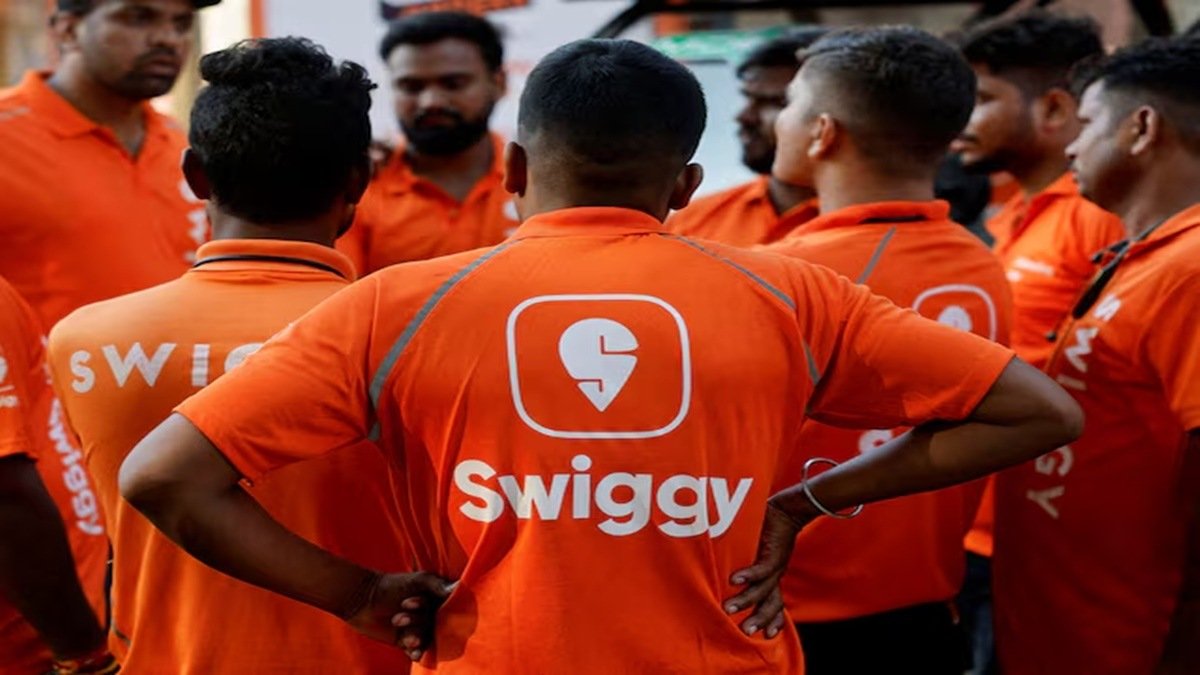
Swiggy is shifting its focus toward sustainable growth and profitability in quick commerce, even as competition intensifies across India’s fast-growing instant delivery market.
The company’s quick-commerce business Instamart reported a more than 53% year-on-year rise in revenue to ₹1,057 crore in the March quarter, while losses narrowed 4.5% to ₹736 crore. Gross order value for the segment stood at ₹7,881 crore during the quarter, showing a marginal sequential decline.
Swiggy co-founder, managing director and group chief executive officer Sriharsha Majety signalled that the company would avoid pursuing short-term growth through aggressive spending despite the scale of the market opportunity.
“…theoretically one can grow significantly higher volumes in the short term in a large addressable market,” Majety said in a shareholders’ letter. “However, the sustainability of that approach is questionable considering the high operating variable costs in the business…”
The company told analysts it sees a ₹1 trillion opportunity in quick commerce in the medium term. Total orders crossed 112 million during the quarter, although average order value fell to ₹700 from ₹746 in the previous quarter.
Instamart Bets on Differentiation
Rather than competing purely on discounts and rapid expansion, Instamart is increasingly focusing on differentiated offerings and private-label products.
The platform has been scaling its private-label brand Noice, which includes categories such as eggs, bread, packaged snacks and sauces. Swiggy is also experimenting with cookware and other adjacent categories.
“One thing we have reiterated again is that we will not take the route of buying growth. This is something we had committed to a couple of quarters ago, and we will continue to do so,” Majety said during the analyst call.
“CM (contribution margin) breakeven is also a [source] of our staying power in this business. It is important to build a more durable business. We do not know yet how many players will be on the other side of all this spending and overall category. But what we have learnt from [the growth in sectors like] modern trade and telecom is that whoever got clarity early is standing today,” he added.
Majety said more differentiated offerings are expected over the next three to four months, adding that Noice and similar categories are contribution-margin positive.
Competitive Pressure Builds
Swiggy’s cautious approach comes as rivals including Amazon, Flipkart, Reliance Retail and Zepto continue expanding aggressively in quick commerce.
Amazon recently announced plans to expand Amazon Now to 100 cities while scaling its dark store network to 1,000 micro-fulfilment centres as part of a ₹2,800 crore India investment.
At the same time, Zepto received approval for its IPO this week, adding further momentum to the competitive landscape.
Brokerage firm JM Financial recently downgraded Swiggy’s stock to “Reduce”, citing concerns around slower Instamart growth due to lower investments and increasing competitive pressure from traditional e-commerce players.
While quick commerce remains under pressure, Swiggy’s food delivery business delivered stronger results. Gross order value in food delivery rose 22.5% year-on-year to ₹9,005 crore during the fourth quarter, while segment profit increased 39% to ₹306 crore.
Overall, Swiggy reported a nearly 45% rise in quarterly revenue from operations to ₹6,383 crore, with losses narrowing to ₹800 crore.
Market Research Outlook Analysis
Swiggy’s strategy signals an important shift emerging across India’s quick-commerce sector, where profitability and operational durability are beginning to matter as much as rapid customer acquisition. The market is moving beyond pure expansion into a phase where contribution margins, private labels, and differentiated product ecosystems could become key competitive levers.
The company’s focus on private-label and margin-positive categories may also push rivals to diversify beyond discount-led grocery delivery models. As large players continue investing heavily in dark stores, fulfilment infrastructure, and instant commerce, the sector is likely to see sharper consolidation and stronger emphasis on sustainable economics over the next few years.
For deeper insights or customised research on this segment, connect with our team at research@marketresearchoutlook.com