

MEA Battery Energy Storage System (BESS) Market, By Application (Utility-Scale / Front-of-the-Meter, Commercial & Industrial / Behind-the-Meter, Microgrids & Off-Grid, Residential); By Technology (Lithium-ion, Flow Batteries, Sodium-ion, Others); By Duration (Short Duration, Medium Duration, Long Duration); By System Configuration (AC-Coupled, DC-Coupled, Hybrid Renewable + Storage); By End User (Utilities, Independent Power Producers, Commercial & Industrial, Data Centers, Oil & Gas, Mining); By Country (Saudi Arabia, UAE, Qatar, Kuwait, Oman, Bahrain, South Africa, Egypt, Morocco, Nigeria, Rest of MEA), Trend Analysis, Competitive Landscape & Forecast, 2021–2031
- Energy and Power
- Jan 2026
- Pages 280
- Report Format: pdf
MEA Battery Energy Storage System (BESS) Market – Industry Trends & Forecast Report, 2031
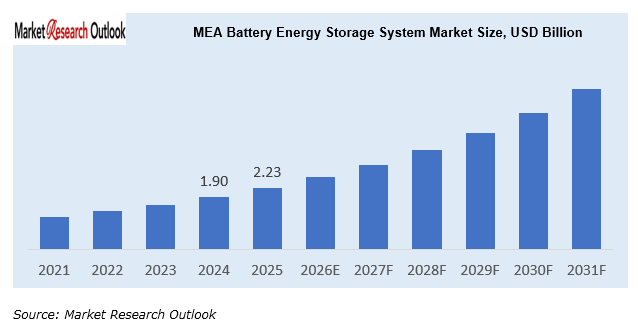
MEA Battery Energy Storage System (BESS) Market size was estimated at USD 1.9 billion in 2024. During the forecast period between 2025 and 2031, the MEA BESS Market size is projected to grow at a CAGR of 17.2%, reaching a value of USD 5.8 billion by 2031. Prominent drivers of the MEA BESS Market include the rapid expansion of renewable energy capacity, rising demand for grid stability and peak-load management, and increasing investments in utility-scale and hybrid power projects across the region. The shift in energy system preferences is propelled by growing reliance on solar and wind power, which necessitates efficient energy storage solutions to address intermittency and ensure reliable electricity supply. Utilities and large energy consumers increasingly prioritize “reliability and resilience over cost alone,” accelerating adoption of advanced battery storage systems despite higher upfront investments. Additionally, large-scale solar-plus-storage tenders, data center expansion, and off-grid power requirements in remote industrial and oil & gas operations are gaining traction across the MEA region. Technological advancements in lithium-ion batteries, improvements in system efficiency, and declining storage costs, combined with supportive government policies, have further fueled growth in the MEA BESS Market, catering to the region’s need for scalable, high-performance, and future-ready energy storage solution.
BESS (Battery Energy Storage System)– Overview
Battery Energy Storage Systems (BESS) refer to integrated energy storage solutions designed to store electrical energy and release it when needed, supporting power generation, transmission, and consumption across utility, commercial, industrial, and residential applications. BESS are typically deployed as modular systems comprising battery cells, power conversion systems, energy management software, and balance-of-plant components, enabling flexible configuration based on capacity and duration requirements. These systems are engineered to deliver fast response, high efficiency, and reliable performance, supporting grid stability, renewable energy integration, and power quality management. Battery energy storage solutions are developed to meet specific operational and safety requirements, offering optimized performance for applications such as peak shaving, frequency regulation, backup power, and microgrid operations, while enhancing energy resilience and supporting the transition to low-carbon energy systems.
MEA BESS Market
Growth Drivers
Increasing Integration of Renewable Energy & Grid Stability Requirements
The accelerating integration of renewable energy sources across the Middle East & Africa is a key factor driving the growth of the MEA Battery Energy Storage System (BESS) Market. As countries across the region expand solar and wind capacity to meet energy transition and decarbonization goals, the need for reliable energy storage solutions has increased significantly. Battery energy storage systems help address intermittency issues, enable peak load management, and improve overall grid stability. Additionally, supportive government policies, renewable energy auctions with storage mandates, and national energy security initiatives are further strengthening BESS adoption. For instance, several GCC countries have introduced utility-scale solar-plus-storage tenders and grid modernization programs to improve system reliability. These initiatives, combined with increasing investments from utilities, independent power producers, and large energy consumers, are creating a favorable environment for sustained growth of the MEA BESS Market.
Challenges
High Capital Cost and Project Financing Constraints
High upfront capital costs associated with battery energy storage systems remain a key challenge for the MEA BESS Market. Despite declining battery prices, the total system cost, including power conversion systems, energy management systems, balance-of-plant, and installation, can be substantial, particularly for large-scale projects. Financing challenges are further amplified by evolving regulatory frameworks, limited revenue certainty from ancillary services, and the absence of mature energy storage market mechanisms in some MEA countries. Additionally, concerns related to battery degradation, safety, and long-term performance add to investment risk perceptions. These factors may slow adoption, especially among smaller commercial and industrial users and in emerging African markets.
MEA BESS Market
Segmental Coverage
MEA BESS Market – By Application
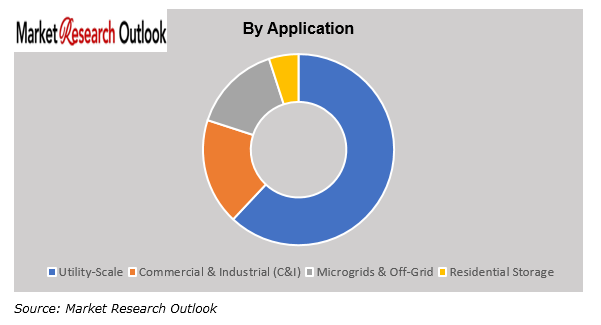
The MEA Battery Energy Storage System (BESS) market by application is strongly dominated by utility-scale deployments, reflecting the region’s strategic push to integrate large volumes of renewable energy and strengthen grid reliability. Utilities across the Middle East and parts of Africa are increasingly deploying front-of-the-meter BESS to support solar and wind integration, manage peak demand, provide frequency regulation, and defer investments in conventional grid infrastructure. Commercial & Industrial (C&I) applications form the second-largest segment, driven by rising electricity costs, demand for uninterrupted power, and sustainability targets among large industrial facilities, data centers, and commercial complexes. Microgrids and off-grid systems also represent a meaningful share, particularly in remote mining sites, oil & gas operations, and rural electrification projects where grid access is limited or unreliable. In contrast, residential storage remains a relatively small segment due to high upfront costs and lower rooftop solar penetration in many MEA countries. Overall, the application mix highlights a market currently led by large-scale, infrastructure-driven investments rather than distributed residential adoption.
MEA BESS Market – By Technology
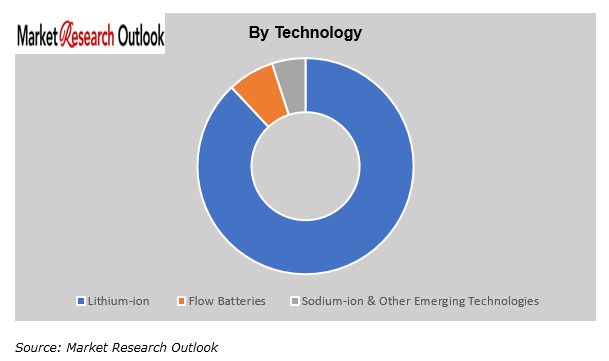
The MEA BESS market is overwhelmingly dominated by lithium-ion technology, driven by its high energy density, fast response, proven reliability, and declining costs. Flow batteries and sodium-ion technologies currently hold niche shares, primarily in pilot projects targeting long-duration storage and extreme operating conditions.
MEA BESS Market – By System Configuration
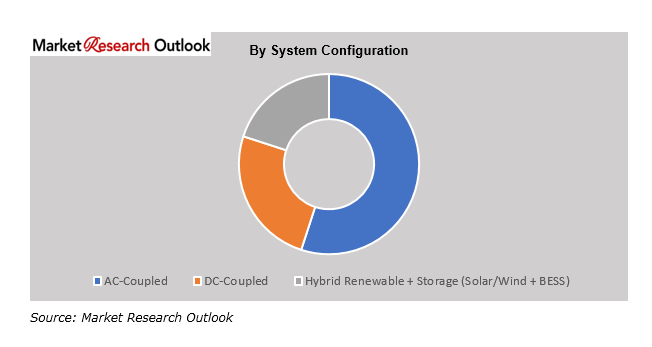
The MEA Battery Energy Storage System (BESS) market by system configuration is led by AC-coupled systems, reflecting their flexibility, ease of integration with existing grid infrastructure, and suitability for retrofitting large utility-scale renewable projects. AC-coupled configurations are widely preferred by utilities due to simpler system design, operational independence between generation and storage, and ease of grid compliance. DC-coupled systems account for a smaller but growing share, driven by their higher efficiency and cost advantages in new-build solar-plus-storage projects, particularly in GCC countries. Meanwhile, hybrid renewable + storage systems combining solar or wind with BESS are gaining traction as governments and developers pursue dispatchable renewable power, improved energy yield, and enhanced grid stability across the MEA region.
Competitive Landscape
Major players operating in the MEA Battery Energy Storage System (BESS) Market include CATL, BYD, LG Energy Solution, Samsung SDI, Panasonic Energy, Tesla (Megapack), Fluence, Wärtsilä Energy Storage, Sungrow Power Supply, Huawei Digital Power, ABB, Schneider Electric, Siemens Energy, and Hitachi Energy. To strengthen their market presence, these companies adopt a range of strategies, including mergers and acquisitions, strategic partnerships, joint ventures, technology licensing agreements, regional expansion, and continuous product innovation, aimed at enhancing system performance, improving cost competitiveness, and expanding their footprint across utility-scale, commercial, and industrial energy storage projects in the MEA region.
Scope of the Report
| Attributes | Details |
| Years Considered | Historical Data – 2021–2025
Base Year – 2026 Estimated Year – 2027 Forecast Period – 2028–2031 |
| Facts Covered | Revenue in USD Million |
| Market Coverage | MEA |
| Product/ Service Segmentation | Application, Duration, Technology, End Use |
| Key Players | CATL, BYD, LG Energy Solution, Samsung SDI, Panasonic Energy, Tesla (Megapack), Fluence, Wärtsilä Energy Storage, Sungrow Power Supply, Huawei Digital Power, ABB, Schneider Electric, Siemens Energy, and Hitachi Energy |
- By Application
-
- Utility-Scale / Front-of-the-Meter (FTM)
- Commercial & Industrial (C&I) / Behind-the-Meter (BTM)
- Microgrids & Off-Grid / Remote Mining & Oil & Gas Sites
- Residential Storage
-
- By Duration
- Short Duration (≤1 hour)
- Medium Duration (2–4 hours)
- Long Duration (≥6 hours)
- By Technology / Chemistry
- Lithium-ion (LFP, NMC)
- Flow Batteries (Vanadium, Zinc-based)
- Sodium-ion & Other Emerging Technologies
- By System Configuration
- AC-Coupled
- DC-Coupled
- Hybrid Renewable + Storage (Solar/Wind + BESS)
- By End User
- Utilities & Grid Operators
- Independent Power Producers (IPPs) & Developers
- Commercial & Industrial Users
- Data Centers & Digital Infrastructure
- Oil & Gas and Mining
MEA Battery Energy Storage System (BESS) Market, 2031
- Research Framework
- Research Objective
- Product Overview
- BESS Definition (Front-of-the-Meter vs Behind-the-Meter)
- System Architecture (Cell–Module–Rack–Container; PCS; EMS; BMS)
- Technology Scope (Li-ion, Flow, Sodium-ion, Other Emerging Chemistries)
- Market Segmentation
- Executive Summary
- MEA BESS Market Insights
- Industry Value Chain Analysis
- Raw Materials & Cell Supply Chain
- Cell/Module Manufacturing & Pack Integration
- PCS, EMS, BMS & Balance of Plant
- System Integrators, EPCs, Developers & Utilities
- O&M, Warranty, Augmentation & End-of-Life/Recycling
- DROC Analysis
2.1. Growth Drivers
3.2.2. Restraints
3.2.3. Opportunities
3.2.4. Challenges - Technological Advancements/Recent Developments
- Regulatory Framework
- Porter’s Five Forces Analysis
- Industry Value Chain Analysis
- MEA BESS Market: Marketing Strategies
- Utility Procurement & Tendering Strategy
- Partnering Models (EPC, Integrator, Developer, Utility)
- Service-Led Differentiation
- Localization & Value Chain Strategy in GCC and Key African Markets
- MEA BESS Market: Pricing Analysis
1. System Price Benchmarking (USD/kWh; USD/kW)
5.2. Pricing by Component (Cells, PCS, EMS/BMS, BOS, EPC)
5.3. Pricing by Duration (1-hour, 2-hour, 4-hour, 6–12 hour) - MEA BESS Market Overview
- Market Size & Forecast, 2021-2031
- By Value (USD Billion)
- By Power (MW) and Energy Capacity (MWh)
- Market Share & Forecast
- By Application
- Utility-Scale / Front-of-the-Meter (FTM)
- Commercial & Industrial (C&I) / Behind-the-Meter (BTM)
- Microgrids & Off-Grid / Remote Mining & Oil & Gas Sites
- Residential Storage
- By Duration
- Short Duration (≤1 hour)
- Medium Duration (2–4 hours)
- Long Duration (≥6 hours)
- By Technology / Chemistry
- Lithium-ion (LFP, NMC)
- Flow Batteries (Vanadium, Zinc-based)
- Sodium-ion & Other Emerging Technologies
- By System Configuration
- AC-Coupled
- DC-Coupled
- Hybrid Renewable + Storage (Solar/Wind + BESS)
- By End User
- Utilities & Grid Operators
- Independent Power Producers (IPPs) & Developers
- Commercial & Industrial Users
- Data Centers & Digital Infrastructure
- Oil & Gas and Mining
- By Country
- Saudi Arabia
- UAE
- Qatar
- Kuwait
- Oman
- Bahrain
- South Africa
- Egypt
- Morocco
- Kenya
- Nigeria
- Rest of MEA
- By Application
- Market Size & Forecast, 2021-2031
- Competitive Landscape
- List of Key Players and Their Offerings
- Cell Suppliers / Battery OEMs
- System Integrators (Containerized Solutions)
- PCS / Inverter Suppliers
- EPCs and Developers Active in MEA
- MEA BESS Company Market Share Analysis, 2024
- Competitive Benchmarking, By Operating Parameters
- System Efficiency & Performance Guarantees
- Safety Certifications & Compliance
- Warranty Terms and Augmentation Offerings
- Local Service Network and O&M Capabilities
- Key Strategic Developments (Mergers, Acquisitions, Partnerships)
- List of Key Players and Their Offerings
- Impact of Escalating Geopolitical Tensions on MEA BESS Market
- Company Profiles (Company Overview, Financial Matrix, Competitive Landscape, Key Personnel, Key Competitors, Contact Address, Strategic Outlook, SWOT Analysis)
1. CATL
9.2. BYD
9.3. LG Energy Solution
9.4. Samsung SDI
9.5. Panasonic Energy
9.6. Tesla (Megapack)
9.7. Fluence
9.8. Wärtsilä Energy Storage
9.9. Sungrow Power Supply
9.10. Huawei Digital Power
9.11. SMA Solar Technology / PCS Providers (as applicable)
9.12. ABB / Schneider Electric / Siemens (Power & Controls Ecosystem)
9.13. Regional EPC/Developer Profiles (Key MEA Players) - Key Strategic Recommendations
1. Go-to-Market Strategy by Country and Buyer Type
10.2. Product Positioning (Duration, Safety, Warranty, Grid-Forming)
10.3. Pricing, Financing, and Contracting Recommendations
10.4. Partnership and Localization Roadmap
10.5. Risk Mitigation (Supply Chain, Safety, Revenue Stack) - Research Methodology
1. Qualitative Research
11.1.1. Primary & Secondary Research
11.2. Quantitative Research
11.3. Market Breakdown & Data Triangulation
11.3.1. Secondary Research
11.3.2. Primary Research
11.4. Breakdown of Primary Research Respondents, By Country
11.5. Assumptions & Limitations - *Financial information of non-listed companies can be provided as per availability.
**The segmentation and the companies are subject to modifications based on in-depth secondary research for the final deliverable.
List of Figures
Figure 1 MEA BESS Segmentation
Figure 2 MEA BESS Market Value Chain Analysis
Figure 3 Company Market Share Analysis, 2024
Figure 4 MEA BESS Market Size, By Value (USD Billion), 2021-2031
Figure 5 MEA BESS Market Size, By Power (MW), 2021-2031
Figure 6 MEA BESS Market Size, By Energy Capacity (MWh), 2021-2031
Figure 7 MEA BESS Market Share, By Application, By Value, 2021-2031
Figure 8 MEA BESS Market Share, By Duration, By Value, 2021-2031
Figure 9 MEA BESS Market Share, By Technology/Chemistry, By Value, 2021-2031
Figure 10 MEA BESS Market Share, By System Configuration, By Value, 2021-2031
Figure 11 MEA BESS Market Share, By End User, By Value, 2021-2031
Figure 12 MEA BESS Market Share, By Country, By Value, 2021-2031
List of Tables
Table 1 MEA BESS Market Size, By Value (USD Billion), 2021-2031
Table 2 MEA BESS Market Size, By Power (MW), 2021-2031
Table 3 MEA BESS Market Size, By Energy Capacity (MWh), 2021-2031
Table 4 MEA BESS Market Size, By Application, By Value, 2021-2031
Table 5 MEA BESS Market Size, By Duration, By Value, 2021-2031
Table 6 MEA BESS Market Size, By Technology/Chemistry, By Value, 2021-2031
Table 7 MEA BESS Market Size, By System Configuration, By Value, 2021-2031
Table 8 MEA BESS Market Size, By End User, By Value, 2021-2031
Table 9 MEA BESS Market Size, By Country, By Value, 2021-2031
Table 10 CATL Company Overview
Table 11 CATL Financial Overview
Table 12 BYD Company Overview
Table 13 BYD Financial Overview
Table 14 LG Energy Solution Company Overview
Table 15 LG Energy Solution Financial Overview
Table 16 Samsung SDI Company Overview
Table 17 Samsung SDI Financial Overview
Table 18 Panasonic Energy Company Overview
Table 19 Panasonic Energy Financial Overview
Table 20 Tesla Company Overview
Table 21 Tesla Financial Overview
Table 22 Fluence Company Overview
Table 23 Fluence Financial Overview
Table 24 Wärtsilä Company Overview
Table 25 Wärtsilä Financial Overview
Table 26 Sungrow Company Overview
Table 27 Sungrow Financial Overview
Table 28 Huawei Digital Power Company Overview
Table 29 Huawei Digital Power Financial Overview
Frequently Asked Questions
1. What is the current market size of MEA Battery Energy Storage System (BESS) Market?
Ans: MEA Battery Energy Storage System (BESS) Market size by value was estimated at USD 1.9 billion in 2024.
2. What is the expected growth rate of MEA Battery Energy Storage System (BESS) Market by value during the forecast period?
Ans: MEA Battery Energy Storage System (BESS) Market is expected to grow at a CAGR of 17.2% during the forecast period between 2025 and 2031.
3. What is the forecast value of MEA Battery Energy Storage System (BESS) Market size by 2031?
Ans: By 2031, MEA Battery Energy Storage System (BESS) Market size is forecast to reach a value of approximately USD 5.8 billion.
4. What are the major factors driving the growth of MEA Battery Energy Storage System (BESS) Market?
Ans: The growth of the MEA Battery Energy Storage System (BESS) Market is primarily driven by rising renewable energy integration, increasing demand for grid stability and energy security, expansion of utility-scale solar and wind projects, and growing adoption of battery storage across commercial, industrial, and oil & gas applications.
5. Name the key players in MEA Battery Energy Storage System (BESS) Market.
Ans: Key players in the MEA Battery Energy Storage System (BESS) Market include CATL, BYD, LG Energy Solution, Samsung SDI, Panasonic Energy, Tesla (Megapack), Fluence, Wärtsilä Energy Storage, Sungrow Power Supply, Huawei Digital Power, ABB, Schneider Electric, Siemens Energy, and Hitachi Energy.
6. Which is the faster-growing segment in MEA Battery Energy Storage System (BESS) Market?
Ans: The utility-scale / front-of-the-meter (FTM) segment is expected to grow at the fastest CAGR in the MEA Battery Energy Storage System (BESS) Market during the forecast period between 2025 and 2031, driven by large-scale renewable energy integration and grid modernization initiatives.
Frequently Asked Questions
1. What is the current market size of MEA Battery Energy Storage System (BESS) Market?
Ans: MEA Battery Energy Storage System (BESS) Market size by value was estimated at USD 1.9 billion in 2024.
2. What is the expected growth rate of MEA Battery Energy Storage System (BESS) Market by value during the forecast period?
Ans: MEA Battery Energy Storage System (BESS) Market is expected to grow at a CAGR of 17.2% during the forecast period between 2025 and 2031.
3. What is the forecast value of MEA Battery Energy Storage System (BESS) Market size by 2031?
Ans: By 2031, MEA Battery Energy Storage System (BESS) Market size is forecast to reach a value of approximately USD 5.8 billion.
4. What are the major factors driving the growth of MEA Battery Energy Storage System (BESS) Market?
Ans: The growth of the MEA Battery Energy Storage System (BESS) Market is primarily driven by rising renewable energy integration, increasing demand for grid stability and energy security, expansion of utility-scale solar and wind projects, and growing adoption of battery storage across commercial, industrial, and oil & gas applications.
5. Name the key players in MEA Battery Energy Storage System (BESS) Market.
Ans: Key players in the MEA Battery Energy Storage System (BESS) Market include CATL, BYD, LG Energy Solution, Samsung SDI, Panasonic Energy, Tesla (Megapack), Fluence, Wärtsilä Energy Storage, Sungrow Power Supply, Huawei Digital Power, ABB, Schneider Electric, Siemens Energy, and Hitachi Energy.
6. Which is the faster-growing segment in MEA Battery Energy Storage System (BESS) Market?
Ans: The utility-scale / front-of-the-meter (FTM) segment is expected to grow at the fastest CAGR in the MEA Battery Energy Storage System (BESS) Market during the forecast period between 2025 and 2031, driven by large-scale renewable energy integration and grid modernization initiatives.