

South Africa Ammonia Market, By Product Type (Anhydrous Ammonia, Aqueous Ammonia, Liquefied Ammonia); By Production Route (Conventional / Grey Ammonia, Blue Ammonia, Green Ammonia, Bio-based / Low-carbon Ammonia); By Feedstock (Natural Gas-based, Coal-based, Naphtha-based, Renewable Hydrogen-based, Others); By Application (Fertilizers, Nitric Acid, Caprolactam, Acrylonitrile, Explosives, Ammonium Phosphates, Others); By Form (Gas, Liquid, Solution / Aqueous), By Trend Analysis, Competitive Landscape & Forecast, 2021–2032
- Chemicals & Advanced Materials
- Mar 2026
- Pages 120
- Report Format: pdf
- Report Price: $2500 USD
South Africa Ammonia Market, Size & Forecast 2021-2032
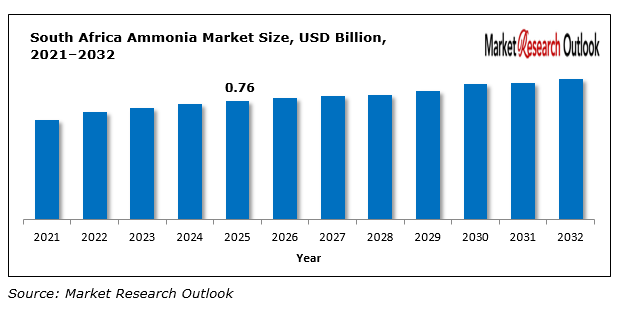
The South Africa Ammonia Market size was estimated at USD 0.76 Billion in 2025. During the forecast period, the South Africa Ammonia Market size is projected to grow at a CAGR of 4.1% reaching a value of USD 1.01 Billion by 2032. Stable agricultural demand together with rising mining operations and chemical industry development drives economic growth in the region. The market landscape will undergo permanent changes because of the investments made in green hydrogen and ammonia projects. The primary elements that impact the situation include changes in raw material prices and power expenses.
South Africa Ammonia Market – Overview
Market Trends
- The South Africa ammonia market exhibits a primary trend which shows an increasing preference for environmentally friendly and low-carbon ammonia manufacturing methods. South Africa is investigating renewable energy-based ammonia production because worldwide sustainable fuel and hydrogen carrier demand continues to rise while the country possesses solar and wind energy resources.
- The energy sector experiences an important trend which shows higher ammonia adoption for various energy applications that include hydrogen transport and marine fuel alternatives. This development creates additional demand opportunities which extend beyond the standard fertilizer and industrial applications.
Geopolitical Impact on South Africa Ammonia Market
The ammonia market experiences substantial impacts from geopolitical factors which affect both international energy costs and trade patterns and supply chain dependencies. South Africa depends on its local production capacity and its import activities, which makes the country vulnerable to international price changes for natural gas and other feedstocks. The global decarbonization efforts together with the rising demand for green ammonia exports are driving investments into domestic production facilities. The market expansion receives support from trade agreements and regional partnerships while infrastructure development and regulatory systems require ongoing attention as essential factors.
| Attributes | Details |
| Years Considered | Historical Data – 2021–2025
Base Year – 2025 Estimated Year – 2026 Forecast Period – 2026–2032 |
| Facts Covered | Revenue in USD Billion |
| Market Coverage | South Africa |
| Segmentation | Product Type, Production Route, Feedstock, Application, Form |
Segmental Coverage
By Product Type
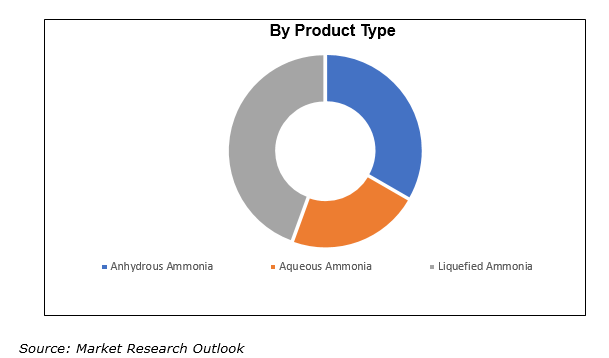
Based on product type, the South Africa Ammonia Market is segmented into Anhydrous Ammonia, Aqueous Ammonia, Liquefied Ammonia. Anhydrous ammonia holds a significant share in the South Africa ammonia market because it serves as an essential component for both industrial uses and large-scale fertilizer manufacturing operations. The ammonia compound exists in its most concentrated form which brings economic benefits for both agricultural transportation and nitrogen-based fertilizer application especially urea and ammonium nitrate. Large farming operations prefer this product because of its high nitrogen content and effective soil application results. The production of industrial chemicals uses anhydrous ammonia as a primary feedstock which helps maintain its market dominance.
By Production Route
Based on production route, the South Africa Ammonia Market is segmented Conventional / Grey Ammonia, Blue Ammonia, Green Ammonia, Bio-based / Low-carbon Ammonia. The South African ammonia market is currently dominated by conventional and grey ammonia because these two types of ammonia have established production facilities which operate at lower costs. The process uses fossil fuel-based feedstocks which include natural gas and coal to produce ammonia through the Haber-Bosch process that has achieved optimal efficiency over many years of development. The existing infrastructure of plants and supply chains together with their technical knowledge make conventional ammonia the most affordable choice for producing large quantities of ammonia which is needed in fertilizer and industrial uses. Its market dominance remains intact because of its cost benefits and advanced development of its infrastructure.
Competitive Landscape
In the competitive landscape of the South Africa Ammonia market, the organisation has covered major players of the market and their details.
Here are some of the leading players that are playing a major role in the South Africa Ammonia market:
- Sasol Chemicals
- Introduction & Company Profile
- Product Benchmarking
- Strategic Outlook
- Key Personals
- Key Competitors
- Financial Analysis
- Swot Analysis
Same Data Pointers Will Be Provided for The Below Companies)
- Omnia Holdings
- AECI
- Foskor
- Yara South Africa
- Afrox
- Air Products South Africa
- Kynoch Fertilizer
- PE Chemicals
- Other Prominent Players
Segmentation
- By Product Type
- Anhydrous Ammonia
- Aqueous Ammonia
- Liquefied Ammonia
- By Production Route
- Conventional / Grey Ammonia
- Blue Ammonia
- Green Ammonia
- Bio-based / Low-carbon Ammonia
- By Feedstock
- Natural Gas-based
- Coal-based
- Naphtha-based
- Renewable Hydrogen-based
- Others
- By Application
- Fertilizers
- Nitric Acid
- Caprolactam
- Acrylonitrile
- Explosives
- Ammonium Phosphates
- Others
- By Form
- Gas
- Liquid
- Solution / Aqueous
South Africa Ammonia Market, 2032
- Research Framework
- Market Segmentation
- Research Objective
- Research Methodology
- Qualitative Research
- Primary Research
- Secondary Research
- Quantitative Research
- Market Breakdown & Data Triangulation
- Demand Side
- Supply Side
- Breakdown Of Primary Research Respondents, By Country
- Assumption & Limitation
- Qualitative Research
- Executive Summary
- Market Overview, 2021–2032
- By Product Type
- By Production Route
- By Feedstock
- By Application
- By Form
- Analyst Recommendations
- Market Overview, 2021–2032
- Geopolitical Impact on South Africa Ammonia Market
- South Africa Ammonia Market Insights
- Market Dynamics
- Growth Drivers
- Strong demand from fertilizer industry supporting agricultural productivity
- Growth in mining and industrial sectors utilizing ammonia-based chemicals
- Increasing use in explosives for mining operations
- Restraints
- High dependence on natural gas or feedstock availability
- Volatility in energy prices impacting production costs
- Aging production infrastructure in certain facilities
- Opportunities
- Development of green ammonia projects using renewable energy
- Export opportunities to Europe and Asia for clean fuel applications
- Government support for energy transition and hydrogen economy cuisine
- Challenges
- High capital investment required for green ammonia projects
- Infrastructure limitations for storage and transportation
- Regulatory and environmental compliance pressures
- Technological Advancements
- Recent Technological Advancements
- Prior to 2020
- Porter’s Five Forces Analysis
- PESTLE Analysis
- Growth Drivers
- Market Dynamics
- Industry Value Chain & Entry Points
- Feedstock Supply
- Hydrogen Production
- Nitrogen Separation
- Ammonia Synthesis
- Storage & Handling
- Distribution & Transportation
- Industrial Processing
- End-Use Industries
- South Africa Ammonia Market: Regulatory Framework
- South Africa Ammonia Market Overview
- Market Size & Forecast, 2021-2032
- By Value (USD Billion)
- Market Share & Forecast
- By Product Type
- Anhydrous Ammonia
- Aqueous Ammonia
- Liquefied Ammonia
- By Production Route
- Conventional / Grey Ammonia
- Blue Ammonia
- Green Ammonia
- Bio-based / Low-carbon Ammonia
- By Feedstock
- Natural Gas-based
- Coal-based
- Naphtha-based
- Renewable Hydrogen-based
- Others
- By Application
- Fertilizers
- Nitric Acid
- Caprolactam
- Acrylonitrile
- Explosives
- Ammonium Phosphates
- Others
- By Form
- Gas
- Liquid
- Solution / Aqueous
- By Product Type
- Market Size & Forecast, 2021-2032
- Competitive Landscape
- South Africa Ammonia Company Market Share Analysis, 2025
- Competitive Benchmarking, By Operating Parameters
- Key Strategic Development (Mergers, Acquisitions, Partnerships, Etc.)
- List of Emerging players
- Company Profile
- Sasol Chemicals
- Introduction & Company Profile
- Product Benchmarking
- Strategic Outlook
- Key Personals
- Key Competitors
- Financial Analysis
- Swot Analysis
- Sasol Chemicals
Same Data Pointers Will Be Provided for The Below Companies)
- Omnia Holdings
- AECI
- Foskor
- Yara South Africa
- Afrox
- Air Products South Africa
- Kynoch Fertilizer
- PE Chemicals
- Other Prominent Players
* Financial information in case of non-listed companies will be provided as per availability
**The segmentation and the companies are subjected to modifications based on in-depth secondary for the final deliverable
Frequently Asked Questions
1. What is the market size of the South Africa Ammonia Market in 2025?
Ans: The South Africa Ammonia market is projected to reach approximately USD 0.76 Billion by 2032.
2. What is the expected growth rate of the South Africa Ammonia Market during the forecast period?
Ans: The South Africa Ammonia market is expected to grow at a CAGR of around 7.5% during the forecast period between 2026 and 2032.
3. What is the forecast value of the South Africa Ammonia Market by 2032?
Ans: The South Africa Ammonia market is projected to reach approximately USD 1.01 Billion by 2032.
4. What are the major factors driving the growth of the South Africa Ammonia Market?
Ans: Stable agricultural demand together with rising mining operations and chemical industry development drives economic growth in the region.
5. Name the key players operating in the South Africa Ammonia Market.
Ans: Key players operating in the South Africa Ammonia market include Sasol Chemicals, Omnia Holdings, AECI, Foskor, Yara South Africa, Afrox, Air Products South Africa, Kynoch Fertilizer, PE Chemicals, and other prominent players.
Frequently Asked Questions
1. What is the market size of the South Africa Ammonia Market in 2025?
Ans: The South Africa Ammonia market is projected to reach approximately USD 0.76 Billion by 2032.
2. What is the expected growth rate of the South Africa Ammonia Market during the forecast period?
Ans: The South Africa Ammonia market is expected to grow at a CAGR of around 7.5% during the forecast period between 2026 and 2032.
3. What is the forecast value of the South Africa Ammonia Market by 2032?
Ans: The South Africa Ammonia market is projected to reach approximately USD 1.01 Billion by 2032.
4. What are the major factors driving the growth of the South Africa Ammonia Market?
Ans: Stable agricultural demand together with rising mining operations and chemical industry development drives economic growth in the region.
5. Name the key players operating in the South Africa Ammonia Market.
Ans: Key players operating in the South Africa Ammonia market include Sasol Chemicals, Omnia Holdings, AECI, Foskor, Yara South Africa, Afrox, Air Products South Africa, Kynoch Fertilizer, PE Chemicals, and other prominent players.