

Middle East and Africa Copper Market, By Product Type (Wires, Plates, Sheets, Strips, Rods, Bars & Sections, Tubes & Pipes, Cathodes, Others); By Copper Grade (Pure Coppers, Oxygen Free Coppers, Electrolytic Coppers, Free-Machining Coppers); By Temper (Green Copper, Soft, Half-Hard, Hard-Spring, Extra-Spring); By Application (Electrical Wiring, Power Transmission Lines, Cables & Busbars, Heat Exchangers, Electric Vehicles (EVs), Others (Motor Parts, Industrial Machinery, Plumbing, Roofing, Solar Panels, etc)); By End-Use Industry (Construction, Electricals & Electronics, Power & Energy, Infrastructure, Automotive, Industrial Equipment, Others (Equipment Manufacture, Consumer Products, Telecommunications, Transport, Medical, Aerospace, Defense, etc)) Trend Analysis, Competitive Landscape & Forecast, 2021–2031
- Chemicals and Material
- Jan 2026
- Pages 240
- Report Format: pdf
- Report Price: $3000 USD
Middle East and Africa Copper Market Size & Forecast, 2021–2031
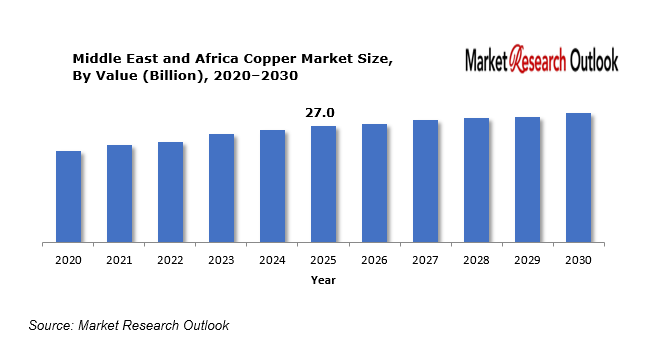
The Middle East and Africa Copper Market was estimated at around USD 27.0 billion in 2025 and is projected to reach over USD 41.0 billion by 2031. The copper market in the Middle East and Africa is experiencing growth because of the regions industrial development and urbanization. The construction of new buildings and power systems and electrical systems will create greater demand for copper metal. The market will expand because of increased renewable energy initiatives and electric vehicle manufacturing. The Middle East and Africa copper market will experience growth because of increasing electronics production and government infrastructure spending and smart grid projects and rising copper needs for telecommunications and data center operations.
The Middle East and Africa copper market experiences advantages from the rapid industrial development and extensive urbanization that is currently occurring in developing nations. The demand for copper has increased because of rising investments in transportation infrastructure which includes railway and metro construction projects. Market expansion is being driven by the rapid growth of electronics and semiconductor production facilities and the development of data centers and 5G networks. The combination of government programs that support electrification and energy-efficient solutions and domestic production together with increasing market demand for copper recycling and sustainable materials will boost the Middle East and Africa Copper Market from 2026 to 2031.
Copper – Overview
Copper serves as a fundamental industrial metal because its exceptional conductivity and ductility provide permanent performance. The metal functions as a crucial component in power cables and electrical equipment and construction components and electronic devices and plumbing systems. The metal functions as a critical element which supports the development of electric vehicles and renewable energy systems and modern communication infrastructure. The ability of copper to undergo endless recycling processes while maintaining its original performance characteristics establishes it as an ecologically sustainable material. The combination of industrial development and infrastructure development and worldwide electrification progress creates increasing needs for copper materials.
Middle East and Africa Copper Market
Growth Drivers
Renewable energy projects
An expansion in the MEA copper market can substantially be attributed to the presence of renewable energy schemes, which serves as essential drivers in the respective market. In the Middle East and Africa, the regional copper consumption is rising due to the investment in large-capacity solar power and wind power schemes, which require copper in the power generation segment and in the transmission and distribution segment as well. In the Middle East and Africa, the respective governments stay focused on reinforcing clean power production, thus ensuring a rise in the consumption of copper in the future as the respective authorities aim to achieve the desired objective of sustainable development in the segment.
Challenges
Supply risks from export restrictions by major copper-producing countries
Risks regarding the supply of copper that may be subject to export restrictions by major countries involved in the production of the resource have the potential to become a major obstacle to the development of the market for copper in the MEA. Some countries, due to their import-driven dependence on the resource, may stand to be affected due to limitations on the export of the resource, which may become a major regulatory setback. Risks regarding supply may also impact the pricing of the resource, which may become a major obstacle to the development of the market.
Impact of Escalating Geopolitical Tensions on Middle East and Africa Copper Market
A notable challenge to the MEA copper market, due to geopolitical tensions, is the uncertainty it may cause within supply chains and trade routes. Instability and tensions may be experienced due to issues like conflict, tensions, and even varying relations among nations. Furthermore, tensions and instability may cause variations within trade routes, and consequently, the prices of the input may be affected. The overall impact of such challenges may, therefore, impede the growth of the MEA copper market.
Middle East and Africa Copper Market
Segmental Coverage
Middle East and Africa Copper Market – By Product Type
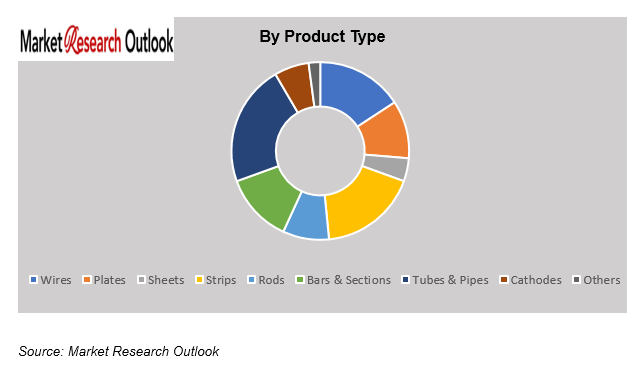
Based on product type, the Middle East and Africa Copper Market is segmented into Wires, Plates, Sheets, Strips, Rods, Bars & Sections, Tubes & Pipes, Cathodes, and Others.
Wires segment in the Middle East and Africa market is reportedly expanding at a steady pace, driven by factors such as increasing electricity consumption and ongoing infrastructure development in the region. Increasing investment in residential, commercial, and industrial sector constructions has fueled demand for electric wire solutions. Various projects undertaken in power distribution, renewable power, and electric vehicle infrastructure have contributed to a rise in demand for copper wire in general. Additionally, increased investment in electronic devices and telecommunications in Africa serves to indicate a steady expansion of the wires segment in general.
Middle East and Africa Copper Market – By Copper Grade
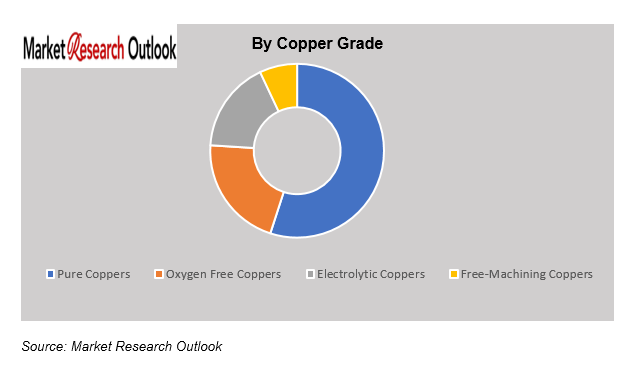
Based copper grade, the Middle East and Africa Copper Market is segmented into Pure Coppers , Oxygen Free Coppers , Electrolytic Coppers , and Free-Machining Coppers. The market for pure copper shows significant growth because its electrical and thermal conductivity properties and its ability to resist corrosion and its outstanding durability make it an ideal choice for various applications. The exceptional properties of pure copper make it the material of choice for electrical wiring and power transmission equipment and electronics and industrial machinery applications. Pure copper usage in residential and commercial and industrial sectors receives strong support from the rising demand for dependable and energy-efficient electrical systems. The increasing demand for solar and wind power renewable energy projects requires high-conductivity materials which results in greater need for pure copper.
Competitive Landscape
The Middle East and Africa copper market features a diverse mix of mining companies, metal processors, integrated energy firms, trading houses, and technology providers operating across the copper value chain. The market players establish their strategic position through the development of extensive copper mining operations, copper refining facilities, and their capacity expansion projects, which they use to secure long-term supply contracts, which they need to support the expected growth in demand from infrastructure development, renewable energy systems, electric vehicles, and industrial applications across the region. The companies develop their competitive advantage through two main processes which include improving their production output and developing their internal operations and building their capacity to obtain low-cost energy and raw materials. The organizations in the supply chain require collaboration with equipment manufacturers, technology developers, logistics providers, and downstream consumers to achieve better operational results and maintain their supply chain operations.
Or
Key participants in the Middle East and Africa Copper market include Elsewedy Electric, Ducab (Dubai Cable Company), Riyadh Cables Group, Saudi Cable Company, Saudi Cable Company, Oman Cables Industry, MESC Cables, ZAMEFA, Aberdare Cables, Nexans Maroc, others.
These companies are implementing strategic growth initiatives in order to gain a competitive advantage. The strategies being largely adopted include mergers and acquisitions, strategic alliances, joint ventures, licensing agreements, and new product launches. With the implementation of these strategies, the market participants aim to increase product portfolios, as well as enhance regional presence for long-term sustainable business growth in the copper industry of MEA.
Scope of the Report
| Attributes | Details |
| Years Considered | Historical Data – 2021–2025
Base Year – 2026 Estimated Year – 2027 Forecast Period – 2028–2031 |
| Facts Covered | Revenue in USD Billion |
| Market Coverage | Middle East and Africa |
| Product/ Service Segmentation | Product Type, Copper Grade, Temper, Application, End-Use Industry |
| Key Players | Elsewedy Electric, Ducab (Dubai Cable Company), Riyadh Cables Group, Saudi Cable Company, Saudi Cable Company, Oman Cables Industry, MESC Cables, ZAMEFA, Aberdare Cables, Nexans Maroc and others |
Market Segmentation
- By Product Type
- Wires
- Plates
- Sheets
- Strips
- Rods
- Bars & Sections
- Tubes & Pipes
- Cathodes
- Others
- By Copper Grade
- Pure Coppers
- Oxygen Free Coppers
- Electrolytic Coppers
- Free-Machining Coppers
- By Temper
- Green Copper
- Soft
- Half-Hard
- Hard-Spring
- Extra-Spring
- By Application
- Electrical Wiring
- Power Transmission Lines
- Cables & Busbars
- Heat Exchangers
- Electric Vehicles (EVs)
- Others (Motor Parts, Industrial Machinery, Plumbing, Roofing, Solar Panels, etc)
- By End-Use Industry
- Construction
- Electricals & Electronics
- Power & Energy
- Infrastructure
- Automotive
- Industrial Equipment
- Others (Equipment Manufacture, Consumer Products, Telecommunications, Transport, Medical, Aerospace, Defense, etc).
- By Country
- Saudi Arabia
- UAE
- Qatar
- Kuwait
- South Africa
- Nigeria
- Algeria
- Rest of MEA
Middle East and Africa Copper Market – Table of Contents
- Introduction
- Market Overview
- Copper Definition & Classification
- Research Methodology
- Key Assumptions
- Executive Summary
- Market Snapshot (2025)
- Key Insights & Emerging Trends
- Strategic Takeaways
- Policy, Regulatory & Decarbonization Landscape
- Copper Ecosystem & Value Chain Analysis
- Market Dynamics
- Growth Drivers
- Market Challenges
- Emerging Opportunities
- Country Demand Hotspots
- Key Market Trends & Developments
- Middle East and Africa Copper Market Outlook (2026–2030)
- Market Size & Forecast (USD Billion)
- Historical Analysis (2020–2025) vs Forecast (2026–2030)
- By Product Type
- Wires
- Plates
- Sheets
- Strips
- Rods
- Bars & Sections
- Tubes & Pipes
- Cathodes
- Others
- By Copper Grade
- Pure Coppers
- Oxygen Free Coppers
- Electrolytic Coppers
- Free-Machining Coppers
- By Temper
- Green Copper
- Soft
- Half-Hard
- Hard-Spring
- Extra-Spring
- By Application
- Electrical Wiring
- Power Transmission Lines
- Cables & Busbars
- Heat Exchangers
- Electric Vehicles (EVs)
- Others (Motor Parts, Industrial Machinery, Plumbing, Roofing, Solar Panels, etc)
- By End-Use Industry
- Construction
- Electricals & Electronics
- Power & Energy
- Infrastructure
- Automotive
- Industrial Equipment
- Others (Equipment Manufacture, Consumer Products, Telecommunications, Transport, Medical, Aerospace, Defense, etc).
- By Country
- Saudi Arabia
- UAE
- Qatar
- Kuwait
- South Africa
- Nigeria
- Algeria
- Rest of MEA
- Saudi Arabia Copper Market Outlook (2026–2030)
- Market Size & Forecast (USD Billion)
- Historical Analysis (2020–2025) vs Forecast (2026–2030)
- By Product Type
- By Copper Grade
- By Temper
- By Application
- By End-Use Industry
- UAE Copper Market Outlook (2026–2030)
- Market Size & Forecast (USD Billion)
- Historical Analysis (2020–2025) vs Forecast (2026–2030)
- By Product Type
- By Copper Grade
- By Temper
- By Application
- By End-Use Industry
- Qatar Copper Market Outlook (2026–2030)
- Market Size & Forecast (USD Billion)
- Historical Analysis (2020–2025) vs Forecast (2026–2030)
- By Product Type
- By Copper Grade
- By Temper
- By Application
- By End-Use Industry
- Kuwait Copper Market Outlook (2026–2030)
- Market Size & Forecast (USD Billion)
- Historical Analysis (2020–2025) vs Forecast (2026–2030)
- By Product Type
- By Copper Grade
- By Temper
- By Application
- By End-Use Industry
- South Africa Copper Market Outlook (2026–2030)
- Market Size & Forecast (USD Billion)
- Historical Analysis (2020–2025) vs Forecast (2026–2030)
- By Product Type
- By Copper Grade
- By Temper
- By Application
- By End-Use Industry
- Nigeria Copper Market Outlook (2026–2030)
- Market Size & Forecast (USD Billion)
- Historical Analysis (2020–2025) vs Forecast (2026–2030)
- By Product Type
- By Copper Grade
- By Temper
- By Application
- By End-Use Industry
- Algeria Copper Market Outlook (2026–2030)
- Market Size & Forecast (USD Billion)
- Historical Analysis (2020–2025) vs Forecast (2026–2030)
- By Product Type
- By Copper Grade
- By Temper
- By Application
- By End-Use Industry
- Rest of MEA Copper Market Outlook (2026–2030)
- Market Size & Forecast (USD Billion)
- Historical Analysis (2020–2025) vs Forecast (2026–2030)
- By Product Type
- By Copper Grade
- By Temper
- By Application
- By End-Use Industry
- By End-Use Industry
- Competitive Landscape
- Competitive Characteristics
- Market Share Analysis
- Company Benchmarking
- Competitive Strategies
- Company Profiles
- Business Overview
- Project Portfolio & Production Capacity
- Technology & Electrolyzer Partnerships
- Geographic Presence
- Sustainability & Net-Zero Commitments
- Strategic Partnerships & Offtake Agreements
- Recent Developments
- Financial Overview
- Policy, Incentives & Carbon Regulation Framework
- Technology Roadmap & Cost Reduction Pathways
- Renewable Power Availability & Copper Supply Chain Strategy
- Go-to-Market, Offtake & Export Strategy
- Conclusion & Key Takeaways
- Disclaimer
Frequently Asked Questions
1. What is the current market size of the Middle East and Africa Copper Market?
Ans: The Middle East and Africa Copper Market size by value was estimated at around USD 27.0 billion in 2025. The copper market in the Middle East and Africa is experiencing growth because of the regions industrial development and urbanization. The construction of new buildings and power systems and electrical systems will create greater demand for copper metal. The market will expand because of increased renewable energy initiatives and electric vehicle manufacturing.
2. What is the expected growth rate of the Middle East and Africa Copper Market by value during the forecast period?
Ans: The Middle East and Africa Copper Market is expected to grow at a CAGR of approximately 7% during the forecast period between 2026 and 2031, this growth is primarily driven by increasing demand from power and renewable energy infrastructure, electric vehicles, construction activities, and industrial manufacturing.
3. What is the forecast value of the Middle East and Africa Copper Market size by the end of the forecast period?
Ans: By 2031, the Middle East and Africa Copper Market size is forecast to reach USD 41.0 billion. Ongoing investments in copper mining, smelting, refining, and recycling capacities, along with improvements in regional supply chains, are enhancing market availability and value. Together, these factors are expected to drive the Middle East and Africa copper market.
4. What are the major factors driving the growth of the Middle East and Africa Copper Market?
Ans: The growth of the Middle East and Africa Copper Market is primarily driven by rapid urbanization and infrastructure development, growth of electric vehicles (evs) and charging infrastructure, industrialization and manufacturing growth, rising demand from emerging economies.
5. Name the key players in the Middle East and Africa Copper Market.
Ans: Key players operating in the Middle East and Africa Copper Market include Elsewedy Electric, Ducab (Dubai Cable Company), Riyadh Cables Group, Saudi Cable Company, Saudi Cable Company, Oman Cables Industry, MESC Cables, ZAMEFA, Aberdare Cables, Nexans Maroc, and others.
6. Which is a faster-growing segment in the Middle East and Africa Copper Market by product type?
Ans: Wires segment in the Middle East and Africa market is reportedly expanding at a steady pace, driven by factors such as increasing electricity consumption and ongoing infrastructure development in the region. Increasing investment in residential, commercial, and industrial sector constructions has fueled demand for electric wire solutions.
Frequently Asked Questions
1. What is the current market size of the Middle East and Africa Copper Market?
Ans: The Middle East and Africa Copper Market size by value was estimated at around USD 27.0 billion in 2025. The copper market in the Middle East and Africa is experiencing growth because of the regions industrial development and urbanization. The construction of new buildings and power systems and electrical systems will create greater demand for copper metal. The market will expand because of increased renewable energy initiatives and electric vehicle manufacturing.
2. What is the expected growth rate of the Middle East and Africa Copper Market by value during the forecast period?
Ans: The Middle East and Africa Copper Market is expected to grow at a CAGR of approximately 7% during the forecast period between 2026 and 2031, this growth is primarily driven by increasing demand from power and renewable energy infrastructure, electric vehicles, construction activities, and industrial manufacturing.
3. What is the forecast value of the Middle East and Africa Copper Market size by the end of the forecast period?
Ans: By 2031, the Middle East and Africa Copper Market size is forecast to reach USD 41.0 billion. Ongoing investments in copper mining, smelting, refining, and recycling capacities, along with improvements in regional supply chains, are enhancing market availability and value. Together, these factors are expected to drive the Middle East and Africa copper market.
4. What are the major factors driving the growth of the Middle East and Africa Copper Market?
Ans: The growth of the Middle East and Africa Copper Market is primarily driven by rapid urbanization and infrastructure development, growth of electric vehicles (evs) and charging infrastructure, industrialization and manufacturing growth, rising demand from emerging economies.
5. Name the key players in the Middle East and Africa Copper Market.
Ans: Key players operating in the Middle East and Africa Copper Market include Elsewedy Electric, Ducab (Dubai Cable Company), Riyadh Cables Group, Saudi Cable Company, Saudi Cable Company, Oman Cables Industry, MESC Cables, ZAMEFA, Aberdare Cables, Nexans Maroc, and others.
6. Which is a faster-growing segment in the Middle East and Africa Copper Market by product type?
Ans: Wires segment in the Middle East and Africa market is reportedly expanding at a steady pace, driven by factors such as increasing electricity consumption and ongoing infrastructure development in the region. Increasing investment in residential, commercial, and industrial sector constructions has fueled demand for electric wire solutions.