

India Vegan Vitamins & Supplements Market Size & Demand 2032
- Food, Beverage & Nutrition, Health, Wellness & Nutrition
- Apr 2026
- Pages 125
- Report Format: pdf
- Report Price: $2400 USD
India’s vegan vitamins and supplements market is surging, fueled by plant-based lifestyles and clean-label awareness. Brands are leveraging Ayurvedic integration and innovative delivery formats like gummies to capture health-conscious urban consumers.
Report Description
| Study Duration | 2021-2032 |
| Market Size (2025) | USD 638 Million |
| CAGR (2026-2032) | 14% |
| Leading Segment | Vitamins |
| Fastest Growing Segment | Protein & Amino Acid Supplements |
| Market Size (2032) | USD 1,590 Million |
Market Overview
The India Vegan Vitamins and Supplements market has transitioned from a specialized dietary niche into a commercially significant USD 638 Million industrial segment by the end of the 2032 strategic horizon. Having established a baseline valuation of USD 1,590 Million in 2025, the market is currently expanding at a robust and consistent CAGR of 14%. The growth of this market results from two factors which include rising public knowledge about plant-based diets and the increasing number of people who adopt vegan and flexitarian dietary patterns and the growing market demand for products with clear labeling and cruelty-free certification.
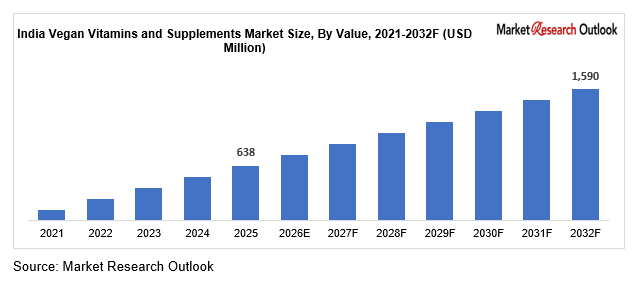
Vitamins currently lead the market because people commonly use them to support their daily supplement needs which help with immune function and overall health. The fitness industry and gut health knowledge expansion have created a growing market for Protein & Amino Acid Supplements and Probiotics & Prebiotics which now serve as the fastest growing segments. Herbal & Botanical Supplements maintain a strong market presence because they utilize India’s traditional Ayurvedic and natural health practices.
Related research: India Health and Wellness Food Market, India Clinical Nutrition for Diabetes Care Market and India Weight Loss and Obesity Management Market.
The competitive landscape is highly dynamic, with participation from nutraceutical companies, D2C startups, and global wellness brands. The FSSAI conducts regulatory oversight to verify that products meet their requirements for labeling, ingredient disclosure, and safety testing. The market will develop until 2032 through innovations that will create better bioavailability and personalized nutrition solutions and functional blends, which will make vegan supplements a central element of India’s developing wellness industry.
Market Drivers
The Plant-Based Shift: Rise of Vegan and Flexitarian Diets
India is experiencing a major increase in plant-based dietary adoption because people in India choose to follow plant-based diets for ethical reasons and for environmental benefits and for health improvements. The trend of vegan supplements now reaches beyond dedicated vegans because flexitarians who want better and more sustainable dietary choices also form part of the growing customer base.
The Preventive Health Movement: Focus on Immunity and Wellness
People show greater interest in health supplements after the pandemic because they want products that boost their immunity and support their gut health and overall wellness. Health-conscious consumers now prefer vegan products because they believe these formulations offer natural and safer benefits.
Market Challenges
Nutrient Bioavailability and Consumer Awareness
The main obstacle which prevents vegan supplements from functioning properly needs to be solved because it requires proper nutrient absorption which helps with Vitamin B12 and iron and omega-3 fatty acid delivery. The lack of consumer knowledge about suitable product formulations creates challenges for users who want to trust and use these products.
Premium Pricing and Market Accessibility
Vegan supplements cost more than standard products because their production requires special material sourcing and manufacturing methods. The premium product positioning restricts access to customers who have budget constraints in the Indian market.
Segmental Analysis
Vitamins dominate the Indian vegan vitamins and supplements marketbecause they function as essential components for daily health maintenanceand immune system protection. The market includes Minerals & Mineral Supplementsand Herbal & Botanical Supplementswhich hold substantial market shareswhile Protein & Amino Acid Supplementsand Probiotics & Prebiotics experience rapid market growthbecause more people learn about fitnessand gut health benefits. Algae-based Omega Fatty Acids have emerged as popular plant-based substitutes for fish oil products.
The market shows plant-based ingredients as the primary product because fermentation-derived supplements have gained popularity due to their improved absorption and sustainable nature. Algae and seaweed sources serve as the main provider of omega fatty acids, whereas fungi and mushroom-based products are becoming popular in specialized wellness markets.
Regional Analysis
The India vegan vitamins and supplements market is concentrated in urban centers, which makes West India the leading region for product adoption because its urban residents have higher disposable incomes and better access to wellness facilities. The area contains numerous gyms, which attract people who want to improve their health. South India is developing into a key expansion center because more people discover plant-based foods and health-oriented companies establish themselves in Bengaluru, Hyderabad, and Chennai. The population in the area demonstrates a strong preference for using online health services and online shopping platforms.
Recent Developments
- Innovation in Algae-Based Omega Products: On July 2025, Corbion, a sustainable ingredients company based in Amsterdam, received regulatory approval from China’s General Administration of Customs (GACC) for its algae-based omega-3 DHA products which now permit access to China’s growing animal nutrition market. The company also announced executive committee restructuring to enhance operational efficiency.
Key Market Players
- Himalaya Wellness Company
- Dabur India Ltd.
- Patanjali Ayurved Ltd.
- Amway India Enterprises Pvt. Ltd.
- Herbalife Nutrition India Pvt. Ltd.
- Abbott India Ltd.
- Nestlé India Ltd. (Health Science Division)
- OZiva (Zywie Ventures Pvt. Ltd.)
- HealthKart (Bright Lifecare Pvt. Ltd.)
- Carbamide Forte (Aimil Pharmaceuticals Pvt. Ltd.)
Segmentation
- Product Type
- Vitamins
- Minerals & Mineral Supplements
- Herbal & Botanical Supplements
- Protein & Amino Acid Supplements
- Omega Fatty Acids
- Probiotics & Prebiotics
- Others
- Source
- Plant-based
- Algae & Seaweed-based
- Fermentation-derived
- Fungi & Mushroom-based
- Others
- Form
- Tablets & Capsules
- Softgels & Gummies
- Powders
- Liquids & Drops
- Others
- Application
- General Wellness & Immunity
- Bone & Joint Health
- Sports & Performance Nutrition
- Weight Management
- Women’s Health
- Men’s Health
- Cognitive & Mental Health
- Others
- Packaging Type
- Bottles & Jars
- Blister Packs
- Sachets & Pouches
- Tubes
- Others
- End User
- Adults
- Geriatric Population
- Pregnant & Lactating Women
- Children & Teenagers
- Athletes & Fitness Enthusiasts
- Distribution Channel
- Pharmacies & Drug Stores
- Health Food Stores & Specialty Stores
- Supermarkets & Hypermarkets
- Online Retail / E-commerce
- Direct-to-Consumer (D2C)
- Others
- Region
- East India
- West India
- North India
- South India
Table of Contents:
- Executive Summary
- Research Methodology
- Report Scope
- Market Definition
- Inclusions & Exclusions
- Research Methodology
- India Vegan Vitamins and Supplements Market Overview
- Market Evolution in India
- Industry Value Chain Overview
- Ecosystem Mapping
- Pricing Analysis Overview
- Market Dynamics
- Drivers
- Challenges
- Opportunities
- Emerging Trends
- Market Attractiveness Index
- Consumer Behaviour Analysis
- Buying Patterns
- Price Sensitivity
- Urban vs Tier 2 Demand
- Policy & Regulatory Landscape
- India Vegan Vitamins and Supplements Market Outlook
- Market Size & Forecast, 2021-2032
- By Value
- By Volume
- Market Share & Forecast by Product Type
- Vitamins
- Minerals & Mineral Supplements
- Herbal & Botanical Supplements
- Protein & Amino Acid Supplements
- Omega Fatty Acids
- Probiotics & Prebiotics
- Others
- Market Share & Forecast by Source
- Plant-based
- Algae & Seaweed-based
- Fermentation-derived
- Fungi & Mushroom-based
- Others
- Market Share & Forecast by Form
- Tablets & Capsules
- Softgels & Gummies
- Powders
- Liquids & Drops
- Others
- Market Share & Forecast by Application
- General Wellness & Immunity
- Bone & Joint Health
- Sports & Performance Nutrition
- Weight Management
- Women’s Health
- Men’s Health
- Cognitive & Mental Health
- Others
- Market Share & Forecast by Packaging Type
- Bottles & Jars
- Blister Packs
- Sachets & Pouches
- Tubes
- Others
- Market Share & Forecast by End User
- Adults
- Geriatric Population
- Pregnant & Lactating Women
- Children & Teenagers
- Athletes & Fitness Enthusiasts
- Market Share & Forecast by Distribution Channel
- Pharmacies & Drug Stores
- Health Food Stores & Specialty Stores
- Supermarkets & Hypermarkets
- Online Retail / E-commerce
- Direct-to-Consumer (D2C)
- Others
- Market Share & Forecast by Region
- North India
- South India
- West India
- East India
- Market Size & Forecast, 2021-2032
- Competitive Landscape
- Market Share Analysis
- Competitive Benchmarking
- Company Profiles
- Product Portfolio Comparison
- Strategic Developments
- Strategic Recommendations
- Growth Strategies for New Entrants
- Expansion Strategies for Existing Players
- Investment Opportunities
Frequently Asked Questions
1. What is the projected market size of the India Vegan Vitamins and Supplements Market in 2025?
Ans: The India Vegan Vitamins and Supplements market is estimated to be valued at approximately USD 638 Million in 2025.
2. What is the expected growth rate (CAGR) of the India Vegan Vitamins and Supplements Market during the forecast period?
Ans: The market is expected to exhibit a robust CAGR of 14% during the forecast period between 2026 and 2032.
3. What is the forecast value of the India Vegan Vitamins and Supplements Market by 2032?
Ans: By the end of the strategic horizon in 2032, the India Vegan Vitamins and Supplements market is projected to reach a valuation of approximately USD 1,590 Million.
4. What are the major factors driving the growth of the India Vegan Vitamins and Supplements Market?
Ans: The growth of this market results from two factors which include rising public knowledge about plant-based diets and the increasing number of people who adopt vegan and flexitarian dietary patterns and the growing market demand for products with clear labeling and cruelty-free certification.
5. Name the key players operating in the India Vegan Vitamins and Supplements Market.
Ans: Prominent players shaping the Indian landscape include Himalaya Wellness Company, Dabur India Ltd., Patanjali Ayurved Ltd., Amway India Enterprises Pvt. Ltd., Herbalife Nutrition India Pvt. Ltd., Abbott India Ltd., Nestlé India Ltd. (Health Science Division), OZiva (Zywie Ventures Pvt. Ltd.), HealthKart (Bright Lifecare Pvt. Ltd.), Carbamide Forte (Aimil Pharmaceuticals Pvt. Ltd.), and other prominent players.
6. Which regions/cities are expected to lead the growth in the India Vegan Vitamins and Supplements Market?
Ans: The India vegan vitamins and supplements market is concentrated in urban centers, which makes West India the leading region for product adoption because its urban residents have higher disposable incomes and better access to wellness facilities.