

India Flavoured and Frozen Yoghurt Market, By Product Type (Flavoured Yoghurt, Frozen Yoghurt, Greek Yoghurt, Set Yoghurt, Drinking Yoghurt, Others); By Flavour (Strawberry, Mango, Blueberry, Vanilla, Mixed Fruit, Plain/Natural, Others); By Packaging Type (Cups & Tubs, Pouches, Bottles, Bulk Packaging, Others); By Application (Household Consumption, Food Processing Industry, Foodservice/HoReCa, Bakery & Confectionery, Others); By Distribution Channel (Supermarkets & Hypermarkets, Convenience Stores, Traditional Retail/Kirana Stores, Online Platforms, Specialty Stores, Others); By Trend Analysis, Competitive Landscape & Forecast, 2021–2032
- Food, Beverage & Nutrition
- Apr 2026
- Pages 120
- Report Format: pdf
- Report Price: $2500 USD
India Flavoured and Frozen Yoghurt Market, Forecasts 2032
Report Description
| Study Duration | 2021-2032 |
| Market Size (2025) | USD 3.98 Billion |
| CAGR (2026-2032) | 9.75% |
| Leading Segment | Flavoured Yoghurt |
| Fastest Growing Segment | Greek Yoghurt and Drinkable / Probiotic Yoghurt |
| Market Size (2032) | USD 6.96 Billion |
Market Overview
The India Flavoured and Frozen Yoghurt market has transitioned from a specialized dietary niche into a commercially significant USD 3.98 Billion industrial segment by the end of the 2032 strategic horizon. Having established a baseline valuation of USD 6.96 Billion in 2025, the market is currently expanding at a robust and consistent CAGR of 9.75%. This growth results from a major shift in consumer tastes which now considers yoghurt to be an adaptable food product that comes in various flavors and provides health benefits and indulgent eating options. The category expansion across India is being driven by three factors which include increased urban development and higher consumer spending and improved public knowledge about gut health.
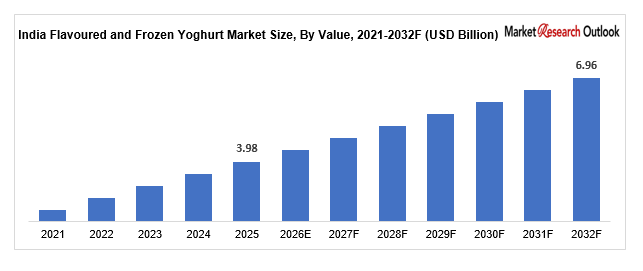
The market is currently controlled by Flavoured Yoghurt which serves as the main product link for customers because it can be found everywhere and people of all ages enjoy it. The two emerging product categories of Greek Yoghurt and Drinkable / Probiotic Yoghurt are expanding at the fastest rate because consumers seek products that provide high protein content and support gut health. Frozen Yoghurt is becoming more popular in cities because people view it as a healthier choice compared to ice cream. The development of new technologies for fermentation and flavor infusion together with cold-chain logistics improvements has enabled companies to produce better products which maintain consistent taste and extended shelf life for wider distribution.
The competitive landscape is witnessing gradual consolidation because major dairy cooperatives and private FMCG companies are expanding their value-added dairy product offerings. FSSAI regulations have improved probiotic labeling standards and nutritional content disclosure requirements, which has increased consumer trust. The market development until 2032 will focus on creating bio-fortified yoghurts that contain functional properties through vitamin and mineral and plant-based ingredient enhancements. Distribution networks are growing, and consumer lifestyles are changing, which will enable the category to sustain strong double-digit growth in its premium market segments.
Market Drivers
The Health Revolution: Probiotics and Protein Demand
In India people now recognize yoghurt as a superfood because they understand its benefits for gut health and immune system function. Consumers are increasingly seeking probiotic-rich and high-protein options such as Greek yoghurt and drinkable variants that align with fitness and wellness goals. Urban millennials and Gen Z consumers drive fast adoption of value-added yoghurt products because they prefer nutritional value over taste.
The Indulgence Factor: Dessert Replacement Trend
The product of frozen yoghurt and flavoured yoghurt has gained market advantages because customers view them as guilt-free treat options. Frozen yoghurt, which people now prefer, serves as a healthier choice that replaces regular ice cream while flavoured yoghurt functions as an easy-to-eat dessert and snack choice. The growth of QSR chains together with cafés and dessert parlors has made yoghurt-based treats common in society because people now consume them as regular food items instead of special products.
Market Challenges
Cold Chain Dependency: Infrastructure Constraints
Yoghurt products require specific temperature control throughout their entire supply chain process because frozen and probiotic yoghurt products need particular temperature requirements. The cold-chain systems of metro cities operate effectively yet Tier-2 and Tier-3 markets encounter infrastructure deficiencies that result in product spoilage and limited product distribution. The logistical problems create two negative effects for manufacturers because they prevent complete market expansion and raise their operating expenses.
Price Sensitivity vs Premium Positioning
The higher retail prices of flavored and functional yogurts make them less accessible to consumers who prioritize budget-friendly options because they cost more than regular yogurt. Greek and probiotic yogurts attract premium prices which restrict their usage by the general population. The market operators face a major obstacle because they need to close the pricing gap while they have to deliver products of high quality.
Segmental Analysis
The Indian frozen yoghurt market is dominated by Flavoured Yoghurt because it offers multiple taste options which attract a broad customer base. Urban dessert markets now include Frozen Yoghurt as an expanding segment while Greek Yoghurt and Drinkable / Probiotic Yoghurt sales increase because of rising health and fitness awareness. Set Yoghurt remains important because it connects traditional curd with contemporary yoghurt products.
By fat content, Full Fat yoghurt holds a significant share due to taste preference, but Low Fat and Non-Fat / Skimmed variants are witnessing increased demand among health-conscious consumers. The market benefits from packaging innovations because Cups and Tubs provide the highest convenience which makes them the leading product. The market for drinkable yogurt products follows Bottles and Tetra Packs as the second most popular packaging option. The QSR and dessert industry restaurants are starting to adopt Cones and Sticks which serve as exclusive products for frozen yogurt.
Regional Analysis
The Indian yoghurt market shows strong urban concentration because Mumbai and Pune in West India lead the country in adopting premium products and developing new products. The region’s developed retail systems and access to international food trends create a significant opportunity for flavoured and frozen yoghurt products. South India operates as the second largest market because its population consumes dairy products while they increasingly accept value-added dairy items. The health-focused population in Bengaluru and Hyderabad creates a new market for probiotic and Greek yoghurt products.
Recent Developments
- Product Innovation & Functional Expansion: Due to health concerns amongst consumers, leading brands have brought in products that are an amalgamation of probiotics, high proteins, and a spell of vitamin fortification in yogurts.
- Expansion of Cold Chain Infrastructure: Investments in refrigerated logistics and warehousing are enhancing product access to Tier 2 and Tier 3 towns.
- QSR & Café Collaborations: Attraction of frozen curds and related yoghurt goodies is being impelled by the moving partnerships between dairy brands and café chains.
Key Market Players
- Amul (GCMMF)
- Mother Dairy
- Nestlé India Ltd.
- Britannia Industries Ltd.
- Danone India
- Hatsun Agro Product Ltd. (Arokya)
- Milky Mist Dairy Food Pvt. Ltd.
- Epigamia (Drums Food International)
- Parag Milk Foods Ltd. (Gowardhan)
- Kwality Ltd.
Segmentation
- Product Type
- Flavoured Yoghurt
- Frozen Yoghurt
- Greek Yoghurt
- Drinkable / Probiotic Yoghurt
- Set Yoghurt
- Others
- Flavour
- Strawberry
- Mango
- Blueberry
- Vanilla
- Chocolate
- Mixed Fruit
- Others
- Fat Content
- Full Fat
- Low Fat
- Non-Fat / Skimmed
- Packaging Type
- Cups & Tubs
- Pouches & Sachets
- Bottles & Tetra Packs
- Cones & Sticks (Frozen)
- Others
- End User
- Household / Retail Consumers
- Foodservice & Restaurants
- QSR & Café Chains
- Bakery & Confectionery Manufacturers
- Distribution Channel
- Supermarkets & Hypermarkets
- Convenience Stores
- Specialty & Health Food Stores
- Online Retail / E-commerce
- Foodservice / Institutional Sales
- Region
- East India
- West India
- North India
- South India
Table of Contents:
- Executive Summary
- Research Methodology
- Report Scope
- Market Definition
- Inclusions & Exclusions
- Research Methodology
- India Flavoured and Frozen Yoghurt Market Overview
- Market Evolution in India
- Industry Value Chain Overview
- Ecosystem Mapping
- Pricing Analysis Overview
- Market Dynamics
- Drivers
- Challenges
- Opportunities
- Emerging Trends
- Market Attractiveness Index
- Consumer Behaviour Analysis
- Buying Patterns
- Price Sensitivity
- Urban vs Tier 2 Demand
- Policy & Regulatory Landscape
- India Flavoured and Frozen Yoghurt Market Outlook
- Market Size & Forecast, 2021-2032
- By Value
- By Volume
- Market Share & Forecast by Product Type
- Flavoured Yoghurt
- Frozen Yoghurt
- Greek Yoghurt
- Drinkable / Probiotic Yoghurt
- Set Yoghurt
- Others
- Market Share & Forecast by Flavour
- Strawberry
- Mango
- Blueberry
- Vanilla
- Chocolate
- Mixed Fruit
- Others
- Market Share & Forecast by Fat Content
- Full Fat
- Low Fat
- Non-Fat / Skimmed
- Market Share & Forecast by Packaging Type
- Cups & Tubs
- Pouches & Sachets
- Bottles & Tetra Packs
- Cones & Sticks (Frozen)
- Others
- Market Share & Forecast by End User
- Household / Retail Consumers
- Foodservice & Restaurants
- QSR & Café Chains
- Bakery & Confectionery Manufacturers
- Market Share & Forecast by Distribution Channel
- Supermarkets & Hypermarkets
- Convenience Stores
- Specialty & Health Food Stores
- Online Retail / E-commerce
- Foodservice / Institutional Sales
- Market Share & Forecast by Region
- East India
- West India
- North India
- South India
- Market Size & Forecast, 2021-2032
- Competitive Landscape
- Market Share Analysis
- Competitive Benchmarking
- Company Profiles
- Product Portfolio Comparison
- Strategic Developments
- Strategic Recommendations
- Growth Strategies for New Entrants
- Expansion Strategies for Existing Players
- Investment Opportunities
Frequently Asked Questions
1. What is the projected market size of the India Flavoured and Frozen Yoghurt Market in 2025?
Ans: The India Flavoured and Frozen Yoghurt market is estimated to be valued at approximately USD 3.98 Billion in 2025.
2. What is the expected growth rate (CAGR) of the India Flavoured and Frozen Yoghurt Market during the forecast period?
Ans: The market is expected to exhibit a robust CAGR of 9.75% during the forecast period between 2026 and 2032.
3. What is the forecast value of the India Flavoured and Frozen Yoghurt Market by 2032?
Ans: By the end of the strategic horizon in 2032, the India Flavoured and Frozen Yoghurt market is projected to reach a valuation of approximately USD 6.96 Billion.
4. What are the major factors driving the growth of the India Flavoured and Frozen Yoghurt Market?
Ans: This growth results from a major shift in consumer tastes which now considers yoghurt to be an adaptable food product that comes in various flavors and provides health benefits and indulgent eating options.
5. Name the key players operating in the India Flavoured and Frozen Yoghurt Market.
Ans: Prominent players shaping the Indian landscape include Amul (GCMMF), Mother Dairy, Nestlé India Ltd., Britannia Industries Ltd., Danone India, Hatsun Agro Product Ltd. (Arokya), Milky Mist Dairy Food Pvt. Ltd., Epigamia (Drums Food International), Parag Milk Foods Ltd. (Gowardhan), Kwality Ltd., and other prominent players.
6. Which regions/cities are expected to lead the growth in the India Flavoured and Frozen Yoghurt Market?
Ans: The Indian yoghurt market shows strong urban concentration because Mumbai and Pune in West India lead the country in adopting premium products and developing new products.
Frequently Asked Questions
1. What is the projected market size of the India Flavoured and Frozen Yoghurt Market in 2025?
Ans: The India Flavoured and Frozen Yoghurt market is estimated to be valued at approximately USD 3.98 Billion in 2025.
2. What is the expected growth rate (CAGR) of the India Flavoured and Frozen Yoghurt Market during the forecast period?
Ans: The market is expected to exhibit a robust CAGR of 9.75% during the forecast period between 2026 and 2032.
3. What is the forecast value of the India Flavoured and Frozen Yoghurt Market by 2032?
Ans: By the end of the strategic horizon in 2032, the India Flavoured and Frozen Yoghurt market is projected to reach a valuation of approximately USD 6.96 Billion.
4. What are the major factors driving the growth of the India Flavoured and Frozen Yoghurt Market?
Ans: This growth results from a major shift in consumer tastes which now considers yoghurt to be an adaptable food product that comes in various flavors and provides health benefits and indulgent eating options.
5. Name the key players operating in the India Flavoured and Frozen Yoghurt Market.
Ans: Prominent players shaping the Indian landscape include Amul (GCMMF), Mother Dairy, Nestlé India Ltd., Britannia Industries Ltd., Danone India, Hatsun Agro Product Ltd. (Arokya), Milky Mist Dairy Food Pvt. Ltd., Epigamia (Drums Food International), Parag Milk Foods Ltd. (Gowardhan), Kwality Ltd., and other prominent players.
6. Which regions/cities are expected to lead the growth in the India Flavoured and Frozen Yoghurt Market?
Ans: The Indian yoghurt market shows strong urban concentration because Mumbai and Pune in West India lead the country in adopting premium products and developing new products.