

India Battery Energy Storage System (BESS) Market, By Battery Type (Lithium-ion Batteries, Lead-acid Batteries, Sodium-ion Batteries, Flow Batteries and Others); By Power Rating (Below 1 MW, 1–10 MW, 10–50 MW, Above 50 MW ); By Energy Capacity (Below 10 MWh, 10–50 MWh, 50–200 MWh, Above 200 MWh); By End User (Utilities & Grid Operators, Commercial & Industrial (C&I), Residential, EV Charging Station Operators, Government & Defense ); By Trend Analysis, Competitive Landscape & Forecast, 2021-2032
- Energy and Power
- Feb 2026
- Pages 250
- Report Format: pdf
- Report Price: $2500 USD
India Battery Energy Storage System (BESS) Market, Size & Forecast 2021-2032
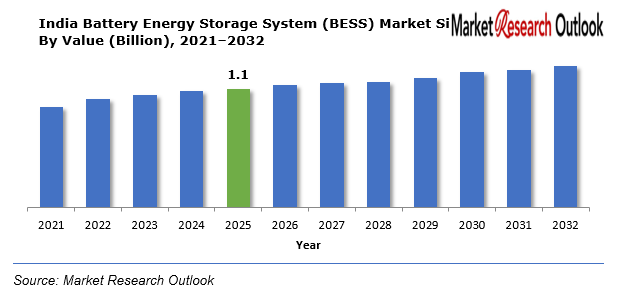
The India Battery Energy Storage System (BESS) Market size was estimated at USD 1.1 Billion in 2025. During the forecast period, the India Battery Energy Storage System (BESS) Market size is projected to grow at a CAGR of 30.2% reaching a value of USD 6.8 Billion by 2032. The Indian Battery Energy Storage System market experiences continuous expansion because renewable energy capacity increases and grid flexibility requirements grow. Utilities and grid operators implement BESS systems because solar and wind energy sources create intermittent power supply problems which require frequency control and peak power reduction and load management solutions. The increasing need for energy storage systems emerges from rising electricity consumption which results from urban growth and industrial development and data center operations. Market expansion receives a boost from government programs and regulatory changes which create more favorable conditions for business development. The PLI scheme provides domestic battery manufacturing incentives and renewable-plus-storage tenders and viability gap funding support which help projects achieve better financial results and attract private sector investment.
Battery Energy Storage System (BESS) – Overview
A Battery Energy Storage System (BESS) functions as a complete energy storage system which stores electrical power in batteries and uses it to enhance the operational reliability of power systems while boosting their performance and operational flexibility. The system operates through a combination of battery cells and battery management systems (BMS) and power conversion systems which include inverters and energy management software and safety components to perform controlled electricity charging and storage and discharging operations. BESS serves multiple purposes in power systems by maintaining electricity supply and demand equilibrium while boosting grid stability and enabling renewable energy source integration through solar and wind power and delivering services such as peak shaving and frequency regulation and backup power and load shifting.
India Battery Energy Storage System (BESS) Market
Growth Drivers
Rapid Expansion of Renewable Energy Capacity
The Battery Energy Storage System (BESS) market in India experiences growth because of the increased development of renewable energy capacity. The increased use of solar and wind power leads to unpredictable electricity production which makes it difficult to maintain grid stability and match supply with demand. BESS helps address these challenges by storing excess renewable energy during periods of high generation and discharging it during peak demand or low generation periods, ensuring reliable and continuous power supply. As India moves closer to achieving its clean energy goals utilities and grid operators start to combine energy storage systems with renewable energy projects to support frequency control and peak demand reduction and deliver continuous power from renewable sources. The rising need for storage solutions to handle intermittent power supply and improve grid operational flexibility creates increased demand for BESS systems in both utility-scale and commercial use cases.
Challenges
High upfront Cost
The Battery Energy Storage System (BESS) market in India faces its most significant hurdle from the requirement of high upfront capital expenses. Battery system costs have decreased over time yet customers still need to make a substantial initial investment to acquire battery systems power conversion equipment control software and safety infrastructure. The requirement for high capital expenses restrains market entry, which affects smaller utilities and commercial users and projects that have limited funding capacity. The cost problem becomes more severe because of extended payback durations and unpredictable revenue flows from grid services. Investors face difficulty in backing extensive initial investments because ancillary service markets and long-term tariff systems lack proper development. The high capital expenses continue to impede BESS adoption despite the market showing strong potential for future growth.
Geopolitical Impact on India Battery Energy Storage System (BESS) Market
The India Battery Energy Storage System market experiences a major influence from geopolitical elements which determine both the supply chain and pricing structure and safety measures for essential battery materials and technologies. India relies heavily on imports for key raw materials such as lithium, cobalt, nickel, and advanced battery cells, much of which are sourced from geopolitically sensitive regions. Trade restrictions, diplomatic tensions, or export controls in these regions create supply chain disruptions which result in BESS project execution delays and price fluctuations. Global geopolitical tensions create barriers which limit technology access and investment opportunities especially in advanced battery manufacturing and energy storage system sectors. The combination of changing trade policies and sanctions together with shifting geopolitical alliances creates higher procurement risks and increased logistics expenses for Indian developers and integrators.
India Battery Energy Storage System (BESS) Market
Segmental Coverage
India Battery Energy Storage System (BESS) Market – By Battery Type
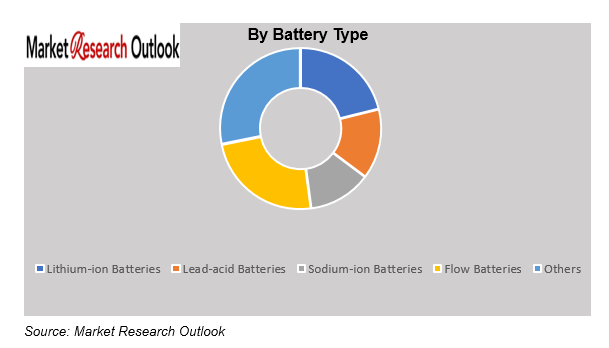
Based on battery type, the India Battery Energy Storage System (BESS) Market is segmented into Lithium-ion Batteries, Lead-acid Batteries, Sodium-ion Batteries, Flow Batteries and Others). The India Battery Energy Storage System market through its lithium-ion batteries segment has become its most rapidly expanding section because of its advanced performance traits and reducing operational costs. Lithium-ion batteries provide superior energy storage capacity together with immediate power delivery and extended operational lifespan and efficient energy use during the charging and discharging process which makes them ideal for both utility-scale and commercial use. The segment shows strong growth for lithium iron phosphate LFP batteries because they provide better safety features together with improved thermal protection and reduced dependence on essential minerals like cobalt and nickel. As battery costs decrease and large-scale renewable energy storage systems become more common, lithium-ion technology has emerged as the primary solution for grid stabilization and peak shaving and renewable energy integration, which drives its rapid expansion in the Indian BESS industry.
India Battery Energy Storage System (BESS) Market – By End User
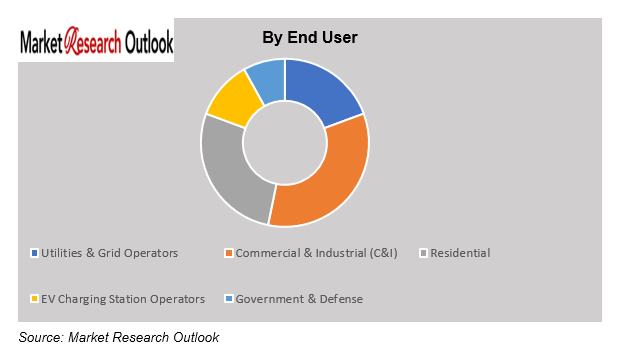
Based on end user, the India Battery Energy Storage System (BESS) Market is segmented into Utilities & Grid Operators, Commercial & Industrial (C&I), Residential, EV Charging Station Operators, Government & Defense. The India Battery Energy Storage System market experiences rapid growth through its utilities and grid operators segment because of rising requirements to keep electricity networks stable as more renewable energy sources are integrated. Utilities use battery energy storage systems to handle power interruptions and maintain frequency control while providing reliable electricity during times of highest demand. People now consider energy storage to be an essential component of electricity grids instead of a secondary system.
Competitive Landscape
Key participants in the India Battery Energy Storage System (BESS) market include Tata Power, Exide Industries Ltd., Amara Raja Energy & Mobility Ltd., Reliance Industries Ltd. (Reliance New Energy), AES–Fluence India, Nexcharge, Wärtsilä India, Delta Electronics, Sungrow
and Other Prominent Players.
These companies are implementing strategic growth initiatives in order to gain a competitive advantage. The strategies being largely adopted include mergers and acquisitions, strategic alliances, joint ventures, licensing agreements, and new product launches. With the implementation of these strategies, the market participants aim to increase product portfolios, as well as enhance regional presence for long-term sustainable business growth in the Battery Energy Storage System (BESS) industry of India.
Scope of the Report
| Attributes | Details |
| Years Considered | Historical Data – 2021–2025
Base Year – 2025 Estimated Year – 2026 Forecast Period – 2026–2032 |
| Facts Covered | Revenue in USD Billion |
| Market Coverage | India |
| Product/ Service Segmentation | Battery Type, Power Rating, Energy Capacity, End User |
| Key Players | Tata Power, Exide Industries Ltd., Amara Raja Energy & Mobility Ltd., Reliance Industries Ltd. (Reliance New Energy), AES–Fluence India, Nexcharge, Wärtsilä India, Delta Electronics, Sungrow and Other Prominent Players. |
Market Segmentation
- By Battery Type
- Lithium-ion Batteries
- Lead-acid Batteries
- Sodium-ion Batteries
- Flow Batteries
- Others
- By Power Rating
- Below 1 MW
- 1–10 MW
- 10–50 MW
- Above 50 MW
- By Energy Capacity
- Below 10 MWh
- 10–50 MWh
- 50–200 MWh
- Above 200 MWh
- By End User
- Utilities & Grid Operators
- Commercial & Industrial (C&I)
- Residential
- EV Charging Station Operators
- Government & Defense
- Research Framework
- Research Objective
- Product Overview
- Market Segmentation
- Executive Summary
- India Battery Energy Storage System (BESS) Market Insights
- DROC Analysis
- Growth Drivers
- Restraints
- Opportunities
- Challenges
- Technological Advancements/Recent Developments
- Porter’s Five Forces Analysis
- Industry Value Chain & Entry Points
- India Battery Energy Storage System (BESS) Market: Regulatory Framework
- India Battery Energy Storage System (BESS) Market: Marketing Strategies
- India Battery Energy Storage System (BESS) Market Overview
- Market Size & Forecast, 2021-2032
- By Value (USD Million)
- Market Share & Forecast
- By Battery Type
- Lithium-ion Batteries
- Lead-acid Batteries
- Sodium-ion Batteries
- Flow Batteries
- Others
- By Power Rating
- Below 1 MW
- 1–10 MW
- 10–50 MW
- Above 50 MW
- By Energy Capacity
- Below 10 MWh
- 10–50 MWh
- 50–200 MWh
- Above 200 MWh
- By End User
- Utilities & Grid Operators
- Commercial & Industrial (C&I)
- Residential
- EV Charging Station Operators
- Government & Defense
- By Battery Type
- Market Size & Forecast, 2021-2032
- Demand Outlook & Customer Adoption Dynamics
- Demand Evolution by End-Use Industry
- Purchasing Behavior & Supplier Selection Criteria
- Demand Visibility & Contracting Trends
- Regional Demand Concentration & Customer Clusters
- Competitive Landscape
- List of Key Players and Their Offerings
- India Battery Energy Storage System (BESS) Company Market Share Analysis, 2025
- Competitive Benchmarking, By Operating Parameters
- Key Strategic Development (Mergers, Acquisitions, Partnerships, etc.)
- Geopolitical Impact on India Battery Energy Storage System (BESS) Market
- Company Profile
- Tata Power
- Introduction & Company Profile
- Product Benchmarking
- Strategic Outlook
- Key Personals
- Key Competitors
- Financial Analysis
- SWOT Analysis
- Tata Power
**(same data pointers will be provided for the below companies)
- Exide Industries Ltd.
- Amara Raja Energy & Mobility Ltd.
- Reliance Industries Ltd. (Reliance New Energy)
- AES–Fluence India
- Nexcharge
- Wärtsilä India
- Delta Electronics
- Sungrow
- Other Prominent Players
- Key Strategic Recommendations
- Research Methodology
- Qualitative Research
- Primary & Secondary Research
- Quantitative Research
- Market Breakdown & Data Triangulation
- Secondary Research
- Primary Research
- Breakdown of Primary Research Respondents, By Country
- Assumption & Limitation
- Qualitative Research
* Financial information in case of non-listed companies will be provided as per availability
**The segmentation and the companies are subjected to modifications based on in-depth secondary for the final deliverable
Frequently Asked Questions
1. What is the expected growth rate of the India Battery Energy Storage System (BESS) Market during the forecast period?
Ans: The India Battery Energy Storage System (BESS) Market size was estimated at USD 1.1 billion in 2025.
2. What is the expected growth rate of the India Battery Energy Storage System (BESS) Market during the forecast period?
Ans: India Battery Energy Storage System (BESS) Market is expected to grow at a CAGR of around 30.2% during the forecast period between 2026 and 2032.
3. What is the forecast value of the India Battery Energy Storage System (BESS) Market by 2032?
Ans: The India Battery Energy Storage System (BESS) Market is projected to reach a value of approximately USD 6.8 billion by 2032.
4. What are the major factors driving the growth of the India Battery Energy Storage System (BESS) Market?
Ans: The Indian Battery Energy Storage System market experiences continuous expansion because renewable energy capacity increases and grid flexibility requirements grow. Utilities and grid operators implement BESS systems because solar and wind energy sources create intermittent power supply problems which require frequency control and peak power reduction and load management solutions.
5. Name the key players operating in the India Battery Energy Storage System (BESS) Market.
Ans: The key players of India Battery Energy Storage System (BESS) Market are Tata Power, Exide Industries Ltd., Amara Raja Energy & Mobility Ltd., Reliance Industries Ltd. (Reliance New Energy), AES–Fluence India, Nexcharge, Wärtsilä India, Delta Electronics, Sungrow and Other Prominent Players.
6. Which is the fastest-growing battery type segment in the India Battery Energy Storage System (BESS) Market?
Ans: The India Battery Energy Storage System market through its lithium-ion batteries segment has become its most rapidly expanding section because of its advanced performance traits and reducing operational costs. Lithium-ion batteries provide superior energy storage capacity together with immediate power delivery and extended operational lifespan and efficient energy use during the charging and discharging process which makes them ideal for both utility-scale and commercial use.
Frequently Asked Questions
1. What is the expected growth rate of the India Battery Energy Storage System (BESS) Market during the forecast period?
Ans: The India Battery Energy Storage System (BESS) Market size was estimated at USD 1.1 billion in 2025.
2. What is the expected growth rate of the India Battery Energy Storage System (BESS) Market during the forecast period?
Ans: India Battery Energy Storage System (BESS) Market is expected to grow at a CAGR of around 30.2% during the forecast period between 2026 and 2032.
3. What is the forecast value of the India Battery Energy Storage System (BESS) Market by 2032?
Ans: The India Battery Energy Storage System (BESS) Market is projected to reach a value of approximately USD 6.8 billion by 2032.
4. What are the major factors driving the growth of the India Battery Energy Storage System (BESS) Market?
Ans: The Indian Battery Energy Storage System market experiences continuous expansion because renewable energy capacity increases and grid flexibility requirements grow. Utilities and grid operators implement BESS systems because solar and wind energy sources create intermittent power supply problems which require frequency control and peak power reduction and load management solutions.
5. Name the key players operating in the India Battery Energy Storage System (BESS) Market.
Ans: The key players of India Battery Energy Storage System (BESS) Market are Tata Power, Exide Industries Ltd., Amara Raja Energy & Mobility Ltd., Reliance Industries Ltd. (Reliance New Energy), AES–Fluence India, Nexcharge, Wärtsilä India, Delta Electronics, Sungrow and Other Prominent Players.
6. Which is the fastest-growing battery type segment in the India Battery Energy Storage System (BESS) Market?
Ans: The India Battery Energy Storage System market through its lithium-ion batteries segment has become its most rapidly expanding section because of its advanced performance traits and reducing operational costs. Lithium-ion batteries provide superior energy storage capacity together with immediate power delivery and extended operational lifespan and efficient energy use during the charging and discharging process which makes them ideal for both utility-scale and commercial use.