

Global Green Ammonia Market Size- By Technology (Alkaline Water Electrolysis, Proton Exchange Membrane (PEM) Electrolysis, Solid Oxide Electrolysis), By Production Method (Electrolysis Based Production, Biomass Gasification, Biogas Based Production), By End User Industry (Agriculture, Power Generation, Chemical Industry, industrial Applications, Others), By Geography (North America, Asia Pacific, Europe, Latin America and Middle East and Africa), By Trend Analysis, Competitive Landscape & Forecast, 2026–2032 – Industry Trends and Forecast to 2032
- Chemicals & Advanced Materials
- Jan 2026
- Pages 250
- Report Format: pdf
- Report Price: $3500 USD
Global Green Ammonia Market Analysis
The global green ammonia market is likely to grow significantly in the coming years, increasing from USD 3000 Million in 2025 to about USD 35000 Million in 2032 with a CAGR of around 7.5% during the forecast period between 2026 and 2032. This growth is expected to be fueled by a high compound annual growth rate of over 40%. This is due to the increasing need for zero-carbon fuels and feedstocks in industries such as fertilizers, power generation, shipping, aviation, and heavy industries. This is further driven by the global net-zero emissions targets and the expansion of hydrogen economies. At present, renewable-powered electrolysis is estimated to account for over 90% of production pathways, compared to biomass gasification in terms of efficiency and scalability, especially in Europe and Australia. Additionally, the policies in place, such as production tax credits, carbon pricing, and shipping fuel mandates, as well as the plummeting costs of electrolyzers by 60% since 2020 and recent developments in large-scale renewable energy integration, and emerging export platforms in the Middle East and Latin America, will boost the use of green ammonia for energy storage.
Global Green Ammonia Market Overview
Market Trends
- The market is moving from pilot projects to large-scale commercial production due to increased investments and global cooperation. Green ammonia is becoming increasingly important as a clean fuel and hydrogen transport media, especially in shipping and power markets. Its expanding use beyond fertilizers is helping it become more important in the global energy transition and its long-term market potential.
- Global attention to decarbonization and net-zero targets is a significant driver for market growth. It is being actively pursued by governments and industries as a low-carbon alternative to fossil fuels. Moreover, favourable policies and subsidies, and increased demand for green hydrogen, are also some of the major factors which are expected to drive market growth.
- High production costs and infrastructure challenges are significant challenges hindering market growth. The production cost of green ammonia is high due to expensive renewable energy and electrolyzer technologies required in its production. It is less competitive compared to conventional ammonia production. Furthermore, insufficient storage and transportation facilities and safety issues in dealing with ammonia are also challenges the market growth.
Geopolitical Impact on Global Green Ammonia Market
Geopolitical tensions have a significant impact on the global green ammonia market as they affect traditional supply chains and accelerate the transition to green energy. The ongoing conflict in the Middle East has reduced traditional ammonia exports by 23% from the region or 4.2 million tonnes in 2025. The conflict in Ukraine and Russia due to the ongoing war has halted Ukrainian exports and damaged Russian plants such as Nevinnomyssk Azot due to drone strikes. This has forced Europe to turn to green ammonia for energy security due to curbs on natural gas.US tariffs have increased costs for imported equipment for electrolyzers and renewable energy by 15-20%. This has forced the US to turn to blue and green energy production while making Latin America and India key low-risk export centers. China’s plans for 26+ green energy projects aim to export them despite challenges in the local market. Trade barriers may lead to an oversupply or delay in exports. These factors, coupled with EU carbon border taxes that add $75/tonne, have forced the global market to diversify supply. However, this makes the market volatile as prices have risen to $590/tonne in March 2026.
| Attributes | Details |
| Years Considered | Historical Data – 2021–2025
Base Year – 2025 Forecast Period – 2026–2032 |
| Facts Covered | Revenue in USD Million |
| Market Coverage | · North America (U.S. and Canada)
· Asia Pacific (China, India, Indonesia, Japan, South Korea, Australia, Malaysia, Rest of Asia Pacific) · Europe (Germany, United Kingdom, France, Italy, Russia, Spain, NORDIC, Rest of Europe) · Latin America (Mexico, Argentina, Brazil, Rest of Latin America) · Middle East and Africa (Israel, GCC, North Africa, South Africa, Rest of the Middle East and Africa) |
| Segmentation | By Technology, By Production Method, By End User Industry |
Global Green Ammonia Market: Segmentation Coverage
By Technology
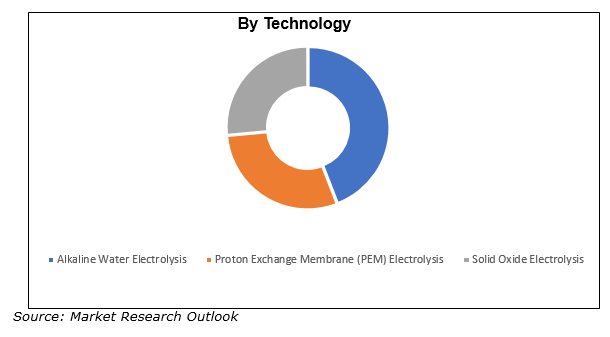
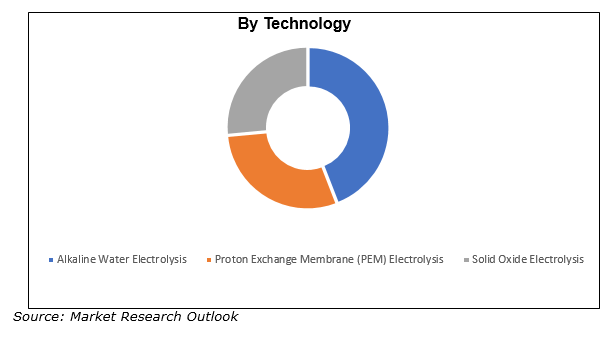
The global green ammonia market is classified in terms of technology into Alkaline Water Electrolysis, Proton Exchange Membrane (PEM) Electrolysis, and Solid Oxide Electrolysis. Among these, the alkaline water electrolysis technology is expected to grow significantly during projected period as it is commonly used for the production of green ammonia on a large scale. This is because the process is reliable and has a lower operating cost. The PEM electrolysis process is also gaining popularity in the global green ammonia market. This is because the process is more efficient and has a rapid response to changes in the supply of renewable energy. Therefore, it is widely used in combination with solar and wind power generation. The emerging Solid Oxide Electrolysis process is energy-efficient and uses low water, making it an ideal option for the production of green ammonia in large-scale industrial applications.
By Production Method
Based on production method, the market is segmented into electrolysis-based production, biomass gasification, and biogas-based production. Among these segments, electrolysis-based production is leading the growth in the market due to its ability to produce green ammonia using renewable electricity sources. This helps in reducing the overall carbon footprint to near zero. Biomass gasification is another segment gaining importance in the global ammonia production market due to its ability to convert biomass into hydrogen and nitrogen for ammonia production, thus reducing waste disposal problems in agricultural surplus countries. Biogas-based production is another segment gaining importance in the global ammonia production market due to its ability to produce hydrogen for ammonia production using biogas generated through anaerobic degradation of organic waste matter.
Regional Analysis
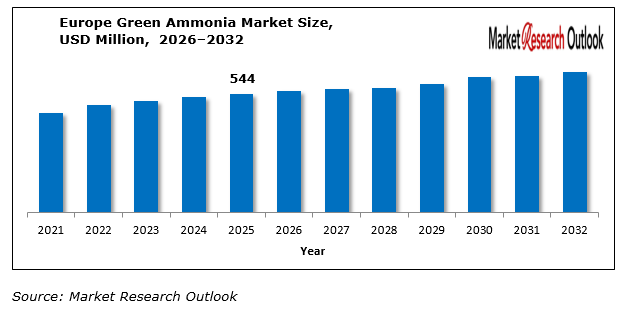
On the basis of region, the global green ammonia market is divided into regions such as North America, Europe, Asia Pacific, Latin America, and Middle East & Africa. Europe is expected to hold the highest share in the green ammonia market. The growth of the region is driven by supportive policies, such as the European Green Deal and the commitment to achieving a net-zero target by 2050. Germany is a leader in investing in green hydrogen, and the UK is experiencing rapid growth with innovations in renewable energy. Europe is also seeing supportive policies from governments, providing subsidies for electrolysis infrastructure, as well as carbon border adjustment mechanisms. The agricultural sector is the largest user of green ammonia, mainly for fertilizers, but transportation, especially maritime, is also a growing segment. The growth of demand from industries, as well as energy, is a key factor for Europe, as it is a crucial region for the transition to a more sustainable production of ammonia. Investments in green technologies will continue to grow, and Europe is expected to remain a leader in the global green ammonia market.
Recent Developments
- In March 2026- India’s Reliance Industries (RELI.NS), opens new tab said on Monday it had signed a binding agreement with Samsung C&T (028260.KS), opens new tab, an affiliate of South Korea’s Samsung Group, to provide it with green ammonia for 15 years in a deal worth more than $3 billion. The supply under the agreement is expected to commence in the second half of fiscal year 2029, the Indian conglomerate said in an exchange filing. The deal, one of the largest long-term green ammonia offtake agreements, comes as countries such as Japan and South Korea look for alternative energy sources.
- In August 2025- L&T Energy GreenTech Ltd (LTEG) has signed a Joint Development Agreement with ITOCHU Corporation of Japan for the development and commercialization of a 300 KTPA green ammonia project at Kandla in the state of Gujarat. The agreement involves the development of the green ammonia project by LTEG and ITOCHU. ITOCHU intends to use the green ammonia produced for bunkering purposes in Singapore. This is a major milestone in the development of clean and green energy solutions for the maritime industry.
- In April 2024- North American clean ammonia producers are eyeing exports to Europe, with project developers taking advantage of US Inflation Reduction Act subsidies and other support to position themselves competitively in the global supply space. The US Gulf Coast was the lowest cost supply center for renewable ammonia to Europe, with calculated costs of production for delivery to Northwest Europe averaging $1,048/mt in March, the Platts Interactive Ammonia Price Chart shows.
Competitive Landscape
In the competitive landscape of the global green ammonia market, the organisation has covered major players of the market and their details.
Here are some of the leading players that are playing a major role in the global green ammonia market:
- Siemens AG
- Introduction & Company Profile
- Product Benchmarking
- Strategic Outlook
- Key Competitors
- Financial Analysis
- Swot Analysis
**(Same Data Pointers Will Be Provided for The Below Companies)
- ThyssenKrupp AG
- Nel ASA
- GreenHydrogen ApS
- Enapter S.r.l.
- Starfire Energy Inc.
- ENGIE SA
- Yara International
- Haldor Topsoe A/S
- ITM Power
- Other Prominent Players
Segments
- By Technology
- Alkaline Water Electrolysis
- Proton Exchange Membrane (PEM) Electrolysis
- Solid Oxide Electrolysis
- By Production Method
- Electrolysis Based Production
- Biomass Gasification
- Biogas Based Production
- By End User Industry
- Agriculture
- Nitrogen Fertilizers
- Sustainable Fertilizer Production
- Power Generation
- Gas Turbine Power Plants
- Energy Storage Systems
- Co firing in Thermal Power Plants
- Chemical Industry
- Nitric Acid Production
- Industrial Chemical Feedstock
- industrial Applications
- Refrigeration
- industrial Fuel Use
- Others
By Geography
- North America
- S.
- Canada
- Asia Pacific
- China
- India
- Australia
- Indonesia
- Japan
- South Korea
- Malaysia
- Thailand
- Rest of Asia Pacific
- Europe
- Germany
- United Kingdom
- France
- Italy
- Russia
- Spain
- Netherlands
- Rest of Europe
- Latin America
- Mexico
- Argentina
- Brazil
- Rest of Latin America
- Middle East and Africa
- Israel
- Saudi Arabia
- UAE
- Qatar
- North Africa
- South Africa
- Rest of the Middle East and Africa
- Research Framework
- Market Segmentation
- Research Objective
- Research Methodology
- Qualitative Research
- Primary Research
- Secondary Research
- Quantitative Research
- Market Breakdown & Data Triangulation
- Demand Side
- Supply Side
- Breakdown Of Primary Research Respondents, By Region
- North America
- Europe
- Asia Pacific
- Latin America
- Middle East and Africa
- Assumption & Limitation
- Qualitative Research
- Executive Summary
- Market Overview, 2021–2032
- By Technology
- By Production Method
- By End User Industry
- By Geography
- Analyst Recommendations
- Market Overview, 2021–2032
- Geopolitical Impact on Global Green Ammonia Market
- Global Green Ammonia Market Insights
- Market Dynamics
- Growth Drivers
- increasing demand for sustainable fertilizers in agriculture
- Growing focus on decarbonization in shipping and power generation
- Rising investments in renewable hydrogen and green ammonia production
- Restraints
- High production cost of green ammonia compared to conventional ammonia
- Limited infrastructure for storage and transportation
- Dependence on renewable electricity availability
- Opportunities
- Increasing adoption of ammonia as a carbon free fuel
- Government support for green hydrogen and ammonia projects
- Growing demand from marine fuel and power sectors
- Challenges
- Technology scalability and efficiency limitations
- Safety and handling concerns related to ammonia storage
- Lack of standardized global regulatory frameworks
- Technological Advancements
- Recent Technological Advancements
- Prior to 2020
- Porter’s Five Forces Analysis
- PESTLE Analysis
- Trade Analysis
- Top 3 Importing Countries
- Top 3 Exporting Countries
- Growth Drivers
- Market Dynamics
- Industry Value Chain & Entry Points
- Renewable Energy Supply
- Hydrogen Production through Electrolysis
- Ammonia Synthesis
- Storage and Transportation
- Distribution Infrastructure
- End Use Applications
- Global Green Ammonia Market: Regulatory Framework
- North America
- Europe
- Asia Pacific
- Latin America
- Middle East and Africa
- Global Green Ammonia Market Overview
- Market Size & Forecast, 2021-2032
- By Value (USD Million)
- By Volume (Million Tons)
- Market Share & Forecast
- By Technology
- Alkaline Water Electrolysis
- Proton Exchange Membrane (PEM) Electrolysis
- Solid Oxide Electrolysis
- By Production Method
- Electrolysis Based Production
- Biomass Gasification
- Biogas Based Production
- By End User Industry
- Agriculture
- Nitrogen Fertilizers
- Sustainable Fertilizer Production
- Power Generation
- Gas Turbine Power Plants
- Energy Storage Systems
- Co firing in Thermal Power Plants
- Chemical Industry
- Nitric Acid Production
- Industrial Chemical Feedstock
- industrial Applications
- Refrigeration
- industrial Fuel Use
- Others
- Agriculture
- By Geography
- North America
- S.
- Canada
- Asia Pacific
- China
- India
- Australia
- Indonesia
- Japan
- South Korea
- Malaysia
- Thailand
- Rest of Asia Pacific
- Europe
- Germany
- United Kingdom
- France
- Italy
- Russia
- Spain
- Netherlands
- Rest of Europe
- Latin America
- Mexico
- Argentina
- Brazil
- Rest of Latin America
- Middle East and Africa
- Israel
- Saudi Arabia
- UAE
- Qatar
- North Africa
- South Africa
- Rest of the Middle East and Africa
- North America
- By Technology
- Market Size & Forecast, 2021-2032
- Competitive Landscape
- Global Green Ammonia Company Market Share Analysis, 2026
- By Region
- North America
- Europe
- Asia Pacific
- Latin America
- Middle East and Africa
- Competitive Benchmarking, By Operating Parameters
- Key Strategic Development (Mergers, Acquisitions, Partnerships, Etc.)
- List of Emerging players
- By Region
- Global Green Ammonia Company Market Share Analysis, 2026
- Company Profile
- Siemens AG
- Introduction & Company Profile
- Product Benchmarking
- Strategic Outlook
- Key Competitors
- Financial Analysis
- Swot Analysis
- Siemens AG
**(Same Data Pointers Will Be Provided for The Below Companies)
- ThyssenKrupp AG
- Nel ASA
- GreenHydrogen ApS
- Enapter S.r.l.
- Starfire Energy Inc.
- ENGIE SA
- Yara International
- Haldor Topsoe A/S
- ITM Power
- Other Prominent Players
* Financial information in case of non-listed companies will be provided as per availability
**The segmentation and the companies are subjected to modifications based on in-depth secondary for the final deliverable
Frequently Asked Questions
1. What is the current market size of the Global Green Ammonia Market?
Ans: The Global Green Ammonia Market size by value was estimated at around USD 0.35 billion in 2025, driven by early-stage commercialization, pilot-scale projects, and initial large-scale capacity announcements across key regions.
2. What is the expected growth rate of the Global Green Ammonia Market by value during the forecast period?
Ans: The Global Green Ammonia Market is expected to grow at a strong CAGR of approximately 60% during the forecast period between 2026 and 2031, supported by rapid capacity additions and increasing policy support for low-carbon fuels.
3. What is the forecast value of the Global Green Ammonia Market size by the end of the forecast period?
Ans: By 2031, the Global Green Ammonia Market size is forecast to reach USD 30–35 billion, as multiple large-scale green ammonia projects move from development to commercial operations.
4. What are the major factors driving the growth of the Global Green Ammonia Market?
Ans: The growth of the Global Green Ammonia Market is primarily driven by global decarbonization targets, rising adoption of green hydrogen derivatives, increasing demand for low-carbon fertilizers, growing interest in green ammonia as a shipping fuel and energy carrier, and strong government incentives, subsidies, and long-term offtake agreements supporting clean energy transition.
5. Name the key players in the Global Green Ammonia Market.
Ans: Key players operating in the Global Green Ammonia Market include Yara International, CF Industries, OCI Global, Fertiglobe, Saudi Aramco, ACWA Power, Ørsted, Siemens Energy, thyssenkrupp Uhde, Nel ASA, Air Products & Chemicals, Linde plc, Iberdrola, TotalEnergies, and Engie, among others.
6. Which is a faster-growing segment in the Global Green Ammonia Market by production technology?
Ans: The PEM electrolysis-based green ammonia segment is expected to grow at a faster CAGR during the forecast period, driven by its operational flexibility, compatibility with variable renewable energy sources, and increasing deployment in large-scale renewable-integrated projects, while SOEC-based technologies are expected to gain traction post-2030 as commercialization advances.
Frequently Asked Questions
1. What is the current market size of the Global Green Ammonia Market?
Ans: The Global Green Ammonia Market size by value was estimated at around USD 0.35 billion in 2025, driven by early-stage commercialization, pilot-scale projects, and initial large-scale capacity announcements across key regions.
2. What is the expected growth rate of the Global Green Ammonia Market by value during the forecast period?
Ans: The Global Green Ammonia Market is expected to grow at a strong CAGR of approximately 60% during the forecast period between 2026 and 2031, supported by rapid capacity additions and increasing policy support for low-carbon fuels.
3. What is the forecast value of the Global Green Ammonia Market size by the end of the forecast period?
Ans: By 2031, the Global Green Ammonia Market size is forecast to reach USD 30–35 billion, as multiple large-scale green ammonia projects move from development to commercial operations.
4. What are the major factors driving the growth of the Global Green Ammonia Market?
Ans: The growth of the Global Green Ammonia Market is primarily driven by global decarbonization targets, rising adoption of green hydrogen derivatives, increasing demand for low-carbon fertilizers, growing interest in green ammonia as a shipping fuel and energy carrier, and strong government incentives, subsidies, and long-term offtake agreements supporting clean energy transition.
5. Name the key players in the Global Green Ammonia Market.
Ans: Key players operating in the Global Green Ammonia Market include Yara International, CF Industries, OCI Global, Fertiglobe, Saudi Aramco, ACWA Power, Ørsted, Siemens Energy, thyssenkrupp Uhde, Nel ASA, Air Products & Chemicals, Linde plc, Iberdrola, TotalEnergies, and Engie, among others.
6. Which is a faster-growing segment in the Global Green Ammonia Market by production technology?
Ans: The PEM electrolysis-based green ammonia segment is expected to grow at a faster CAGR during the forecast period, driven by its operational flexibility, compatibility with variable renewable energy sources, and increasing deployment in large-scale renewable-integrated projects, while SOEC-based technologies are expected to gain traction post-2030 as commercialization advances.