

Canada EV Battery Materials Market, By Material Type (Cathode Materials, Anode Materials, Electrolyte Material, Separator Materials and Other Materials); By battery Type (Lithium-ion Batteries, Solid-state Batteries, Nickel Metal Hydride Batteries and Lead-acid Batteries (limited EV use)); By vehicle Type (Passenger Electric Vehicles, Commercial Electric Vehicles, Electric Buses, Two-wheelers & Three-wheelers and Off-highway Electric Vehicles); By Application (Battery Cells Manufacturing, Battery Pack Assembly and Energy Storage for EV Charging Infrastructure); By Trend Analysis, Competitive Landscape & Forecast, 2021-2032
- Chemicals and Material
- Feb 2026
- Pages 153
- Report Format: pdf
- Report Price: $2500 USD
Canada EV Battery Materials Market, Size & Forecast 2021-2032
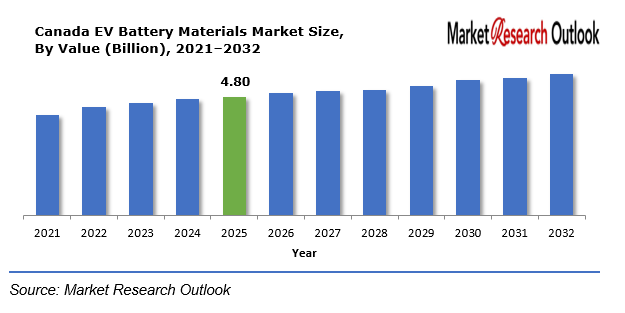
The Canada EV Battery Materials Market size was estimated at USD 4.80 Billion in 2025. During the forecast period, the Canada EV Battery Materials Market size is projected to grow at a CAGR of 11.4% reaching a value of USD 10.25 Billion by 2032. The Canada EV battery materials market is expected to experience strong growth during the forecast period 2026–2032 because electric vehicle production will increase and battery manufacturing investments will rise and the government plans to establish a domestic battery supply chain. Canada possesses extensive critical mineral reserves which include lithium and nickel and cobalt and graphite thus making it a vital source of EV battery raw materials for North America. Canada develops its position in the EV battery value chain through growing partnerships with global automakers and battery manufacturers. The establishment of battery material processing and refining facilities receives acceleration through government funding programs and tax incentives which support clean energy initiatives and zero-emission vehicle development in Ontario and Quebec provinces. The demand for battery materials which are locally sourced increases because of the development of EV battery gigafactories and recycling plants. The Canada EV battery materials market will experience substantial growth throughout the forecast period because of rising worldwide demand for electric vehicles and sustainable battery supply chains.
EV Battery Materials – Overview
The essential raw materials and chemical components used in manufacturing batteries for electric vehicles. The materials establish the main framework of rechargeable batteries which includes lithium-ion batteries used by electric vehicles to store energy and charge their batteries and deliver power to their systems. The key materials that make up electric vehicle batteries consist of cathode materials which include lithium and nickel and cobalt and manganese and anode materials which include graphite and silicon and electrolytes and separators and other essential chemicals and metals like copper and aluminum. The materials in your product determine all aspects of your device which include performance energy density charging speed safety operational lifespan and total manufacturing expenses.
Canada EV Battery Materials Market
Growth Drivers
Rapid Growth in Electric Vehicle Adoption
The electric vehicle battery materials market shows rapid growth because more people adopt electric vehicles. Governments worldwide use subsidies and tax incentives together with strict emission regulations to promote electric mobility which helps reduce carbon emissions and decrease fossil fuel dependence. Automakers are increasing their production of electric passenger cars and commercial vehicles and electric buses which creates a large demand for lithium-ion batteries. The increase in battery production results in higher usage of essential materials which include lithium, nickel, cobalt, manganese, and graphite used in cathodes and anodes. The awareness of clean transportation among consumers continues to grow while the EV charging infrastructure keeps improving which results in higher Canada EV sales.
Challenges
Volatility in Raw Material Prices
The Canada EV battery materials market faces substantial growth challenges because raw material markets experience price volatility. The prices of essential materials like lithium and cobalt and nickel and graphite undergo constant changes because of supply-demand imbalances which result from geopolitical conflicts and trade barriers and restricted mining operations. The electric vehicle market and energy storage market drive up demand for critical minerals which results in unpredictable costs for battery manufacturers. Sudden raw material price increases result in higher battery production expenses which lead to increased electric vehicle prices and decreased consumer adoption. The limited distribution of mineral resources across multiple nations creates supply chain vulnerabilities which force manufacturers to navigate international political risks and export control measures.
Geopolitical Impact on Canada EV Battery Materials Market
Geopolitical factors create a significant impact on the Canadian EV battery materials market because they determine essential mineral supply chains and North American energy independence. Countries now compete to obtain dependable lithium nickel cobalt and graphite sources because of the increasing worldwide demand for these battery raw materials. The United States and Europe consider Canada to be an emerging strategic supplier because the country possesses abundant mineral resources and a stable political climate while Western nations seek to decrease their reliance on China for battery materials processing. The USMCA and North American critical mineral partnerships together with trade policies create an investment-friendly environment for Canada’s mining and refining and battery material production sectors. The ongoing geopolitical conflicts and supply chain disruptions that affect Russia and various African regions have made Canada a more important destination for secure and ethical EV battery material sourcing.
Canada EV Battery Materials Market
Segmental Coverage
Canada EV Battery Materials Market – By Material Type
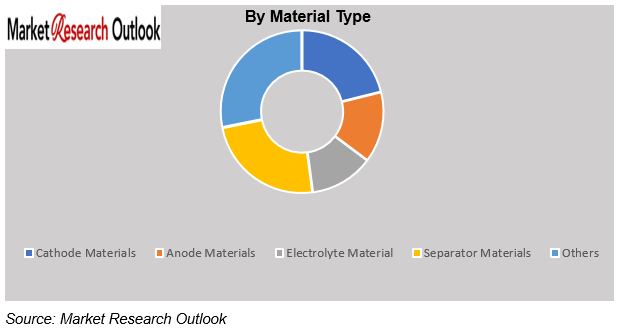
Based on material type, the Canada EV Battery Materials Market is segmented into Cathode Materials, Anode Materials, Electrolyte Material, Separator Materials and Other Materials. The Canada market for EV battery materials will experience major growth because lithium-ion battery production will increase alongside demand for advanced electric vehicles during the forecast period. The cathode serves as the most important and expensive element in electric vehicle batteries because it determines both energy capacity and driving distance and total battery performance. The rising use of advanced battery chemistries including lithium iron phosphate (LFP) and nickel manganese cobalt (NMC) creates an increasing need for superior cathode materials. Automakers and battery manufacturers are increasingly focusing on nickel-rich and cobalt-reduced cathode formulations to improve battery performance and reduce costs.
Canada EV Battery Materials Market – By Vehicle Type
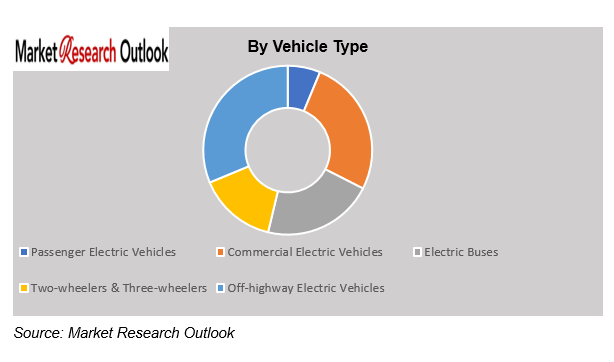
Based on vehicle type, the Canada EV Battery Materials Market is segmented into Passenger Electric Vehicles, Commercial Electric Vehicles, Electric Buses, Two-wheelers & Three-wheelers and Off-highway Electric Vehicles. The Canada EV battery materials market will experience strong demand during the forecast period because passenger electric vehicles will achieve significant growth during this time. The worldwide adoption of electric passenger cars is increasing because consumers prefer clean and fuel-efficient transportation and governments provide support through subsidies and tax benefits and they enforce strict emission regulations. Automakers are expanding their electric vehicle portfolios and investing heavily in advanced battery technologies to improve driving range performance and affordability which creates higher demand for battery materials that include lithium and nickel and cobalt and graphite.
Competitive Landscape
Key participants in the Canada EV Battery Materials market include Umicore, Lithion Technologies, Nano One Materials Corp., Electra Battery Materials Corporation, BASF, Glencore, Nemaska Lithium, Northvolt, Rio Tinto and E3 Lithium Ltd. and Other Prominent Players.
These companies are implementing strategic growth initiatives in order to gain a competitive advantage. The strategies being largely adopted include mergers and acquisitions, strategic alliances, joint ventures, licensing agreements, and new product launches. With the implementation of these strategies, the market participants aim to increase product portfolios, as well as enhance regional presence for long-term sustainable business growth in the EV Battery Materials industry of Canada.
Scope of the Report
| Attributes | Details |
| Years Considered | Historical Data – 2021–2025
Base Year – 2025 Estimated Year – 2026 Forecast Period – 2026–2032 |
| Facts Covered | Revenue in USD Billion |
| Market Coverage | Canada |
| Product/ Service Segmentation | Material Type, Battery Type, Vehicle Type, Application |
| Key Players | Umicore, Lithion Technologies, Nano One Materials Corp., Electra Battery Materials Corporation, BASF, Glencore, Nemaska Lithium, Northvolt, Rio Tinto and E3 Lithium Ltd. and Other Prominent Players. |
Market Segmentation
- By Material Type
- Cathode Materials
- Anode Materials
- Electrolyte Material
- Separator Materials
- Others
- By Battery Type
- Lithium-ion Batteries
- Solid-state Batteries
- Nickel Metal Hydride Batteries
- Lead-acid Batteries (limited EV use)
- By Vehicle Type
- Passenger Electric Vehicles
- Commercial Electric Vehicles
- Electric Buses
- Two-wheelers & Three-wheelers
- Off-highway Electric Vehicles
- By Application
- Battery Cells Manufacturing
- Battery Pack Assembly
- Energy Storage for EV Charging Infrastructure
- Research Framework
- Research Objective
- Product Overview
- Market Segmentation
- Executive Summary
- Canada EV Battery Materials Market Insights
- Growth Drivers
- Restraints
- Opportunities
- Challenges
- Technological Advancements/Recent Developments
- Porter’s Five Forces Analysis
- Industry Value Chain & Entry Points
- Canada EV Battery Materials Market: Regulatory Framework
- Canada EV Battery Materials Market: Marketing Strategies
- Canada EV Battery Materials Market Overview
- Market Size & Forecast, 2021-2032
- By Value (USD Billion)
- Market Share & Forecast
- By Material Type
- Cathode Materials
- Anode Materials
- Electrolyte Material
- Separator Materials
- Others
- By Battery Type
- Lithium-ion Batteries
- Solid-state Batteries
- Nickel Metal Hydride Batteries
- Lead-acid Batteries (limited EV use)
- By Vehicle Type
- Passenger Electric Vehicles
- Commercial Electric Vehicles
- Electric Buses
- Two-wheelers & Three-wheelers
- Off-highway Electric Vehicles
- By Application
- Battery Cells Manufacturing
- Battery Pack Assembly
- Energy Storage for EV Charging Infrastructure
- By Material Type
- Market Size & Forecast, 2021-2032
- Demand Outlook & Customer Adoption Dynamics
- Demand Evolution by End-Use Industry
- Purchasing Behavior & Supplier Selection Criteria
- Demand Visibility & Contracting Trends
- Regional Demand Concentration & Customer Clusters
- Competitive Landscape
- List of Key Players and Their Products
- Canada EV Battery Materials Company Market Share Analysis, 2025
- Competitive Benchmarking, By Operating Parameters
- Key Strategic Developments (Mergers, Acquisitions, Partnerships, etc.)
- Geopolitical Impact on Canada EV Battery Materials Market
- Company Profile
- Umicore
- Introduction & Company Profile
- Product Benchmarking
- Strategic Outlook
- Key Personals
- Key Competitors
- Financial Analysis
- SWOT Analysis
- Umicore
**(same data pointers will be provided for the below companies)
- Lithion Technologies
- Nano One Materials Corp.
- Electra Battery Materials Corporation
- BASF
- Glencore
- Nemaska Lithium
- Northvolt
- Rio Tinto
- E3 Lithium Ltd.
- Other Prominent Players
- Key Strategic Recommendations
- Research Methodology
- Qualitative Research
- Primary & Secondary Research
- Quantitative Research
- Market Breakdown & Data Triangulation
- Secondary Research
- Primary Research
- Breakdown of Primary Research Respondents, By Region
- Assumptions & Limitations
- Qualitative Research
*Financial information of case of non-listed companies can be provided as per availability.
**The segmentation and the companies are subject to modifications based on in-depth secondary research for the final deliverable
Frequently Asked Questions
1. What is the expected growth rate of the Canada EV Battery Materials Market during the forecast period?
Ans: The Canada EV Battery Materials Market size was estimated at USD 4.80 billion in 2025.
2. What is the expected growth rate of the Canada EV Battery Materials Market during the forecast period?
Ans: Canada EV Battery Materials Market is expected to grow at a CAGR of around 11.4% during the forecast period between 2026 and 2032.
3. What is the forecast value of the Canada EV Battery Materials Market by 2032?
Ans: The Canada EV Battery Materials Market is projected to reach a value of approximately USD 10.25 billion by 2032.
4. What are the major factors driving the growth of the Canada EV Battery Materials Market?
Ans: The Canada EV battery materials market is expected to experience strong growth during the forecast period 2026–2032 because electric vehicle production will increase and battery manufacturing investments will rise and the government plans to establish a domestic battery supply chain.
5. Name the key players operating in the Canada EV Battery Materials Market.
Ans: The key players of Canada EV Battery Materials Market are Umicore, Lithion Technologies, Nano One Materials Corp., Electra Battery Materials Corporation, BASF, Glencore, Nemaska Lithium, Northvolt, Rio Tinto and E3 Lithium Ltd. and Other Prominent Players.
6. Which is the fastest-growing material type segment in the Canada EV Battery Materials Market?
Ans: The Canada market for EV battery materials will experience major growth because lithium-ion battery production will increase alongside demand for advanced electric vehicles during the forecast period. The cathode serves as the most important and expensive element in electric vehicle batteries because it determines both energy capacity and driving distance and total battery performance.
Frequently Asked Questions
1. What is the expected growth rate of the Canada EV Battery Materials Market during the forecast period?
Ans: The Canada EV Battery Materials Market size was estimated at USD 4.80 billion in 2025.
2. What is the expected growth rate of the Canada EV Battery Materials Market during the forecast period?
Ans: Canada EV Battery Materials Market is expected to grow at a CAGR of around 11.4% during the forecast period between 2026 and 2032.
3. What is the forecast value of the Canada EV Battery Materials Market by 2032?
Ans: The Canada EV Battery Materials Market is projected to reach a value of approximately USD 10.25 billion by 2032.
4. What are the major factors driving the growth of the Canada EV Battery Materials Market?
Ans: The Canada EV battery materials market is expected to experience strong growth during the forecast period 2026–2032 because electric vehicle production will increase and battery manufacturing investments will rise and the government plans to establish a domestic battery supply chain.
5. Name the key players operating in the Canada EV Battery Materials Market.
Ans: The key players of Canada EV Battery Materials Market are Umicore, Lithion Technologies, Nano One Materials Corp., Electra Battery Materials Corporation, BASF, Glencore, Nemaska Lithium, Northvolt, Rio Tinto and E3 Lithium Ltd. and Other Prominent Players.
6. Which is the fastest-growing material type segment in the Canada EV Battery Materials Market?
Ans: The Canada market for EV battery materials will experience major growth because lithium-ion battery production will increase alongside demand for advanced electric vehicles during the forecast period. The cathode serves as the most important and expensive element in electric vehicle batteries because it determines both energy capacity and driving distance and total battery performance.