

Middle East & Africa Food Services Market, Size & Forecast 2021-2032
- Global Markets
- Mar 2026
- Pages 250
- Report Format: pdf
- Report Price: $3000 USD
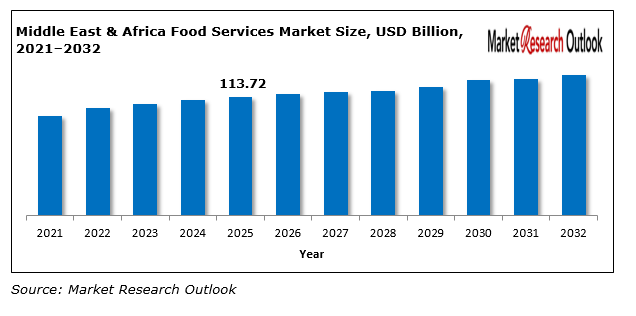
The Middle East & Africa Food Services Market size was estimated at USD 113.72 Billion in 2025. During the forecast period, the Middle East & Africa Food Services Market size is projected to grow at a CAGR of 8.41% reaching a value of USD 199.04 Billion by 2032. Consumer spending on dining establishments and the growth of quick service restaurant networks together with the rapid development of food delivery services all drive restaurant industry expansion. The market continues to grow because of two factors: tourism growth in UAE and Saudi Arabia and government programs that develop the hospitality industry. The development of infrastructure and retail projects which include shopping malls and food courts contribute to the expansion of foodservice businesses.
Middle East & Africa Food Services Market – Overview
Market Trends
- The MEA food services market currently experiences rapid growth because quick service restaurants and fast food chains provide affordable dining options and convenient service with consistent food quality. International brands continue their aggressive expansion, while local businesses develop new solutions to stay competitive.
- Another key trend is the rise of online food delivery and cloud kitchens. Customers now prefer to use digital platforms for food orders which results in increased business growth for delivery-based work models. The demand for healthier menu options and plant-based dishes and premium dining experiences is increasing because of shifting consumer tastes.
Geopolitical Impact on Middle East & Africa Food Services Market
The food services market in the MEA region depends on three geopolitical elements which include regional stability and the movement of tourists and the implementation of trade agreements. The hospitality and foodservice industries in GCC countries experience uninterrupted growth because of their political stability but certain African regions encounter challenges because of their economic and political instability. The operational expenses of foodservice businesses experience direct effects from changes in international commodity prices which especially include food and energy costs. The market becomes vulnerable to international supply chain interruptions because businesses depend on foreign food products. The government establishes food safety standards and labor regulations and foreign investment rules which together determine how the market operates.
| Attributes | Details |
| Years Considered | Historical Data – 2021–2025
Base Year – 2025 Estimated Year – 2026 Forecast Period – 2026–2032 |
| Facts Covered | Revenue in USD Billion |
| Market Coverage | Saudi Arabia, UAE, Qatar, Kuwait, Bahrain, Oman, Egypt, Algeria, Nigeria, South Africa, Rest of MEA |
| Segmentation | Service Type, Outlet Type, Ownership Type, Cuisine Type, Distribution Channel, Country |
Segmental Coverage
By Service Type
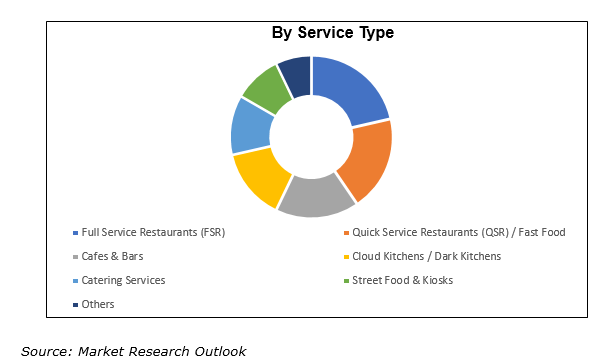
Based on service type, the market is segmented into full service restaurants (FSR), quick service restaurants (QSR)/fast food, cafes & bars, cloud kitchens/dark kitchens, catering services, street food & kiosks, and others. The market is controlled by QSRs because they offer low prices while delivering fast service and maintaining strong brand recognition. Full service restaurants hold a significant share, particularly in urban and tourist areas where dining experiences are valued. Cafes and bars are expanding quickly because social dining trends have become popular among young people. The online food delivery market has created rapid development opportunities for cloud kitchens which have become a major growth sector. Street food and kiosks maintain their essential function because they serve both African markets and local business activities.
By Outlet Type
Based on outlet type, the market includes standalone outlets, food courts, hotels & lodging establishments, institutional catering, and others. The majority of standalone outlets operate throughout both urban and suburban regions which results in their major market share. Shopping malls gain substantial revenue from their food courts which operate as essential dining venues in Gulf Cooperation Council countries. The growth of tourism increases demand for upscale dining services which hotels and lodging facilities provide. The institutional catering market serves essential dining needs for corporate offices and healthcare facilities and educational institutions.
Regional Analysis
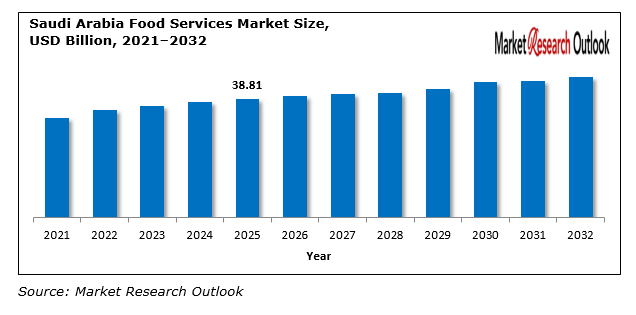
On the basis of country, the market is divided into Saudi Arabia, UAE, Qatar, Kuwait, Bahrain, Oman, Egypt, Algeria, Nigeria, South Africa, and Rest of MEA. The market in the UAE and Saudi Arabia operates through three main factors which include their strong tourism industry and their citizens’ high disposable income and their developed foodservice systems. The African market depends on South Africa and Egypt as its primary markets because both countries experience urban growth and their middle-class population continues to expand. The demand for budget-friendly foodservice solutions is rising in Nigeria and Algeria which creates new business opportunities for both countries. The different regions in MEA countries maintain separate development paths which create distinct growth patterns throughout the entire area.
Competitive Landscape
In the competitive landscape of the Middle East & Africa Food Services market, the organisation has covered major players of the market and their details.
Here are some of the leading players that are playing a major role in the Middle East & Africa Food Services market:
- McDonald’s Corporation
- Introduction & Company Profile
- Product Benchmarking
- Strategic Outlook
- Key Competitors
- Financial Analysis
- Swot Analysis
**(Same Data Pointers Will Be Provided for The Below Companies)
- Yum! Brands, Inc. (KFC, Pizza Hut, Taco Bell)
- Restaurant Brands International Inc. (Burger King, Tim Hortons)
- Americana Restaurants International PLC
- Azadea Group
- Alshaya Group
- Emaar Hospitality Group
- Domino’s Pizza Inc.
- Subway IP LLC
- Starbucks Corporation
- Nando’s Group Holdings Ltd.
- Other Prominent Players
Segmentation
- By Service Type
- Full Service Restaurants (FSR)
- Quick Service Restaurants (QSR) / Fast Food
- Cafes & Bars
- Cloud Kitchens / Dark Kitchens
- Catering Services
- Street Food & Kiosks
- Others
- By Outlet Type
- Standalone Outlets
- Food Courts
- Hotels & Lodging Establishments
- Institutional Catering (Corporate, Healthcare, Education)
- Others
- By Ownership Type
- Chained / Branded
- Independent
- By Cuisine Type
- Middle Eastern & Arabic Cuisine
- Asian Cuisine
- Western / Continental Cuisine
- African Cuisine
- Others
- By Distribution Channel
- Dine-In
- Takeaway / Drive-Through
- Online Food Delivery Platforms
- Others
- By Country
- Saudi Arabia
- United Arab Emirates (UAE)
- Qatar
- Kuwait
- Bahrain
- Oman
- Egypt
- Algeria
- Nigeria
- South Africa
- Rest of MEA
Middle East & Africa Food Services Market, 2032
- Research Framework
- Market Segmentation
- Research Objective
- Research Methodology
- Qualitative Research
- Primary Research
- Secondary Research
- Quantitative Research
- Market Breakdown & Data Triangulation
- Demand Side
- Supply Side
- Breakdown Of Primary Research Respondents, By Region
- Saudi Arabia
- United Arab Emirates (UAE)
- Qatar
- Kuwait
- Bahrain
- Oman
- Egypt
- Algeria
- Nigeria
- South Africa
- Rest of Middle East and Africa
- Assumption & Limitation
- Qualitative Research
- Executive Summary
- Market Overview, 2021–2032
- By Service Type
- By Outlet Type
- By Ownership Type
- By Cuisine Type
- By Distribution Channel
- By Geography
- Analyst Recommendations
- Market Overview, 2021–2032
- Geopolitical Impact on Middle East & Africa Food Services Market
- Middle East & Africa Food Services Market Insights
- Market Dynamics
- Growth Drivers
- Rising tourism and hospitality sector expansion across the Middle East
- Rapid urbanization and growing young population driving eating-out culture
- Increasing investment in food delivery platforms and digital ordering
- Restraints
- High operational costs including rent, labor, and food raw material prices
- Stringent halal certification and food safety regulatory requirements
- Limited cold chain infrastructure in parts of Sub-Saharan Africa
- Opportunities
- Expansion of international Quick Service Restaurant (QSR) chains in the region
- Growing demand for cloud kitchens and online food delivery services
- Government-backed tourism and Vision 2030 initiatives boosting hospitality demand
- Challenges
- High food import dependency and supply chain vulnerabilities
- Cultural and dietary restrictions limiting menu diversification
- Intense competition between organized and unorganized food service operators
- Technological Advancements
- Recent Technological Advancements
- Prior to 2020
- Porter’s Five Forces Analysis
- PESTLE Analysis
- Trade Analysis
- Top 3 Importing Countries
- Top 3 Exporting Countries
- Growth Drivers
- Market Dynamics
- Industry Value Chain & Entry Points
- Food & beverage raw material suppliers
- Food processing & packaging manufacturers
- Foodservice equipment suppliers
- Food distributors & logistics providers
- Franchise & brand licensing operators
- Food service operators (restaurants, cafes, catering)
- End users (individual consumers, corporate, institutional)
- Aftermarket services & facility management
- Middle East & Africa Food Services Market: Regulatory Framework
- Saudi Arabia
- United Arab Emirates (UAE)
- Qatar
- Kuwait
- Bahrain
- Oman
- Egypt
- Algeria
- Nigeria
- South Africa
- Rest of the Middle East and Africa
- Middle East & Africa Food Services Market Overview
- Market Size & Forecast, 2021-2032
- By Value (USD Billion)
- Market Share & Forecast
- By Service Type
- Full Service Restaurants (FSR)
- Quick Service Restaurants (QSR) / Fast Food
- Cafes & Bars
- Cloud Kitchens / Dark Kitchens
- Catering Services
- Street Food & Kiosks
- Others
- By Outlet Type
- Standalone Outlets
- Food Courts
- Hotels & Lodging Establishments
- Institutional Catering (Corporate, Healthcare, Education)
- Others
- By Ownership Type
- Chained / Branded
- Independent
- By Cuisine Type
- Middle Eastern & Arabic Cuisine
- Asian Cuisine
- Western / Continental Cuisine
- African Cuisine
- Others
- By Distribution Channel
- Dine-In
- Takeaway / Drive-Through
- Online Food Delivery Platforms
- Others
- By Country
- Saudi Arabia
- United Arab Emirates (UAE)
- Qatar
- Kuwait
- Bahrain
- Oman
- Egypt
- Algeria
- Nigeria
- South Africa
- Rest of MEA
- By Service Type
- Market Size & Forecast, 2021-2032
- Competitive Landscape
- Middle East & Africa Food Services Company Market Share Analysis, 2025
- By Country
- Saudi Arabia
- United Arab Emirates (UAE)
- Qatar
- Kuwait
- Bahrain
- Oman
- Egypt
- Algeria
- Nigeria
- South Africa
- Rest of MEA
- Competitive Benchmarking, By Operating Parameters
- Key Strategic Development (Mergers, Acquisitions, Partnerships, Etc.)
- List of Emerging players
- By Country
- Middle East & Africa Food Services Company Market Share Analysis, 2025
- Company Profile
- McDonald’s Corporation
- Introduction & Company Profile
- Product Benchmarking
- Strategic Outlook
- Key Competitors
- Financial Analysis
- Swot Analysis
- McDonald’s Corporation
**(Same Data Pointers Will Be Provided for The Below Companies)
- Yum! Brands, Inc. (KFC, Pizza Hut, Taco Bell)
- Restaurant Brands International Inc. (Burger King, Tim Hortons)
- Americana Restaurants International PLC
- Azadea Group
- Alshaya Group
- Emaar Hospitality Group
- Domino’s Pizza Inc.
- Subway IP LLC
- Starbucks Corporation
- Nando’s Group Holdings Ltd.
- Other Prominent Players
* Financial information in case of non-listed companies will be provided as per availability
**The segmentation and the companies are subjected to modifications based on in-depth secondary for the final deliverable
Frequently Asked Questions
1. What is the market size of the Middle East & Africa Food Services Market in 2025?
Ans: The Middle East & Africa Food Services market is projected to reach approximately USD 113.72 Billion by 2032.
2. What is the expected growth rate of the Middle East & Africa Food Services Market during the forecast period?
Ans: The Middle East & Africa Food Services market is expected to grow at a CAGR of around 7.5% during the forecast period between 2026 and 2032.
3. What is the forecast value of the Middle East & Africa Food Services Market by 2032?
Ans: The Middle East & Africa Food Services market is projected to reach approximately USD 199.04 Billion by 2032.
4. What are the major factors driving the growth of the Middle East & Africa Food Services Market?
Ans: Consumer spending on dining establishments and the growth of quick service restaurant networks together with the rapid development of food delivery services all drive restaurant industry expansion.
5. Name the key players operating in the Middle East & Africa Food Services Market.
Ans: Key players operating in the Middle East & Africa Food Services market include McDonald’s Corporation, Yum! Brands, Inc. (KFC, Pizza Hut, Taco Bell), Restaurant Brands International Inc. (Burger King, Tim Hortons), Americana Restaurants International PLC, Azadea Group, Alshaya Group, Emaar Hospitality Group, Domino’s Pizza Inc., Subway IP LLC, Starbucks Corporation, Nando’s Group Holdings Ltd., and other prominent players.
6. Which Country is Expected to grow in the Middle East & Africa Food Services Market.
Ans: The market in the UAE and Saudi Arabia operates through three main factors which include their strong tourism industry and their citizens' high disposable income and their developed foodservice systems.