

Africa Grid Stabilization & Battery-Based Backup Solutions Market, Size & Forecast 2021-2032
- Global Markets
- Mar 2026
- Pages 200
- Report Format: pdf
- Report Price: $3000 USD
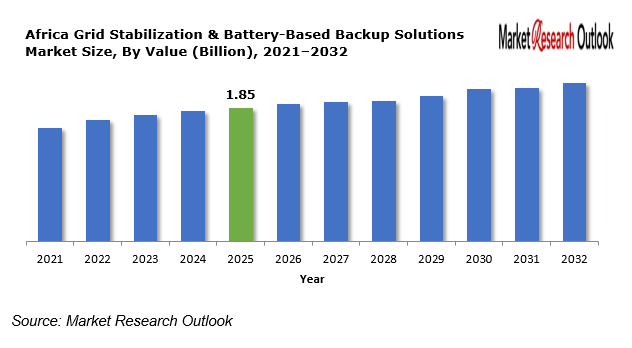
The Africa Grid Stabilization & Battery-Based Backup Solutions Market size was estimated at USD 1.85 Billion in 2025. During the forecast period, the Africa Grid Stabilization & Battery-Based Backup Solutions Market size is projected to grow at a CAGR of 14.6% reaching a value of USD 4.75 Billion by 2032. African countries will experience market expansion between 2026 and 2032 because of three factors, which include increasing power outages and aging grid systems and growing use of renewable energy sources. The rising deployment of solar and wind energy projects now creates urgent requirements for energy storage and grid stabilizing solutions, which will manage the variable energy output from these projects. The ongoing power outages in multiple Sub-Saharan African nations force businesses and telecom companies and government organizations to implement battery backup systems for their essential operations. The need for microgrid and off-grid battery systems has increased because electrification efforts continue to reach underserved rural and remote communities.
Grid Stabilization & Battery-Based Backup Solutions – Overview
Grid Stabilization & Battery-Based Backup Solutions provide energy storage systems which function as hybrid power solutions that maintain stable electricity delivery throughout the day while offering backup power during electrical grid failures. The systems use various battery technologies which include lithium-ion batteries, lead-acid batteries, sodium-sulfur batteries, and flow batteries together with inverters and energy management systems and hybrid generator systems.
Africa Grid Stabilization & Battery-Based Backup Solutions Market
Growth Drivers
Increasing Grid Instability and Renewable Energy Integration
African nations experience ongoing electrical system problems because their power networks depend on outdated equipment and their power plants lack adequate capacity and their cities continue to expand.Industrial facilities and public services experience disruptions from frequent load shedding and voltage fluctuations, which drive strong demand for grid-scale battery energy storage systems (BESS) and hybrid backup solutions. Africa experiences rapid growth in renewable energy projects, which focus on solar and wind energy development. The projects help achieve sustainability objectives, but their unpredictable operation requires energy storage systems to maintain grid stability and balance power distribution.
Challenges
High Initial Capital Costs and Financing Constraints
The current high demand for advanced battery storage systems in Africa remains unfulfilled because their installation requires expensive initial funding. The implementation of grid-scale BESS and hybrid systems needs extensive financial investment which creates budget difficulties for both utility companies and small businesses that operate in regions with limited financial resources. Some areas still struggle to provide cost-effective financing options while fluctuating currency rates raise the expenses of equipment imports. The advanced battery technology manufacturing sector in the country needs to expand because current domestic production capacities force projects to depend on imported systems which drives up their total expenses.
Geopolitical Impact on Africa Grid Stabilization & Battery-Based Backup Solutions Market
The Africa Grid Stabilization & Battery-Based Backup Solutions Market experiences multiple geopolitical factors which disrupt supply chains and investment flows and establish energy policies. The trade relations between African nations and major battery-producing countries such as China and the United States and European nations determine the availability and cost of equipment. The import of lithium-ion cells and energy storage components faces disruption from tariffs and trade restrictions and geopolitical tensions. Foreign direct investment (FDI) for grid modernization and renewable energy projects depends on the political stability of African countries. Government policies on energy transition and carbon reduction and electrification initiatives determine how quickly storage systems will be installed.
Africa Grid Stabilization & Battery-Based Backup Solutions Market
Segmental Coverage
Africa Grid Stabilization & Battery-Based Backup Solutions Market – By Solution Type
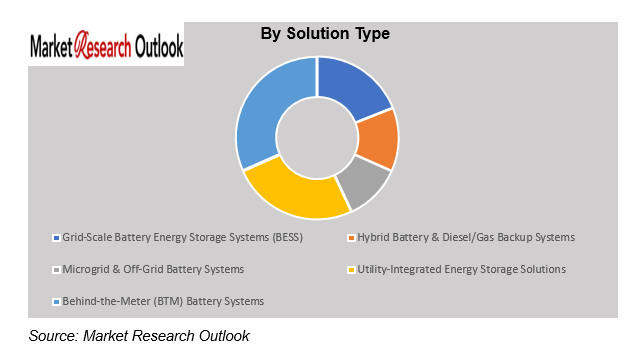
Based on solution type, the market is segmented into Grid-Scale Battery Energy Storage Systems (BESS), Hybrid Battery & Diesel/Gas Backup Systems, Microgrid & Off-Grid Battery Systems, Utility-Integrated Energy Storage Solutions, and Behind-the-Meter (BTM) Battery Systems. The Grid-Scale BESS segment will experience substantial growth between 2026 and 2032 because of the rising number of renewable energy projects and national grid stabilization programs. Utilities use large-capacity battery storage systems to handle their peak energy needs while maintaining system frequency and managing the unpredictability of renewable energy sources. Hybrid Battery & Diesel/Gas Backup Systems are commonly used in areas with unstable power grids to provide continuous electricity for telecom towers and commercial buildings. The use of Microgrid & Off-Grid Battery Systems is becoming more popular for use in rural electrification efforts and remote mining operations. Commercial and industrial companies have started to adopt Behind-the-Meter (BTM) Battery Systems because they help lower energy expenses and improve protection against power outages.
Africa Grid Stabilization & Battery-Based Backup Solutions Market – By End User
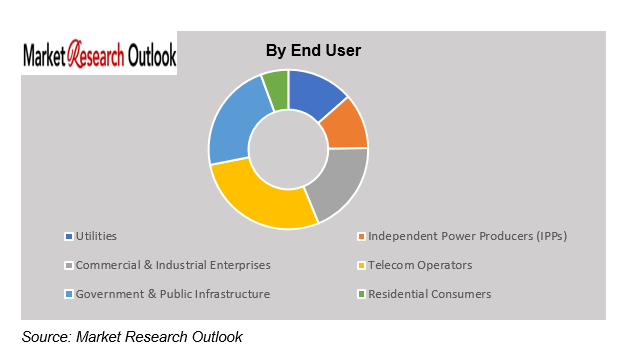
Based on end user, the market is segmented into Utilities, Independent Power Producers (IPPs), Commercial & Industrial Enterprises, Telecom Operators, Government & Public Infrastructure, and Residential Consumers. The forecast period will witness market domination by the Utilities segment because of substantial investments which support grid modernization and renewable energy integration projects. Independent Power Producers (IPPs) are also deploying battery storage systems to enhance project bankability and optimize energy dispatch. Telecom Operators represent a high-growth segment, as thousands of telecom towers across Africa require reliable backup solutions to prevent network downtime. Commercial & Industrial Enterprises have started using battery-based systems to protect their operations from production losses which occur during grid outages.
Competitive Landscape
Key participants in the Africa Grid Stabilization & Battery-Based Backup Solutions market include Scatec ASA, Globeleq, Lekela Power, Aggreko plc, Siemens Energy, Schneider Electric SE, ABB Ltd., BYD Company Ltd., Huawei Technologies Co., Ltd., and Tesla, Inc., and Other Prominent Players. These companies are implementing strategic growth initiatives in order to gain a competitive advantage. The strategies being largely adopted include mergers and acquisitions, strategic alliances, joint ventures, licensing agreements, and new product launches. With the implementation of these strategies, the market participants aim to increase product portfolios, as well as enhance regional presence for long-term sustainable business growth in the Grid Stabilization & Battery-Based Backup Solutions industry of Africa.
Scope of the Report
| Attributes | Details |
| Years Considered | Historical Data – 2021–2025
Base Year – 2025 Estimated Year – 2026 Forecast Period – 2026–2032 |
| Facts Covered | Revenue in USD Billion |
| Market Coverage | Africa |
| Product/ Service Segmentation | Solution Type, Battery Technology, Power Capacity, End User |
| Key Players | Scatec ASA, Globeleq, Lekela Power, Aggreko plc, Siemens Energy, Schneider Electric SE, ABB Ltd., BYD Company Ltd., Huawei Technologies Co., Ltd., and Tesla, Inc., and Other Prominent Players. |
Market Segmentation
- By Solution Type
- Grid-Scale Battery Energy Storage Systems (BESS)
- Hybrid Battery & Diesel/Gas Backup Systems
- Microgrid & Off-Grid Battery Systems
- Utility-Integrated Energy Storage Solutions
- Behind-the-Meter (BTM) Battery Systems
- By Battery Technology
- Lithium-ion Batteries
- Lead-Acid Batteries
- Sodium-Sulfur Batteries
- Flow Batteries
- Solid-State Batteries
- By Power Capacity
- Below 1 MW
- 1–10 MW
- 10–50 MW
- Above 50 MW
- By End User
- Utilities
- Independent Power Producers (IPPs)
- Commercial & Industrial Enterprises
- Telecom Operators
- Government & Public Infrastructure
- Residential Consumers
- Research Framework
- Research Objective
- Product Overview
- Market Segmentation
- Executive Summary
- Africa Grid Stabilization & Battery-Based Backup Solutions Market Insights
- Growth Drivers
- Restraints
- Opportunities
- Challenges
- Utility-level stabilization capex mapping
- Technological Advancements/Recent Developments
- Porter’s Five Forces Analysis
- Industry Value Chain & Entry Points
- Africa Grid Stabilization & Battery-Based Backup Solutions Market: Regulatory Framework
- Africa Grid Stabilization & Battery-Based Backup Solutions Market: Marketing Strategies
- Africa Grid Stabilization & Battery-Based Backup Solutions Market Overview
- Market Size & Forecast, 2021-2032
- By Value (USD Billion)
- Market Share & Forecast
- By Solution Type
- Grid-Scale Battery Energy Storage Systems (BESS)
- Hybrid Battery & Diesel/Gas Backup Systems
- Microgrid & Off-Grid Battery Systems
- Utility-Integrated Energy Storage Solutions
- Behind-the-Meter (BTM) Battery Systems
- By Battery Technology
- Lithium-ion Batteries
- Lead-Acid Batteries
- Sodium-Sulfur Batteries
- Flow Batteries
- Solid-State Batteries
- By Power Capacity
- Below 1 MW
- 1–10 MW
- 10–50 MW
- Above 50 MW
- By End User
- Utilities
- Independent Power Producers (IPPs)
- Commercial & Industrial Enterprises
- Telecom Operators
- Government & Public Infrastructure
- Residential Consumers
- By Solution Type
- Market Size & Forecast, 2021-2032
- Demand Outlook & Customer Adoption Dynamics
- Demand Evolution By End-Use Industry
- Purchasing Behavior & Supplier Selection Criteria
- Demand Visibility & Contracting Trends
- Regional Demand Concentration & Customer Clusters
- Competitive Landscape
- List Of Key Players And Their Offerings
- Africa Grid Stabilization & Battery-Based Backup Solutions Company Market Share Analysis, 2025
- Competitive Benchmarking, By Operating Parameters
- Key Strategic Development (Mergers, Acquisitions, Partnerships, Etc.)
- Geopolitical Impact On Africa Grid Stabilization & Battery-Based Backup Solutions Market
- Company Profile
- Scatec ASA
- Introduction & Company Profile
- Product Benchmarking
- Strategic Outlook
- Key Personals
- Key Competitors
- Financial Analysis
- Swot Analysis
- Scatec ASA
**(Same Data Pointers Will Be Provided For The Below Companies)
- Globeleq
- Lekela Power
- Aggreko plc
- Siemens Energy
- Schneider Electric SE
- ABB Ltd.
- BYD Company Ltd.
- Huawei Technologies Co., Ltd.
- Tesla, Inc.
- Other Prominent Players
- Key Strategic Recommendations
- Research Methodology
- Qualitative Research
- Primary & Secondary Research
- Quantitative Research
- Market Breakdown & Data Triangulation
- Secondary Research
- Primary Research
- Breakdown Of Primary Research Respondents, By Country
- Assumption & Limitation
- Qualitative Research
* Financial information in case of non-listed companies will be provided as per availability
**The segmentation and the companies are subjected to modifications based on in-depth secondary for the final deliverable
Frequently Asked Questions
1. What is the expected growth rate of the Africa Grid Stabilization & Battery-Based Backup Solutions Market during the forecast period?
Ans: The Africa Grid Stabilization & Battery-Based Backup Solutions Market size was estimated at USD 1.85 billion in 2025.
2. What is the expected growth rate of the Africa Grid Stabilization & Battery-Based Backup Solutions Market during the forecast period?
Ans: Africa Grid Stabilization & Battery-Based Backup Solutions Market is expected to grow at a CAGR of around 14.6% during the forecast period between 2026 and 2032.
3. What is the forecast value of the Africa Grid Stabilization & Battery-Based Backup Solutions Market by 2032?
Ans: The Africa Grid Stabilization & Battery-Based Backup Solutions Market is projected to reach a value of approximately USD 4.75 billion by 2032.
4. What are the major factors driving the growth of the Africa Grid Stabilization & Battery-Based Backup Solutions Market?
Ans: African countries will experience market expansion between 2026 and 2032 because of three factors, which include increasing power outages and aging grid systems and growing use of renewable energy sources.
5. Name the key players operating in the Africa Grid Stabilization & Battery-Based Backup Solutions Market.
Ans: The key players of Africa Grid Stabilization & Battery-Based Backup Solutions Market are Scatec ASA, Globeleq, Lekela Power, Aggreko plc, Siemens Energy, Schneider Electric SE, ABB Ltd., BYD Company Ltd., Huawei Technologies Co., Ltd., and Tesla, Inc., and Other Prominent Players.
6. Which is the fastest-growing solution type segment in the Africa Grid Stabilization & Battery-Based Backup Solutions Market?
Ans: The Grid-Scale BESS segment will experience substantial growth between 2026 and 2032 because of the rising number of renewable energy projects and national grid stabilization programs.