

Global Hydrogen Storage & Transportation Market, Size & Forecast 2021-2032
- Global Markets
- Feb 2026
- Pages 450
- Report Format: pdf
- Report Price: $3500 USD
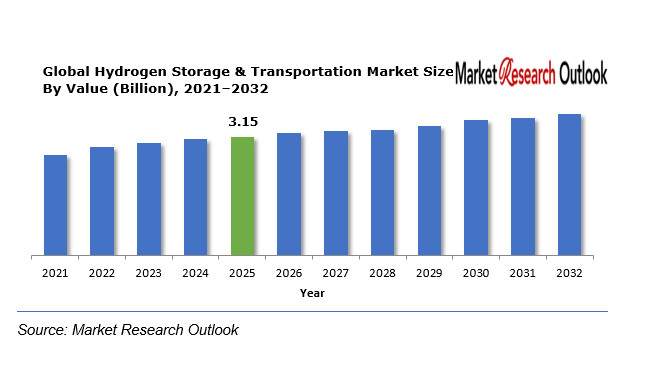
The Global Hydrogen Storage & Transportation Market size was estimated at USD 3.15 Billion in 2025. During the forecast period, the Global Hydrogen Storage & Transportation Market size is projected to grow at a CAGR of 21.6% reaching a value of USD 12.40 Billion by 2032. The coming six-year period from 2026 to 2032 will bring significant market development because of rising hydrogen fuel infrastructure implementation and hydrogen refueling network expansion and industrial and mobility sector hydrogen adoption. European and Asia-Pacific and North American governments establish hydrogen roadmaps while they fund extensive hydrogen production and distribution initiatives to achieve their climate objectives. Hydrogen demand has increased because of its use in refining operations and ammonia production and steel manufacturing and fuel cell mobility which has prompted companies to invest in building extensive storage facilities and developing transportation systems. Supply chain efficiency is being enhanced through the research and development of cryogenic storage technologies and high-pressure storage systems and hydrogen pipeline and shipping infrastructure construction.
Hydrogen Storage & Transportation – Overview
Hydrogen storage and transportation refer to the processes and technologies used to safely store hydrogen and deliver it from production sites to end users. The systems function through compressed gas storage tanks and cryogenic liquid storage systems and solid-state storage technologies and pipelines and specialized transportation vehicles which include tube trailers and cryogenic tankers. The organization of efficient storage and transportation infrastructure serves as a fundamental requirement which enables hydrogen distribution throughout multiple industries that range from energy to industrial manufacturing and mobility.
Global Hydrogen Storage & Transportation Market
Growth Drivers
Rising Adoption of Hydrogen as a Clean Energy Source
The worldwide shift toward low-carbon energy systems has created a substantial need for hydrogen storage facilities and transportation networks. Hydrogen serves as an environmentally friendly fuel choice for transportation and power generation and industrial applications because it helps decrease greenhouse gas emissions. Governments and energy companies are investing heavily in green hydrogen projects produced using renewable energy sources such as wind and solar power. Hydrogen fuel cell vehicles and hydrogen-powered industrial operations need effective storage and transport systems which enable their continuous operation. Various regions are establishing large hydrogen hubs that will require pipelines and liquefied hydrogen shipping and advanced storage technologies.
Challenges
High Infrastructure and Transportation Costs
The development of hydrogen storage and transportation infrastructure requires substantial capital investment, which presents a major challenge for market growth. The installation and operational costs of hydrogen storage systems increase because cryogenic tanks and high-pressure cylinders require intricate engineering and safety standards. Dedicated hydrogen pipelines and specialized transport vehicles need substantial financial investment for their development. The long-distance transportation of hydrogen becomes costly because energy losses occur during compression and liquefaction and conversion processes. The project costs and complexity increase because of insufficient refueling infrastructure and the absence of standardized regulations between different regions.
Geopolitical Impact on Global Hydrogen Storage & Transportation Market
Geopolitical factors which include international energy policies and trade agreements and regional energy security strategies all impact the Global Hydrogen Storage and Transportation Market. Countries across the world invest in hydrogen infrastructure because they want to decrease their fossil fuel imports while improving their energy self-sufficiency. The trade partnerships which hydrogen-producing countries establish with hydrogen-consuming nations create new global supply chains and transportation routes. Market expansion and investment patterns experience strong influences from government policies which address renewable energy development and carbon emission control and hydrogen funding. The financial backing of projects together with supply chain operational security and technology exchange processes face disruptions from ongoing international conflicts and changes in energy market values.
Global Hydrogen Storage & Transportation Market
Segmental Coverage
Global Hydrogen Storage & Transportation Market – By Storage Type
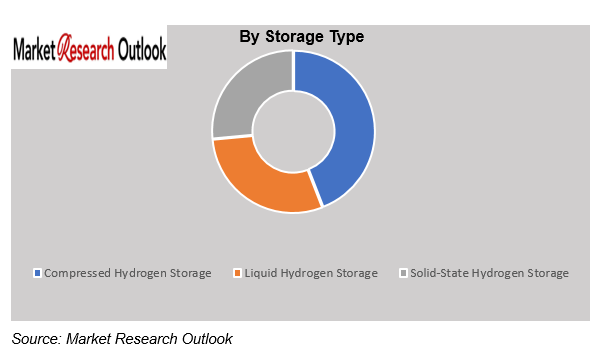
Based on storage type, the Global Hydrogen Storage & Transportation Market is segmented into Compressed Hydrogen Storage, Liquid Hydrogen Storage, and Solid-State Hydrogen Storage. The compressed hydrogen storage segment is expected to witness significant growth during the forecast period because industrial applications and fuel cell vehicles require its technology. The hydrogen distribution system relies on high-pressure storage cylinders and tanks which function as standard equipment for transportation between short distances and medium distances. Liquid hydrogen storage has emerged as the preferred solution for large-scale and long-distance transportation because it provides superior energy density and operational efficiency. The development of solid-state hydrogen storage technologies which include metal hydrides and advanced material-based storage systems will result in improved safety and storage capacity. The research and development investments which focus on advanced storage materials and technologies will drive growth across all storage segments throughout the coming years.
Global Hydrogen Storage & Transportation Market – By End User
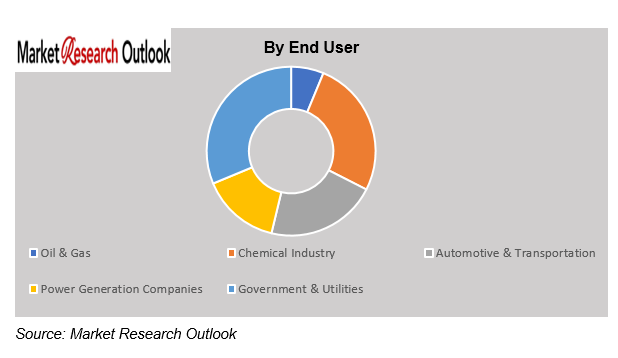
Based on end user, the Global Hydrogen Storage & Transportation Market is segmented into Oil & Gas, Chemical Industry, Automotive & Transportation, Power Generation Companies, and Government & Utilities. The automotive and transportation segment will experience substantial growth between 2026 and 2032 because more people will start using hydrogen fuel cell vehicles and hydrogen refueling stations will become more widespread. The automotive industry and government bodies are funding hydrogen mobility research to develop solutions that will decrease carbon emissions and enhance energy efficiency in transportation systems. Hydrogen serves as the primary industrial fuel for refining operations and ammonia manufacturing in both the oil and gas and chemical sectors, which creates a need for efficient hydrogen storage and transportation solutions. Power generation companies are studying hydrogen as a renewable energy source to support grid stability and renewable energy storage needs.
Competitive Landscape
Key participants in the Global Hydrogen Storage & Transportation market include Air Liquide, Linde plc, Air Products and Chemicals Inc., Plug Power Inc., Chart Industries Inc., Hexagon Purus, Worthington Industries, NPROXX, McPhy Energy, ITM Power plc, Kawasaki Heavy Industries Ltd., and Cryostar SAS, and other prominent players.
These companies are implementing strategic growth initiatives in order to gain a competitive advantage. The strategies being largely adopted include mergers and acquisitions, strategic alliances, joint ventures, licensing agreements, and new product launches. With the implementation of these strategies, the market participants aim to increase product portfolios, as well as enhance regional presence for long-term sustainable business growth in the Hydrogen Storage & Transportation industry of Global.
Scope of the Report
| Attributes | Details |
| Years Considered | Historical Data – 2021–2025
Base Year – 2025 Estimated Year – 2026 Forecast Period – 2026–2032 |
| Facts Covered | Revenue in USD Billion |
| Market Coverage | Global |
| Product/ Service Segmentation | Storage Type, Transportation Mode, Technology, End User |
| Key Players | Air Liquide, Linde plc, Air Products and Chemicals Inc., Plug Power Inc., Chart Industries Inc., Hexagon Purus, Worthington Industries, NPROXX, McPhy Energy, ITM Power plc, Kawasaki Heavy Industries Ltd., and Cryostar SAS, and other prominent players. |
Market Segmentation
- By Storage Type
- Compressed Hydrogen Storage
- Liquid Hydrogen Storage
- Solid-State Hydrogen Storage
- By Transportation Mode
- Pipeline Transportation
- Road Transportation
- Rail Transportation
- Marine Transportation
- By Technology
- Cryogenic Storage Technology
- High-Pressure Storage Technology
- Material-Based Storage Technology
- Liquid Organic Hydrogen Carrier (LOHC) Technology
- By End User
- Oil & Gas
- Chemical Industry
- Automotive & Transportation
- Power Generation Companies
- Government & Utilities
- By Region
- North America
- Europe
- Asia Pacific (APAC)
- Latin America (LATAM)
- Middle East and Africa (MEA)
- Research Framework
- Research Objective
- Product Overview
- Market Segmentation
- Executive Summary
- Global Hydrogen Storage & Transportation Market Insights
- Growth Drivers
- Restraints
- Opportunities
- Challenges
- Technological Advancements/Recent Developments
- Porter’s Five Forces Analysis
- Industry Value Chain & Entry Points
- Global Hydrogen Storage & Transportation Market: Regulatory Framework
- Global Hydrogen Storage & Transportation Market: Marketing Strategies
- Global Hydrogen Storage & Transportation Market Overview
- Market Size & Forecast, 2021-2032
- By Value (USD Billion)
- Market Share & Forecast
- By Storage Type
- Compressed Hydrogen Storage
- Liquid Hydrogen Storage
- Solid-State Hydrogen Storage
- By Transportation Mode
- Pipeline Transportation
- Road Transportation
- Rail Transportation
- Marine Transportation
- By Technology
- Cryogenic Storage Technology
- High-Pressure Storage Technology
- Material-Based Storage Technology
- Liquid Organic Hydrogen Carrier (LOHC) Technology
- By End User
- Oil & Gas
- Chemical Industry
- Automotive & Transportation
- Power Generation Companies
- Government & Utilities
- By Region
- North America
- Europe
- Asia Pacific (APAC)
- Latin America (LATAM)
- Middle East and Africa (MEA)
- By Storage Type
- Market Size & Forecast, 2021-2032
- North America Hydrogen Storage & Transportation Market
- Market Size & Forecast, 2021-2032
- By Value (USD Billion)
- Market Share & Forecast
- By Storage Type
- By Transportation Mode
- By Technology
- By End User
- By Country
- United States
- By Storage Type
- By Transportation Mode
- By Technology
- By End User
- Canada
- By Storage Type
- By Transportation Mode
- By Technology
- By End User
- United States
- Market Size & Forecast, 2021-2032
- Europe Hydrogen Storage & Transportation Market
- Market Size & Forecast, 2021-2032
- By Value (USD Billion)
- Market Share & Forecast
- By Storage Type
- By Transportation Mode
- By Technology
- By End User
- By Country
- Germany
- By Storage Type
- By Transportation Mode
- By Technology
- By End User
- United Kingdom
- By Storage Type
- By Transportation Mode
- By Technology
- By End User
- Italy
- By Storage Type
- By Transportation Mode
- By Technology
- By End User
- France
- By Storage Type
- By Transportation Mode
- By Technology
- By End User
- Spain
- By Storage Type
- By Transportation Mode
- By Technology
- By End User
- Belgium
- By Storage Type
- By Transportation Mode
- By Technology
- By End User
- Russia
- By Storage Type
- By Transportation Mode
- By Technology
- By End User
- The Netherlands
- By Storage Type
- By Transportation Mode
- By Technology
- By End User
- Rest of Europe
- By Storage Type
- By Transportation Mode
- By Technology
- By End User
- Asia Pacific Hydrogen Storage & Transportation Market
- Market Size & Forecast, 2021-2032
- By Value (USD Billion)
- Market Share & Forecast
- By Storage Type
- By Transportation Mode
- By Technology
- By End User
- By Country
- China
- By Storage Type
- By Transportation Mode
- By Technology
- By End User
- India
- By Storage Type
- By Transportation Mode
- By Technology
- By End User
- Japan
- By Storage Type
- By Transportation Mode
- By Technology
- By End User
- South Korea
- By Storage Type
- By Transportation Mode
- By Technology
- By End User
- Australia & New Zealand
- By Storage Type
- By Transportation Mode
- By Technology
- By End User
- Indonesia
- By Storage Type
- By Transportation Mode
- By Technology
- By End User
- Malaysia
- By Storage Type
- By Transportation Mode
- By Technology
- By End User
- Singapore
- By Storage Type
- By Transportation Mode
- By Technology
- By End User
- Vietnam
- By Storage Type
- By Transportation Mode
- By Technology
- By End User
- Rest of APAC
- By Storage Type
- By Transportation Mode
- By Technology
- By End User
- Latin America Hydrogen Storage & Transportation Market
- Market Size & Forecast, 2021-2032
- By Value (USD Billion)
- Market Share & Forecast
- By Storage Type
- By Transportation Mode
- By Technology
- By End User
- By Country
- Brazil
- By Storage Type
- By Transportation Mode
- By Technology
- By End User
- Mexico
- By Storage Type
- By Transportation Mode
- By Technology
- By End User
- Argentina
- By Storage Type
- By Transportation Mode
- By Technology
- By End User
- Peru
- By Storage Type
- By Transportation Mode
- By Technology
- By End User
- Rest of LATAM
- By Storage Type
- By Transportation Mode
- By Technology
- By End User
- Middle East & Africa Hydrogen Storage & Transportation Market
- Market Size & Forecast, 2021-2032
- By Value (USD Billion)
- Market Share & Forecast
- By Storage Type
- By Transportation Mode
- By Technology
- By End User
- By Country
- Saudi Arabia
- By Storage Type
- By Transportation Mode
- By Technology
- By End User
- UAE
- By Storage Type
- By Transportation Mode
- By Technology
- By End User
- Qatar
- By Storage Type
- By Transportation Mode
- By Technology
- By End User
- Kuwait
- By Storage Type
- By Transportation Mode
- By Technology
- By End User
- South Africa
- By Storage Type
- By Transportation Mode
- By Technology
- By End User
- Nigeria
- By Storage Type
- By Transportation Mode
- By Technology
- By End User
- Algeria
- By Storage Type
- By Transportation Mode
- By Technology
- By End User
- Rest of MEA
- By Storage Type
- By Transportation Mode
- By Technology
- By End User
- Demand Outlook & Customer Adoption Dynamics
- Demand Evolution by End-Use Industry
- Purchasing Behavior & Supplier Selection Criteria
- Demand Visibility & Contracting Trends
- Regional Demand Concentration & Customer Clusters
- Competitive Landscape
- List of Key Players and Their Products
- Global Hydrogen Storage & Transportation Company Market Share Analysis, 2025
- Competitive Benchmarking, By Operating Parameters
- Key Strategic Developments (Mergers, Acquisitions, Partnerships, etc.)
- Geopolitical Impact on Global Hydrogen Storage & Transportation Market
- Company Profile
- Air Liquide
- Introduction & Company Profile
- Product Benchmarking
- Strategic Outlook
- Key Personals
- Key Competitors
- Financial Analysis
- SWOT Analysis
- Air Liquide
- Saudi Arabia
- Market Size & Forecast, 2021-2032
- Brazil
- Market Size & Forecast, 2021-2032
- China
- Market Size & Forecast, 2021-2032
- Germany
- Market Size & Forecast, 2021-2032
**(same data pointers will be provided for the below companies)
- Linde plc
- Air Products and Chemicals, Inc.
- Plug Power Inc.
- Chart Industries, Inc.
- Hexagon Purus
- Worthington Industries
- NPROXX
- McPhy Energy
- ITM Power plc
- Kawasaki Heavy Industries, Ltd.
- Cryostar SAS
- Other Prominent Players
- Key Strategic Recommendations
- Research Methodology
- Qualitative Research
- Primary & Secondary Research
- Quantitative Research
- Market Breakdown & Data Triangulation
- Secondary Research
- Primary Research
- Breakdown of Primary Research Respondents, By Region
- Assumptions & Limitations
- Qualitative Research
*Financial information of case of non-listed companies can be provided as per availability.
**The segmentation and the companies are subject to modifications based on in-depth secondary research for the final deliverable
Frequently Asked Questions
1. What is the expected growth rate of the Global Hydrogen Storage & Transportation Market during the forecast period?
Ans: The Global Hydrogen Storage & Transportation Market size was estimated at USD 3.15 billion in 2025.
2. What is the expected growth rate of the Global Hydrogen Storage & Transportation Market during the forecast period?
Ans: Global Hydrogen Storage & Transportation Market is expected to grow at a CAGR of around 21.6% during the forecast period between 2026 and 2032.
3. What is the forecast value of the Global Hydrogen Storage & Transportation Market by 2032?
Ans: The Global Hydrogen Storage & Transportation Market is projected to reach a value of approximately USD 12.40 Billion by 2032.
4. What are the major factors driving the growth of the Global Hydrogen Storage & Transportation Market?
Ans: The coming six-year period from 2026 to 2032 will bring significant market development because of rising hydrogen fuel infrastructure implementation and hydrogen refueling network expansion and industrial and mobility sector hydrogen adoption.
5. Name the key players operating in the Global Hydrogen Storage & Transportation Market.
Ans: The key players of Global Hydrogen Storage & Transportation Market are Air Liquide, Linde plc, Air Products and Chemicals Inc., Plug Power Inc., Chart Industries Inc., Hexagon Purus, Worthington Industries, NPROXX, McPhy Energy, ITM Power plc, Kawasaki Heavy Industries Ltd., and Cryostar SAS, and other prominent players.
6. Which is the fastest-growing end user segment in the Global Hydrogen Storage & Transportation Market?
Ans: The automotive and transportation segment will experience substantial growth between 2026 and 2032 because more people will start using hydrogen fuel cell vehicles and hydrogen refueling stations will become more widespread.
7. Which region contributes significantly to the growth of the Global Hydrogen Storage & Transportation Market?
Ans: The Global Hydrogen Storage and Transportation Market in North America will experience significant growth throughout the forecast period because of rising clean hydrogen infrastructure investment and government policies that support low-carbon energy development.