

Indonesia EV Battery Supply Chain Market, Size & Forecast 2021-2032
- Global Markets
- Feb 2026
- Pages 140
- Report Format: pdf
- Report Price: $2400 USD
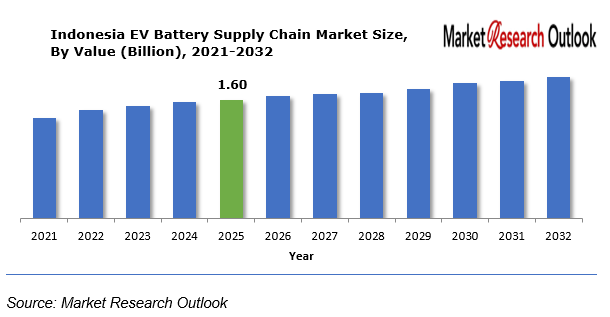
The Indonesia EV Battery Supply Chain Market size was estimated at USD 1.60 Billion in 2025. During the forecast period, the Indonesia EV Battery Supply Chain Market size is projected to grow at a CAGR of 12.5% reaching a value of USD 3.65 Billion by 2032. The Indonesian market for electric vehicle battery supply chains will experience rapid development during the upcoming years because of robust governmental backing and plentiful natural resources and increasing worldwide interest in electric vehicles. Indonesia controls some of the largest nickel reserves throughout the world which serves as a vital element in lithiumion batteries while the country has established regulations that support its domestic battery manufacturing through export restrictions on unprocessed nickel and financial support for battery production. The presence of major global battery manufacturers such as LG Energy Solution and CATL and Panasonic has led to rapid development of gigafactories and their complete supply chain operations in Indonesia. Indonesia establishes itself as a strong player in the electric vehicle market through its partnerships with automotive companies and technology providers. The electric vehicle market will experience substantial growth from 2026 to 2032 because of increasing electric vehicle adoption and government production targets for local batteries and renewable energy systems.
EV Battery Supply Chain – Overview
The term EV Battery Supply Chain describes the complete system that handles all steps needed to create and deliver all components required for electric vehicle (EV) batteries which need to be recycled after their initial use. The process starts with sourcing raw materials including lithium and cobalt and nickel and graphite, followed by chemical processing to create battery-grade materials, and continues with cell manufacturing and module and pack assembly, until finished products reach EV manufacturers, who then use the batteries in vehicles and energy storage systems, before they finally go through end-of-life procedures which include battery recycling and second-life applications. The supply chain delivers high-quality batteries at scheduled times while it achieves optimal results for cost effectiveness and performance and safety and sustainable practices throughout the electric vehicle ecosystem.
Indonesia EV Battery Supply Chain Market
Growth Drivers
Rapid EV Adoption
The Indonesia market for EV battery supply chains develops because of increased electric vehicle adoption. The demand for electric vehicles has risen through three factors which include environmental sustainability awareness and government incentives and charging station development. The growing number of electric vehicles on roads creates a rising demand for advanced battery systems which will drive investments into battery production and assembly and energy storage systems. The increasing adoption of electric vehicles drives expansion throughout the entire battery supply chain which includes processes from material extraction to battery recycling which establishes the Indonesia as a new center for electric vehicle battery research and development.
Challenges
Raw Material Price Volatility
The volatility in the price of raw materials presents an ongoing challenge to the growth of the Indonesia’s EV Battery Supply Chain Market. Battery inputs like lithium, cobalt, nickel, and graphite have a significant impact on their costs and the ability of the Indonesia Battery Manufacturers and Integrators to accurately forecast these costs. The costs of lithium, cobalt, nickel, and graphite fluctuate because of supply/demand challenges in the world market as well as geopolitical concerns and limited mining capacity. Because the Indonesia is primarily dependent on importing these materials, sudden changes in their prices directly impact the pricing of locally manufactured battery packages and integrators, affect profit margins, and slow the pace of investment in local battery assembly and energy storage projects. This type of volatility makes it difficult for manufacturers to develop long-term plans and could prevent them from achieving scalable success with establishing a stable and competitive EV Battery Supply Chain within the Indonesia.
Geopolitical Impact on Indonesia EV Battery Supply Chain Market
Geopolitical factors have a major impact on the Indonesia EV battery supply chain market because the country serves as a key link in the worldwide electric vehicle and battery supply chain. Indonesia possesses abundant essential minerals including nickel and cobalt and manganese which serve as vital components for producing lithium-ion batteries. The global trade tensions and export restrictions together with changing international relations create risks to resource availability and price stability. The foreign investment climate in Indonesia’s battery industry gets directly impacted by trade tariff policies and environmental regulations and investment incentives which China and the United States and Japan and the European Union establish. Indonesia’s export bans on raw nickel together with its domestic battery manufacturing incentives create a policy framework that shapes global supply chain operations and affects international business partnerships and joint ventures and technology exchange.
Indonesia EV Battery Supply Chain Market
Segmental Coverage
Indonesia EV Battery Supply Chain Market – By Battery Type
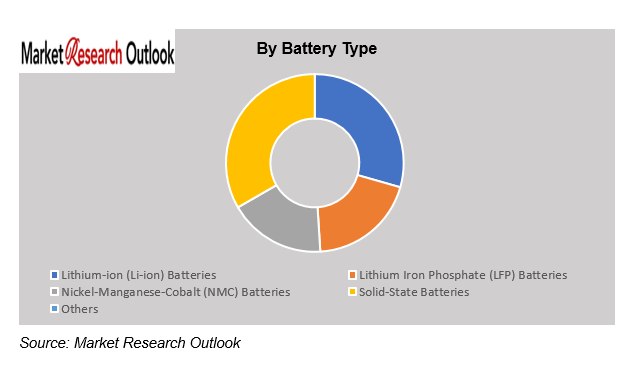
Based on chemical type, the Indonesia EV Battery Supply Chain Market is segmented into Lithium-ion (Li-ion) Batteries, Lithium Iron Phosphate (LFP) Batteries, Nickel-Manganese-Cobalt (NMC) Batteries, Solid-State Batteries and Others. The Indonesia EV battery supply chain market experiences its highest growth through lithium-ion batteries which serve electric vehicles because of their high energy density and extended cycle life. The Indonesia market shows increased demand for lithium-ion battery cells and modules and packs because electric passenger cars and buses and commercial EVs have become more popular through their enhanced performance and falling prices. The adoption of lithium-ion technology receives acceleration from three factors which include strong governmental backing for environmentally friendly transportation and the growth of electric vehicle charging networks and increased funding for energy storage technologies. The Indonesia EV battery supply chain market exists in a state of continuous growth which lithium-ion batteries maintain as their dominant technology.
Indonesia EV Battery Supply Chain Market – By Application
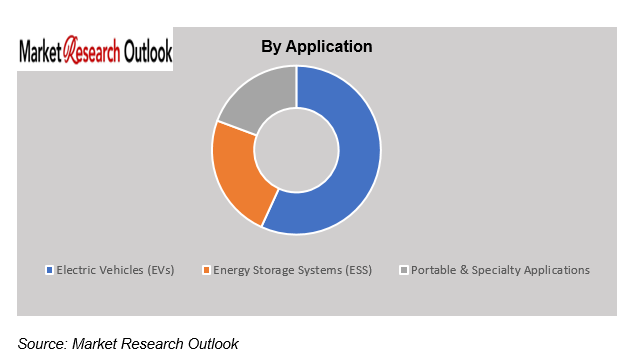
Based on application, the Indonesia EV Battery Supply Chain Market is segmented into Electric Vehicles (EVs), Energy Storage Systems (ESS), Portable & Specialty Applications. The Indonesia electric vehicle (EV) battery supply chain market expands because energy storage systems (ESS) experience significant growth. The renewable energy sector particularly solar and wind power projects needs large-scale battery energy storage systems to maintain grid stability and manage power interruptions. Electric utilities and commercial businesses together with residential customers are adopting lithium-ion storage systems which create a rising need for battery components. The combination of electric vehicle charging systems with energy storage facilities creates benefits through improved energy efficiency and decreased peak electricity demand from the power grid. The advanced battery technology adoption process receives acceleration through these technological improvements which establish energy storage systems as the primary development area in the Indonesia electric vehicle battery supply chain market.
Competitive Landscape
Key participants in the Indonesia EV Battery Supply Chain market include PT. Indonesia Battery Corporation, PT. PLN (Persero), LG Energy Solution, CATL (Contemporary Amperex Technology Co. Ltd.), Panasonic Corporation, Samsung SDI, Hyundai Motor Group, BASF, Mitsui & Co., Ltd., Sumitomo Metal Mining Co., Ltd.and Other Prominent Players. These companies are implementing strategic growth initiatives in order to gain a competitive advantage. The strategies being largely adopted include mergers and acquisitions, strategic alliances, joint ventures, licensing agreements, and new product launches. With the implementation of these strategies, the market participants aim to increase product portfolios, as well as enhance regional presence for long-term sustainable business growth in the EV Battery Supply Chain industry of Indonesia.
Scope of the Report
| Attributes | Details |
| Years Considered | Historical Data – 2021–2025
Base Year – 2025 Estimated Year – 2026 Forecast Period – 2026–2032 |
| Facts Covered | Revenue in USD Billion |
| Market Coverage | Indonesia |
| Product/ Service Segmentation | Battery Type, Supply Chain Stage, Application |
| Key Players | PT. Indonesia Battery Corporation, PT. PLN (Persero), LG Energy Solution, CATL (Contemporary Amperex Technology Co. Ltd.), Panasonic Corporation, Samsung SDI, Hyundai Motor Group, BASF, Mitsui & Co., Ltd., Sumitomo Metal Mining Co., Ltd.and Other Prominent Players. |
Market Segmentation
- By Battery Type
- Lithium-ion (Li-ion) Batteries
- Lithium Iron Phosphate (LFP) Batteries
- Nickel-Manganese-Cobalt (NMC) Batteries
- Solid-State Batteries
- Others
- By Supply Chain Stage
- Raw Materials
- Battery Chemicals / Precursors
- Battery Cells
- Modules & Packs
- Battery Recycling / Second-Life Applications
- By Application
- Electric Vehicles (EVs)
- Energy Storage Systems (ESS)
- Portable & Specialty Applications
- Research Framework
- Research Objective
- Product Overview
- Market Segmentation
- Executive Summary
- Indonesia EV Battery Supply Chain Market Insights
- Growth Drivers
- Restraints
- Opportunities
- Challenges
- Technological Advancements/Recent Developments
- Porter’s Five Forces Analysis
- Industry Value Chain & Entry Points
- Indonesia EV Battery Supply Chain Market: Regulatory Framework
- Indonesia EV Battery Supply Chain Market: Marketing Strategies
- Indonesia EV Battery Supply Chain Market Overview
- Market Size & Forecast, 2021-2032
- By Value (USD Billion)
- Market Share & Forecast
- By Battery Type
- Lithium-Ion Batteries
- Lithium Iron Phosphate Batteries
- Nickel-Manganese-Cobalt Batteries
- Solid-State Batteries
- Others
- By Supply Chain Stage
- Raw Materials
- Battery Chemicals / Precursors
- Battery Cells
- Modules & Packs
- Battery Recycling / Second-Life Applications
- By Application
- Electric Vehicles
- Energy Storage Systems
- Portable & Specialty Applications
- By Battery Type
- Market Size & Forecast, 2021-2032
- Demand Outlook & Customer Adoption Dynamics
- Demand Evolution By End-Use Industry
- Purchasing Behavior & Supplier Selection Criteria
- Demand Visibility & Contracting Trends
- Regional Demand Concentration & Customer Clusters
- Competitive Landscape
- List Of Key Players And Their Offerings
- Indonesia EV Battery Supply Chain Company Market Share Analysis, 2025
- Competitive Benchmarking, By Operating Parameters
- Key Strategic Development (Mergers, Acquisitions, Partnerships, Etc.)
- Geopolitical Impact On Indonesia EV Battery Supply Chain Market
- Company Profile
- Indonesia Battery Corporation
- Introduction & Company Profile
- Product Benchmarking
- Strategic Outlook
- Key Personals
- Key Competitors
- Financial Analysis
- Swot Analysis
- Indonesia Battery Corporation
**(Same Data Pointers Will Be Provided For The Below Companies)
- PLN (Persero)
- LG Energy Solution
- CATL (Contemporary Amperex Technology Co. Ltd.)
- Panasonic Corporation
- Samsung SDI
- Hyundai Motor Group
- BASF
- Mitsui & Co., Ltd.
- Sumitomo Metal Mining Co., Ltd.
- Other Prominent Players
- Key Strategic Recommendations
- Research Methodology
- Qualitative Research
- Primary & Secondary Research
- Quantitative Research
- Market Breakdown & Data Triangulation
- Secondary Research
- Primary Research
- Breakdown Of Primary Research Respondents, By Country
- Assumption & Limitation
- Qualitative Research
* Financial information in case of non-listed companies will be provided as per availability
**The segmentation and the companies are subjected to modifications based on in-depth secondary for the final deliverable
Frequently Asked Questions
1. What is the expected growth rate of the Indonesia EV Battery Supply Chain Market during the forecast period?
Ans: The Indonesia EV Battery Supply Chain Market size was estimated at USD 1.60 Billion in 2025.
2. What is the expected growth rate of the Indonesia EV Battery Supply Chain Market during the forecast period?
Ans: The Indonesia EV Battery Supply Chain Market is expected to grow at a CAGR of around 12.5% during the forecast period between 2026 and 2025.
3. What is the forecast value of the Indonesia EV Battery Supply Chain Market by 2012.5?
Ans: The Indonesia EV Battery Supply Chain Market is projected to reach a value of approximately USD 3.65 Billion by 2032.
4. What are the major factors driving the growth of the Indonesia EV Battery Supply Chain Market?
Ans: The Indonesian market for electric vehicle battery supply chains will experience rapid development during the upcoming years because of robust governmental backing and plentiful natural resources and increasing worldwide interest in electric vehicles.
5. Name the key players operating in the Indonesia EV Battery Supply Chain Market.
Ans: The key players of Indonesia EV Battery Supply Chain Market are PT. Indonesia Battery Corporation, PT. PLN (Persero), LG Energy Solution, CATL (Contemporary Amperex Technology Co. Ltd.), Panasonic Corporation, Samsung SDI, Hyundai Motor Group, BASF, Mitsui & Co., Ltd., Sumitomo Metal Mining Co., Ltd.and Other Prominent Players.
6. Which is the fastest-growing battery type segment in the Indonesia EV Battery Supply Chain Market?
Ans: The Indonesia electric vehicle (EV) battery supply chain market expands because energy storage systems (ESS) experience significant growth. The renewable energy sector particularly solar and wind power projects needs large-scale battery energy storage systems to maintain grid stability and manage power interruptions.