

Global Sustainable Aviation Fuel (SAF) Market, Size & Forecast 2021-2032
- Global Markets
- Feb 2026
- Pages 300
- Report Format: pdf
- Report Price: $3500 USD
The global Sustainable Aviation Fuel (SAF) market is experiencing rapid growth because the aviation industry faces mounting pressure to decrease carbon emissions while reaching net-zero emissions targets by 2050. North American and European governments together with regional regulatory bodies have established mandatory requirements and tax benefits and carbon reduction initiatives which motivate airlines and fuel manufacturers to use SAF. The increasing number of air passengers together with the growth of commercial airline fleets and the rising environmental consciousness of both airlines and travelers drive the demand for low-carbon aviation fuels.
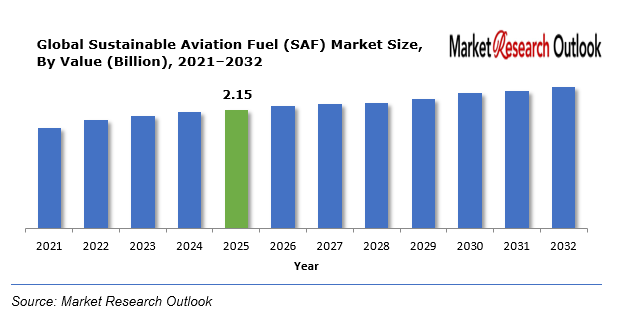
The Global Sustainable Aviation Fuel (SAF) Market size was estimated at USD 2.15 Billion in 2025. During the forecast period, the Global Sustainable Aviation Fuel (SAF) Market size is projected to grow at a CAGR of 52.4% reaching a value of USD 54.20 Billion by 2032. The Sustainable Aviation Fuel (SAF) market worldwide will experience strong market growth between 2026 and 2032 because the aviation industry increases its efforts to achieve decarbonization and net-zero emission goals. The North American, European, and Asia-Pacific governments support SAF adoption and production capacity growth through policy implementation, blending mandates, and financial incentive programs. Airlines are entering into long-term offtake agreements while funding SAF projects which help them decrease operational carbon emissions to fulfill their environmental sustainability goals. The demand for low-carbon aviation fuels is increasing because more passengers are flying, flight networks are expanding, and environmental regulations are becoming stricter. The HEFA, Fischer-Tropsch, Alcohol-to-Jet, and Power-to-Liquid pathways will achieve greater production efficiency and scalability because of ongoing technological advancements and oil and gas companies and energy companies increasing their investments.
Sustainable Aviation Fuel (SAF) – Overview
Sustainable Aviation Fuel (SAF) functions as a renewable fuel solution which emits low carbon emissions when compared to traditional jet fuel because it derives from sustainable feedstocks that include waste oils and agricultural residues and municipal solid waste and biomass and captured carbon and green hydrogen. SAF functions as an aircraft fuel solution which supports current engine and fueling systems while achieving lower greenhouse gas emissions throughout its entire life cycle in comparison to standard fossil fuel aviation fuel. The aviation industry can use this fuel because it blends with conventional jet fuel and operates aircraft systems without any necessary changes. Sustainable Aviation Fuel helps reduce carbon emissions, supports energy diversification, and enables airlines and governments to achieve long-term climate and net-zero aviation targets.
Global Sustainable Aviation Fuel (SAF) Market
Growth Drivers
Rising Demand for Low-Carbon Aviation and Corporate Sustainability
The global Sustainable Aviation Fuel (SAF) market is experiencing growth because of rising low-carbon aviation demand and corporate sustainability commitments which drive companies to adopt eco-friendly practices. The airline and cargo operator and corporate travel sectors face mounting demands from regulators and investors and environmentally conscious customers who want the companies to cut their carbon emissions and achieve net-zero emissions. SAF has become a vital solution for the aviation industry because it enables airlines to reduce their greenhouse gas emissions throughout their operational lifecycle without needing substantial modifications to their aircraft or airport systems. Global airlines and logistics firms establish permanent SAF purchasing contracts while they fund production initiatives to accomplish their environmental objectives and boost their brand image.
Challenges
Insufficient Production Infrastructure
The global Sustainable Aviation Fuel (SAF) market faces major growth challenges because of inadequate production infrastructure. The number of operational large-scale SAF production facilities currently remains below the essential level which airlines and governments need to meet their aviation fuel requirements. The establishment of new biorefineries and the expansion of current facilities require three essential elements which include high capital costs and state-of-the-art technologies and extended development periods that hinder supply growth. The regions of the world lack sufficient refining capacity together with feedstock processing units and distribution systems which enable continuous SAF distribution. The supply-demand imbalance creates two problems which include increased fuel prices and restricted airline access to fuel especially in emerging market economies.
Geopolitical Impact on Global Sustainable Aviation Fuel (SAF) Market
The global Sustainable Aviation Fuel (SAF) market experiences major changes because geopolitical factors affect its feedstock supply and energy security plans and trade regulations and investment activities. Rising geopolitical tensions and energy security concerns are encouraging many countries to reduce dependence on conventional fossil fuel imports and invest in domestically produced renewable fuels, including SAF. Governments in North America and Europe and Asia-Pacific region countries use supportive policies and subsidies and strategic partnerships to advance their local SAF production efforts which help them achieve climate goals and energy independence.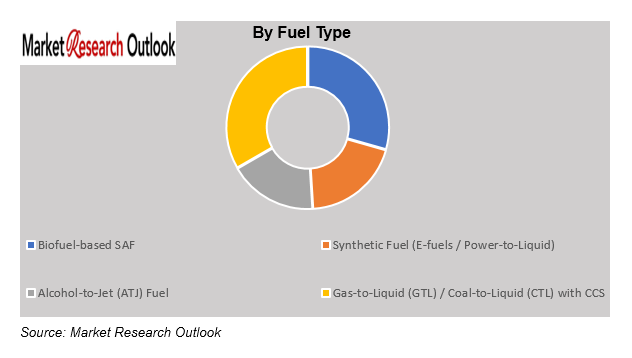
Global Sustainable Aviation Fuel (SAF) Market
Segmental Coverage
Global Sustainable Aviation Fuel (SAF) Market – By Fuel Type
Based on fuel type, the Global Sustainable Aviation Fuel (SAF) Market is segmented into Biofuel-based SAF, Synthetic Fuel (E-fuels / Power-to-Liquid), Alcohol-to-Jet (ATJ) Fuel and Gas-to-Liquid (GTL) / Coal-to-Liquid (CTL) with CCS. The biofuel-based Sustainable Aviation Fuel (SAF) segment is expected to grow substantially during the forecast period because it has achieved commercial readiness and the aviation industry is starting to use it. Biofuel-based SAF becomes commercially available through production methods that use renewable feedstocks, which include used cooking oil, animal fats, agricultural residues, and multiple biomass sources. The majority of existing SAF production facilities operate with Hydroprocessed Esters and Fatty Acids (HEFA) technology, which has already received certification and works with all current aircraft engines and fuel systems. Airlines and fuel producers are increasingly prioritizing bio-based SAF to meet short- and medium-term emission reduction targets, as it offers an immediate and practical solution for lowering lifecycle carbon emissions.
Global Sustainable Aviation Fuel (SAF) Market – By Blend Ratio
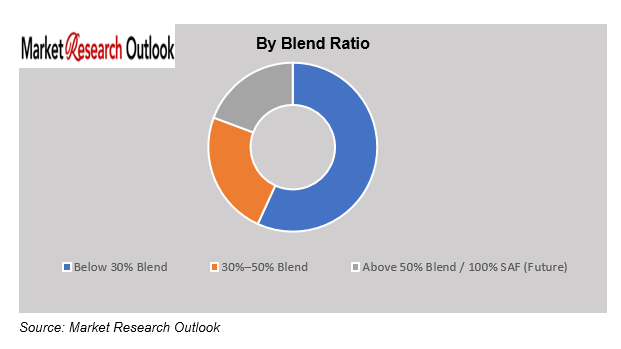
Based on blend ratio, the Global Sustainable Aviation Fuel (SAF) Market is segmented into Below 30% Blend, 30%–50% Blend, and Above 50% Blend / 100% SAF (Future). The below 30% blend segment is expected to grow significantly during the forecast period as it represents the most widely approved and commercially viable blend ratio for Sustainable Aviation Fuel (SAF) usage. Most aviation regulatory authorities currently permit SAF to be blended with conventional jet fuel at lower percentages, typically up to 30%, without requiring modifications to aircraft engines or fueling infrastructure. The existence of this compatibility allows airlines and fuel suppliers to adopt lower blend ratios as a safe and efficient operational solution which they can implement throughout their entire business operations. Airlines are increasingly using below 30% SAF blends to meet short-term emission reduction targets and comply with government mandates and sustainability commitments.
Competitive Landscape
Key participants in the Global Sustainable Aviation Fuel (SAF) market include Neste, World Energy, TotalEnergies, Shell plc, BP plc, Gevo Inc., Velocys plc, LanzaJet, Fulcrum BioEnergy, Honeywell UOP, SkyNRG, Aemetis Inc. and Other Prominent Players.
These companies are implementing strategic growth initiatives in order to gain a competitive advantage. The strategies being largely adopted include mergers and acquisitions, strategic alliances, joint ventures, licensing agreements, and new product launches. With the implementation of these strategies, the market participants aim to increase product portfolios, as well as enhance regional presence for long-term sustainable business growth in the Sustainable Aviation Fuel (SAF) industry of Global.
Scope of the Report
| Attributes | Details |
| Years Considered | Historical Data – 2021–2025
Base Year – 2025 Estimated Year – 2026 Forecast Period – 2026–2032 |
| Facts Covered | Revenue in USD Billion |
| Market Coverage | Global |
| Product/ Service Segmentation | Fuel Type, Production Technology, Blend Ratio, Application |
| Key Players | Neste, World Energy, TotalEnergies, Shell plc, BP plc, Gevo Inc., Velocys plc, LanzaJet, Fulcrum BioEnergy, Honeywell UOP, SkyNRG, Aemetis Inc. and Other Prominent Players |
Market Segmentation
- By Fuel Type
- Biofuel-based SAF
- Synthetic Fuel (E-fuels / Power-to-Liquid)
- Alcohol-to-Jet (ATJ) Fuel
- Gas-to-Liquid (GTL) / Coal-to-Liquid (CTL) with CCS
- By Production Technology
- HEFA-SPK (Hydroprocessed Esters and Fatty Acids)
- Fischer-Tropsch (FT-SPK)
- Alcohol-to-Jet (ATJ-SPK)
- Power-to-Liquid (PtL) / E-SAF
- Hydrothermal Liquefaction (HTL)
- By Blend Ratio
- Below 30% Blend
- 30%–50% Blend
- Above 50% Blend / 100% SAF (Future)
- By Application
- Commercial Aviation
- Military Aviation
- Cargo & Logistics Aviation
- Business & General Aviation
- By Region
- North America
- Europe
- Asia Pacific (APAC)
- Latin America (LATAM)
- Middle East and Africa (MEA)
- Research Framework
- Research Objective
- Product Overview
- Market Segmentation
- Executive Summary
- Global Sustainable Aviation Fuel (SAF) Market Insights
- Growth Drivers
- Restraints
- Opportunities
- Challenges
- Technological Advancements/Recent Developments
- Porter’s Five Forces Analysis
- Industry Value Chain & Entry Points
- Global Sustainable Aviation Fuel (SAF) Market: Regulatory Framework
- Global Sustainable Aviation Fuel (SAF) Market: Marketing Strategies
- Global Sustainable Aviation Fuel (SAF) Market Overview
- Market Size & Forecast, 2021-2032
- By Value (USD Billion)
- Market Share & Forecast
- By Fuel Type
- Biofuel-based SAF
- Synthetic Fuel (E-fuels / Power-to-Liquid)
- Alcohol-to-Jet (ATJ) Fuel
- Gas-to-Liquid (GTL) / Coal-to-Liquid (CTL) with CCS
- By Production Technology
- HEFA-SPK (Hydroprocessed Esters and Fatty Acids)
- Fischer-Tropsch (FT-SPK)
- Alcohol-to-Jet (ATJ-SPK)
- Power-to-Liquid (PtL) / E-SAF
- Hydrothermal Liquefaction (HTL)
- By Blend Ratio
- Below 30% Blend
- 30%–50% Blend
- Above 50% Blend / 100% SAF (Future)
- By Application
- Commercial Aviation
- Military Aviation
- Cargo & Logistics Aviation
- Business & General Aviation
- By Region
- North America
- Europe
- Asia Pacific (APAC)
- Latin America (LATAM)
- Middle East and Africa (MEA)
- By Fuel Type
- Market Size & Forecast, 2021-2032
- North America Sustainable Aviation Fuel (SAF) Market
- Market Size & Forecast, 2021-2032
- By Value (USD Billion)
- Market Share & Forecast
- By Fuel Type
- By Production Technology
- By Blend Ratio
- By Application
- By Country
- United States
- By Fuel Type
- By Production Technology
- By Blend Ratio
- By Application
- Canada
- By Fuel Type
- By Production Technology
- By Blend Ratio
- By Application
- United States
- Market Size & Forecast, 2021-2032
- Europe Sustainable Aviation Fuel (SAF) Market
- Market Size & Forecast, 2021-2032
- By Value (USD Billion)
- Market Share & Forecast
- By Fuel Type
- By Production Technology
- By Blend Ratio
- By Application
- By Country
- Germany
- By Fuel Type
- By Production Technology
- By Blend Ratio
- By Application
- United Kingdom
- By Fuel Type
- By Production Technology
- By Blend Ratio
- By Application
- Italy
- By Fuel Type
- By Production Technology
- By Blend Ratio
- By Application
- France
- By Fuel Type
- By Production Technology
- By Blend Ratio
- By Application
- Spain
- By Fuel Type
- By Production Technology
- By Blend Ratio
- By Application
- Belgium
- By Fuel Type
- By Production Technology
- By Blend Ratio
- By Application
- Russia
- By Fuel Type
- By Production Technology
- By Blend Ratio
- By Application
- The Netherlands
- By Fuel Type
- By Production Technology
- By Blend Ratio
- By Application
- Rest of Europe
- By Fuel Type
- By Production Technology
- By Blend Ratio
- By Application
- Asia Pacific Sustainable Aviation Fuel (SAF) Market
- Market Size & Forecast, 2021-2032
- By Value (USD Billion)
- Market Share & Forecast
- By Fuel Type
- By Production Technology
- By Blend Ratio
- By Application
- By Country
- China
- By Fuel Type
- By Production Technology
- By Blend Ratio
- By Application
- India
- By Fuel Type
- By Production Technology
- By Blend Ratio
- By Application
- Japan
- By Fuel Type
- By Production Technology
- By Blend Ratio
- By Application
- South Korea
- By Fuel Type
- By Production Technology
- By Blend Ratio
- By Application
- Australia & New Zealand
- By Fuel Type
- By Production Technology
- By Blend Ratio
- By Application
- Indonesia
- By Fuel Type
- By Production Technology
- By Blend Ratio
- By Application
- Malaysia
- By Fuel Type
- By Production Technology
- By Blend Ratio
- By Application
- Singapore
- By Fuel Type
- By Production Technology
- By Blend Ratio
- By Application
- Vietnam
- By Fuel Type
- By Production Technology
- By Blend Ratio
- By Application
- Rest of APAC
- By Fuel Type
- By Production Technology
- By Blend Ratio
- By Application
- Latin America Sustainable Aviation Fuel (SAF) Market
- Market Size & Forecast, 2021-2032
- By Value (USD Billion)
- Market Share & Forecast
- By Fuel Type
- By Production Technology
- By Blend Ratio
- By Application
- By Country
- Brazil
- By Fuel Type
- By Production Technology
- By Blend Ratio
- By Application
- Mexico
- By Fuel Type
- By Production Technology
- By Blend Ratio
- By Application
- Argentina
- By Fuel Type
- By Production Technology
- By Blend Ratio
- By Application
- Peru
- By Fuel Type
- By Production Technology
- By Blend Ratio
- By Application
- Rest of LATAM
- By Fuel Type
- By Production Technology
- By Blend Ratio
- By Application
- Middle East & Africa Sustainable Aviation Fuel (SAF) Market
- Market Size & Forecast, 2021-2032
- By Value (USD Billion)
- Market Share & Forecast
- By Fuel Type
- By Production Technology
- By Blend Ratio
- By Application
- By Country
- Saudi Arabia
- By Fuel Type
- By Production Technology
- By Blend Ratio
- By Application
- UAE
- By Fuel Type
- By Production Technology
- By Blend Ratio
- By Application
- Qatar
- By Fuel Type
- By Production Technology
- By Blend Ratio
- By Application
- Kuwait
- By Fuel Type
- By Production Technology
- By Blend Ratio
- By Application
- South Africa
- By Fuel Type
- By Production Technology
- By Blend Ratio
- By Application
- Nigeria
- By Fuel Type
- By Production Technology
- By Blend Ratio
- By Application
- Algeria
- By Fuel Type
- By Production Technology
- By Blend Ratio
- By Application
- Rest of MEA
- By Fuel Type
- By Production Technology
- By Blend Ratio
- By Application
- Demand Outlook & Customer Adoption Dynamics
- Demand Evolution by End-Use Industry
- Purchasing Behavior & Supplier Selection Criteria
- Demand Visibility & Contracting Trends
- Regional Demand Concentration & Customer Clusters
- Competitive Landscape
- List of Key Players and Their Products
- Global Sustainable Aviation Fuel (SAF) Company Market Share Analysis, 2025
- Competitive Benchmarking, By Operating Parameters
- Key Strategic Developments (Mergers, Acquisitions, Partnerships, etc.)
- Geopolitical Impact on Global Sustainable Aviation Fuel (SAF) Market
- Company Profile
- Neste
- Introduction & Company Profile
- Product Benchmarking
- Strategic Outlook
- Key Personals
- Key Competitors
- Financial Analysis
- SWOT Analysis
- Neste
- Saudi Arabia
- Market Size & Forecast, 2021-2032
- Brazil
- Market Size & Forecast, 2021-2032
- China
- Market Size & Forecast, 2021-2032
- Germany
- Market Size & Forecast, 2021-2032
**(same data pointers will be provided for the below companies)
- World Energy
- TotalEnergies
- Shell plc
- BP plc
- Gevo Inc.
- Velocys plc
- LanzaJet
- Fulcrum BioEnergy
- Honeywell UOP
- SkyNRG
- Aemetis Inc.
- Other Prominent Players
- Key Strategic Recommendations
- Research Methodology
- Qualitative Research
- Primary & Secondary Research
- Quantitative Research
- Market Breakdown & Data Triangulation
- Secondary Research
- Primary Research
- Breakdown of Primary Research Respondents, By Region
- Assumptions & Limitations
- Qualitative Research
*Financial information of case of non-listed companies can be provided as per availability.
**The segmentation and the companies are subject to modifications based on in-depth secondary research for the final deliverable
Frequently Asked Questions
1. What is the expected growth rate of the Global Sustainable Aviation Fuel (SAF) Market during the forecast period?
Ans: The Global Sustainable Aviation Fuel (SAF) Market size was estimated at USD 2.15 billion in 2025.
2. What is the expected growth rate of the Global Sustainable Aviation Fuel (SAF) Market during the forecast period?
Ans: Global Sustainable Aviation Fuel (SAF) Market is expected to grow at a CAGR of around 52.4% during the forecast period between 2026 and 2032.
3. What is the forecast value of the Global Sustainable Aviation Fuel (SAF) Market by 2032?
Ans: The Global Sustainable Aviation Fuel (SAF) Market is projected to reach a value of approximately USD 54.20 billion by 2032.
4. What are the major factors driving the growth of the Global Sustainable Aviation Fuel (SAF) Market?
Ans: The Sustainable Aviation Fuel (SAF) market worldwide will experience strong market growth between 2026 and 2032 because the aviation industry increases its efforts to achieve decarbonization and net-zero emission goals. The North American, European, and Asia-Pacific governments support SAF adoption and production capacity growth through policy implementation, blending mandates, and financial incentive programs.
5. Name the key players operating in the Global Sustainable Aviation Fuel (SAF) Market.
Ans: The key players of Global Sustainable Aviation Fuel (SAF) Market are Neste, World Energy, TotalEnergies, Shell plc, BP plc, Gevo Inc., Velocys plc, LanzaJet, Fulcrum BioEnergy, Honeywell UOP, SkyNRG, Aemetis Inc. and Other Prominent Players.
6. Which is the fastest-growing fuel type segment in the Global Sustainable Aviation Fuel (SAF) Market?
Ans: The biofuel-based Sustainable Aviation Fuel (SAF) segment is expected to grow substantially during the forecast period because it has achieved commercial readiness and the aviation industry is starting to use it. Biofuel-based SAF becomes commercially available through production methods that use renewable feedstocks, which include used cooking oil, animal fats, agricultural residues, and multiple biomass sources.
7. Which region contributes significantly to the growth of the Global Sustainable Aviation Fuel (SAF) Market?
Ans: North America is expected to experience significant expansion of its Sustainable Aviation Fuel market during the forecast period because of government support and advanced biofuel infrastructure and growing airline carbon reduction commitments. The United States leads the regional market due to favorable policies that include SAF tax credits and the Renewable Fuel Standard and funding initiatives which support domestic SAF production and usage.