

Global Green Hydrogen Market, Size & Forecast 2021-2032
- Global Markets
- Feb 2026
- Pages 300
- Report Format: pdf
- Report Price: $3500 USD
The global green hydrogen market will expand in 2026-2032 because of the rising adoption of green hydrogen in chemical production of fertilizers and ammonia. The global green hydrogen market will grow through two main factors which include the progress of electrolysis technologies and the increasing demand from Fuel Cell Electric Vehicles and power generation facilities.
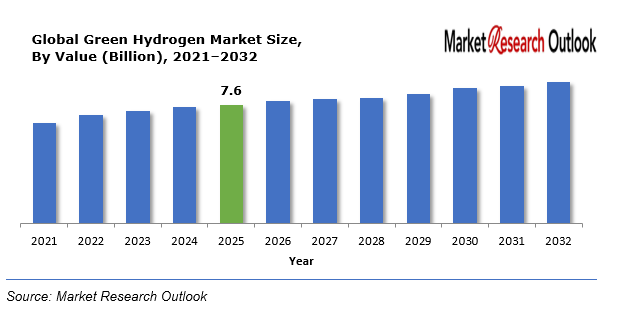
The Global Green Hydrogen Market size was estimated at USD 7.6 Billion in 2025. During the forecast period, the Global Green Hydrogen Market size is projected to grow at a CAGR of 49.8% reaching a value of USD 125.4 Billion by 2032. Between 2026 and 2032 the global green hydrogen market will experience rapid expansion because of stricter decarbonization requirements and the fast growth of renewable energy resources and the increasing government support for clean hydrogen technologies. Governments across Europe Asia-Pacific the Middle East and North America are implementing national hydrogen strategies which provide financial assistance and tax benefits and support funding for electrolyzer installation and hydrogen infrastructure development. The initiatives are attracting substantial financial commitments towards green hydrogen production development which will mainly benefit industrial decarbonization efforts and energy storage solution development.
Green Hydrogen – Overview
Green hydrogen exists as hydrogen which results from using electrolysis to split water when the process uses electricity derived from 100 percent renewable energy sources that include solar and wind and hydropower. This method uses water (H₂O) to create hydrogen (H₂) and oxygen (O₂) through a process which produces no carbon dioxide emissions and no greenhouse gases. Green hydrogen serves as a zero-carbon fuel because it maintains zero carbon emissions throughout its entire production process whereas grey hydrogen and blue hydrogen both emit carbon during their production from fossil fuels.
Global Green Hydrogen Market
Growth Drivers
Rapid Expansion of Renewable Energy Capacity
The green hydrogen market is experiencing worldwide growth because renewable energy capacity is expanding at an exceptional rate. The ongoing development of extensive solar and wind energy facilities leads to a rise in affordable clean electricity, which serves as the essential resource for producing green hydrogen. Electrolyzer-based hydrogen production achieves greater economic viability and scalable expansion as renewable energy capacity expands across European and Asia-Pacific and Middle Eastern and North American regions. The system uses excess renewable energy produced during peak times to create hydrogen, which helps maintain grid stability and boosts total system efficiency.
Challenges
High Production Costs Compared to Conventional Hydrogen
The global green hydrogen market faces its main obstacle because production costs for green hydrogen exceed costs of traditional hydrogen production. Green hydrogen production relies on renewable electricity and electrolyzer systems which both require expensive capital and operational costs. Green hydrogen production costs have decreased over time but the technology remains more expensive than grey hydrogen from fossil fuels and blue hydrogen with carbon capture which makes it uncompetitive in industries that depend on low costs. The production costs increase because renewable energy sources create intermittent power which leads to low electrolyzer utilization rates. The requirement for substantial initial funding to establish renewable power generation systems and electrolyzers and storage facilities and their necessary infrastructure components increases both the difficulty of projects and their financial danger.
Geopolitical Impact on Global Green Hydrogen Market
Geopolitical factors have a major impact on the global green hydrogen market because they affect both supply chains and investment choices and international trade operations. The essential materials required for electrolyzer components and rare metals and renewable energy equipment become inaccessible when political unrest and trade conflicts and changing diplomatic ties occur, which results in price fluctuations and project delays. Export restrictions and sanctions together with trade policy changes will disrupt the transportation of green hydrogen and electrolyzers and hydrogen derivatives which include green ammonia. Countries are currently changing their energy security methods because of geopolitical factors which require them to decrease their reliance on imported fossil fuels while establishing multiple energy sources. Governments now focus on domestic green hydrogen production because they want to establish international hydrogen trade corridors.
Global Green Hydrogen Market
Segmental Coverage
Global Green Hydrogen Market – By Technology
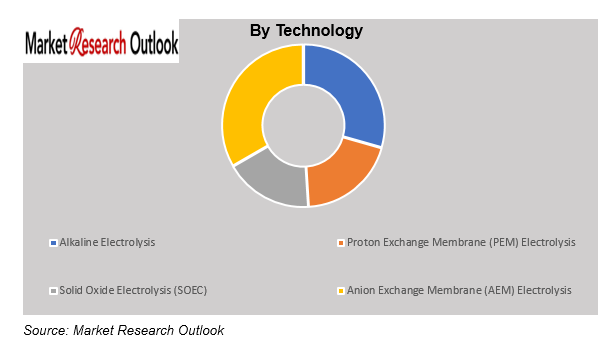
Based on technology, the Global Green Hydrogen Market is segmented into Alkaline Electrolysis, Proton Exchange Membrane (PEM) Electrolysis, Solid Oxide Electrolysis (SOEC), Anion Exchange Membrane (AEM) Electrolysis). The alkaline electrolysis segment is witnessing strong growth in the global green hydrogen market because it has reached technological maturity and its operational costs are low and it can produce hydrogen at industrial scale. Alkaline electrolysis stands as one of the most established methods for hydrogen production because it delivers lower initial investment requirements and extended operational lifespan compared to modern hydrogen production technologies which have emerged. The technology is used in various industries which include green ammonia production and refining and chemical manufacturing to deliver continuous hydrogen supply at high production rates. Alkaline electrolyzers achieve reliable performance at large scale operations, and the ongoing enhancements of their efficiency and system design capabilities have led to their expanded usage in regions which possess plentiful renewable energy resources.
Global Green Hydrogen Market – By End User
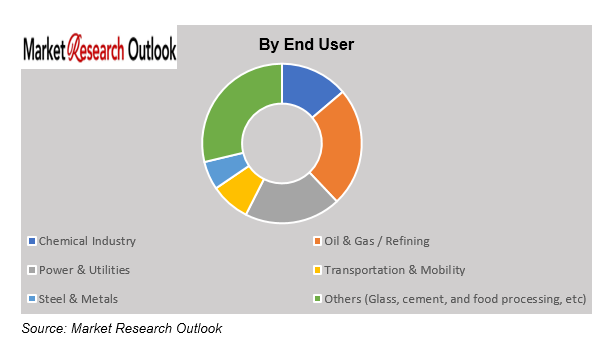
Based on end user, the Global Green Hydrogen Market is segmented into Chemical Industry, Oil & Gas / Refining, Power & Utilities, Transportation & Mobility, Steel & Metals and Others (Glass, cement, and food processing, etc) . The chemical industry expansion is driving the worldwide green hydrogen market forward. Chemical manufacturers are increasingly adopting green hydrogen as a clean feedstock to reduce carbon emissions from the production of ammonia, methanol, and other hydrogen-intensive chemicals. Chemical companies throughout the world now prioritize green hydrogen implementation because environmental regulations become more stringent and sustainability commitments increase. The increasing need for green ammonia in fertilizer production and energy export together with the rising use of green methanol in chemical production and shipping fuel applications is driving higher hydrogen consumption rates. Major chemical companies are establishing permanent offtake contracts while they build their own green hydrogen production facilities to obtain environmentally friendly hydrogen supplies.
Competitive Landscape
Key participants in the Global Green Hydrogen market include Siemens Energy AG, Toshiba Energy Systems & Solutions Corporation, Nel ASA, Linde, Cummins Inc, H&R Ölwerke Schindler GmbH, Wind to Gas Energy GmbH & Co. KG, Guangdong Nation-Synergy Hydrogen Power Technology Co., Ltd., Air Liquide, ITM Power, Thyssenkrupp Nucera and Other Prominent Players.
These companies are implementing strategic growth initiatives in order to gain a competitive advantage. The strategies being largely adopted include mergers and acquisitions, strategic alliances, joint ventures, licensing agreements, and new product launches. With the implementation of these strategies, the market participants aim to increase product portfolios, as well as enhance regional presence for long-term sustainable business growth in the Green Hydrogen industry of Global.
Scope of the Report
| Attributes | Details |
| Years Considered | Historical Data – 2021–2025
Base Year – 2025 Estimated Year – 2026 Forecast Period – 2026–2032 |
| Facts Covered | Revenue in USD Billion |
| Market Coverage | Global |
| Product/ Service Segmentation | Technology, Renewable Source, End User |
| Key Players | Siemens Energy AG, Toshiba Energy Systems & Solutions Corporation, Nel ASA, Linde, Cummins Inc, H&R Ölwerke Schindler GmbH, Wind to Gas Energy GmbH & Co. KG, Guangdong Nation-Synergy Hydrogen Power Technology Co., Ltd., Air Liquide, ITM Power, Thyssenkrupp Nucera and Other Prominent Players |
Market Segmentation
- By Technology
- Alkaline Electrolysis
- Proton Exchange Membrane (PEM) Electrolysis
- Solid Oxide Electrolysis (SOEC)
- Anion Exchange Membrane (AEM) Electrolysis
- By Renewable Source
- Solar Energy
- Wind Energy
- Hydropower
- Hybrid Renewable Sources
- By End User
- Chemical Industry
- Oil & Gas / Refining
- Power & Utilities
- Transportation & Mobility
- Steel & Metals
- Others (Glass, cement, and food processing, etc)
- By Region
- North America
- Europe
- Asia Pacific (APAC)
- Latin America (LATAM)
- Middle East and Africa (MEA)
- Research Framework
- Research Objective
- Product Overview
- Market Segmentation
- Executive Summary
- Global Green Hydrogen Market Insights
- Growth Drivers
- Restraints
- Opportunities
- Challenges
- Technological Advancements/Recent Developments
- Porter’s Five Forces Analysis
- Industry Value Chain & Entry Points
- Global Green Hydrogen Market: Regulatory Framework
- Global Green Hydrogen Market: Marketing Strategies
- Global Green Hydrogen Market Overview
- Market Size & Forecast, 2021-2032
- By Value (USD Billion)
- Market Share & Forecast
- By Technology
- Alkaline Electrolysis
- Proton Exchange Membrane (PEM) Electrolysis
- Solid Oxide Electrolysis (SOEC)
- Anion Exchange Membrane (AEM) Electrolysis
- By Renewable Source
- Solar Energy
- Wind Energy
- Hydropower
- Hybrid Renewable Sources
- By End User
- Chemical Industry
- Oil & Gas / Refining
- Power & Utilities
- Transportation & Mobility
- Steel & Metals
- Others (Glass, cement, and food processing, etc)
- By Region
- North America
- Europe
- Asia Pacific (APAC)
- Latin America (LATAM)
- Middle East and Africa (MEA)
- By Technology
- Market Size & Forecast, 2021-2032
- North America Green Hydrogen Market
- Market Size & Forecast, 2021-2032
- By Value (USD Billion)
- Market Share & Forecast
- By Technology
- By Renewable Source
- By End User
- By Country
- United States
- By Technology
- By Renewable Source
- By End User
- Canada
- By Technology
- By Renewable Source
- By End User
- United States
- Market Size & Forecast, 2021-2032
- Europe Green Hydrogen Market
- Market Size & Forecast, 2021-2032
- By Value (USD Billion)
- Market Share & Forecast
- By Technology
- By Renewable Source
- By End User
- By Country
- Germany
- By Technology
- By Renewable Source
- By End User
- United Kingdom
- By Technology
- By Renewable Source
- By End User
- Italy
- By Technology
- By Renewable Source
- By End User
- France
- By Technology
- By Renewable Source
- By End User
- Spain
- By Technology
- By Renewable Source
- By End User
- Belgium
- By Technology
- By Renewable Source
- By End User
- Russia
- By Technology
- By Renewable Source
- By End User
- The Netherlands
- By Technology
- By Renewable Source
- By End User
- Rest of Europe
- By Technology
- By Renewable Source
- By End User
- Asia Pacific Green Hydrogen Market
- Market Size & Forecast, 2021-2032
- By Value (USD Billion)
- Market Share & Forecast
- By Technology
- By Renewable Source
- By End User
- By Country
- China
- By Technology
- By Renewable Source
- By End User
- India
- By Technology
- By Renewable Source
- By End User
- Japan
- By Technology
- By Renewable Source
- By End User
- South Korea
- By Technology
- By Renewable Source
- By End User
- Australia & New Zealand
- By Technology
- By Renewable Source
- By End User
- Indonesia
- By Technology
- By Renewable Source
- By End User
- Malaysia
- By Technology
- By Renewable Source
- By End User
- Singapore
- By Technology
- By Renewable Source
- By End User
- Vietnam
- By Technology
- By Renewable Source
- By End User
- Rest of APAC
- By Technology
- By Renewable Source
- By End User
- Latin America Green Hydrogen Market
- Market Size & Forecast, 2021-2032
- By Value (USD Billion)
- Market Share & Forecast
- By Technology
- By Renewable Source
- By End User
- By Country
- Brazil
- By Technology
- By Renewable Source
- By End User
- Mexico
- By Technology
- By Renewable Source
- By End User
- Argentina
- By Technology
- By Renewable Source
- By End User
- Peru
- By Technology
- By Renewable Source
- By End User
- Rest of LATAM
- By Technology
- By Renewable Source
- By End User
- Middle East & Africa Green Hydrogen Market
- Market Size & Forecast, 2021-2032
- By Value (USD Billion)
- Market Share & Forecast
- By Technology
- By Renewable Source
- By End User
- By Country
- Saudi Arabia
- By Technology
- By Renewable Source
- By End User
- UAE
- By Technology
- By Renewable Source
- By End User
- Qatar
- By Technology
- By Renewable Source
- By End User
- Kuwait
- By Technology
- By Renewable Source
- By End User
- South Africa
- By Technology
- By Renewable Source
- By End User
- Nigeria
- By Technology
- By Renewable Source
- By End User
- Algeria
- By Technology
- By Renewable Source
- By End User
- Rest of MEA
- By Technology
- By Renewable Source
- By End User
- Demand Outlook & Customer Adoption Dynamics
- Demand Evolution by End-Use Industry
- Purchasing Behavior & Supplier Selection Criteria
- Demand Visibility & Contracting Trends
- Regional Demand Concentration & Customer Clusters
- Competitive Landscape
- List of Key Players and Their Offerings
- Global Green Hydrogen Company Market Share Analysis, 2025
- Competitive Benchmarking, By Operating Parameters
- Key Strategic Developments (Mergers, Acquisitions, Partnerships, etc.)
- Geopolitical Impact on Global Green Hydrogen Market
- Company Profile
- Siemens Energy AG
- Introduction & Company Profile
- Product Benchmarking
- Strategic Outlook
- Key Personals
- Key Competitors
- Financial Analysis
- SWOT Analysis
- Siemens Energy AG
- Saudi Arabia
- Market Size & Forecast, 2021-2032
- Brazil
- Market Size & Forecast, 2021-2032
- China
- Market Size & Forecast, 2021-2032
- Germany
- Market Size & Forecast, 2021-2032
**(same data pointers will be provided for the below companies)
- Toshiba Energy Systems & Solutions Corporation
- Nel ASA
- Linde
- Cummins Inc
- H&R Ölwerke Schindler GmbH
- Wind to Gas Energy GmbH & Co. KG
- Guangdong Nation-Synergy Hydrogen Power Technology Co., Ltd.
- Air Liquide
- ITM Power
- Thyssenkrupp Nucera
- Other Prominent Players
- Key Strategic Recommendations
- Research Methodology
- Qualitative Research
- Primary & Secondary Research
- Quantitative Research
- Market Breakdown & Data Triangulation
- Secondary Research
- Primary Research
- Breakdown of Primary Research Respondents, By Region
- Assumptions & Limitations
- Qualitative Research
*Financial information of case of non-listed companies can be provided as per availability.
**The segmentation and the companies are subject to modifications based on in-depth secondary research for the final deliverable
Frequently Asked Questions
1. What is the expected growth rate of the Global Green Hydrogen Market during the forecast period?
Ans: The Global Green Hydrogen Market size was estimated at USD 7.6 billion in 2025.
2. What is the expected growth rate of the Global Green Hydrogen Market during the forecast period?
Ans: Global Green Hydrogen Market is expected to grow at a CAGR of around 49.8% during the forecast period between 2026 and 2032.
3. What is the forecast value of the Global Green Hydrogen Market by 2032?
Ans: The Global Green Hydrogen Market is projected to reach a value of approximately USD 125.4 billion by 2032.
4. What are the major factors driving the growth of the Global Green Hydrogen Market?
Ans: Between 2026 and 2032 the global green hydrogen market will experience rapid expansion because of stricter decarbonization requirements and the fast growth of renewable energy resources and the increasing government support for clean hydrogen technologies.
5. Name the key players operating in the Global Green Hydrogen Market.
Ans: The key players of Global Green Hydrogen Market are Siemens Energy AG, Toshiba Energy Systems & Solutions Corporation, Nel ASA, Linde, Cummins Inc, H&R Ölwerke Schindler GmbH, Wind to Gas Energy GmbH & Co. KG, Guangdong Nation-Synergy Hydrogen Power Technology Co., Ltd., Air Liquide, ITM Power, Thyssenkrupp Nucera and Other Prominent Players.
6. Which is the fastest-growing technology segment in the Global Green Hydrogen Market?
Ans: The alkaline electrolysis segment is predicted to make up the biggest portion of the green hydrogen market. Alkaline electrolysis will become more popular because it needs less money to operate while its systems work for extended periods of time. Alkaline technology provides permanent process stability which enables efficient production of green hydrogen through its manufacturing process.
7. Which region contributes significantly to the growth of the Global Green Hydrogen Market?
Ans: The European green hydrogen market is expanding rapidly because of its strong policy framework and its ambitious decarbonization goals and its high demand from industrial sectors. The European Union's climate neutrality goal for 2050 and its 2030 interim emission-reduction targets are driving green hydrogen implementation in energy-intensive sectors including chemicals and steel and refining and power generation.